frequencies binaural
Alpha Waves Sleep: Use Them Under Dream-Self Audio
Alpha waves sleep guidance for using 8–12 Hz tones under Dream-Self audio: timing, volume, evidence, and when brown noise may work better tonight.
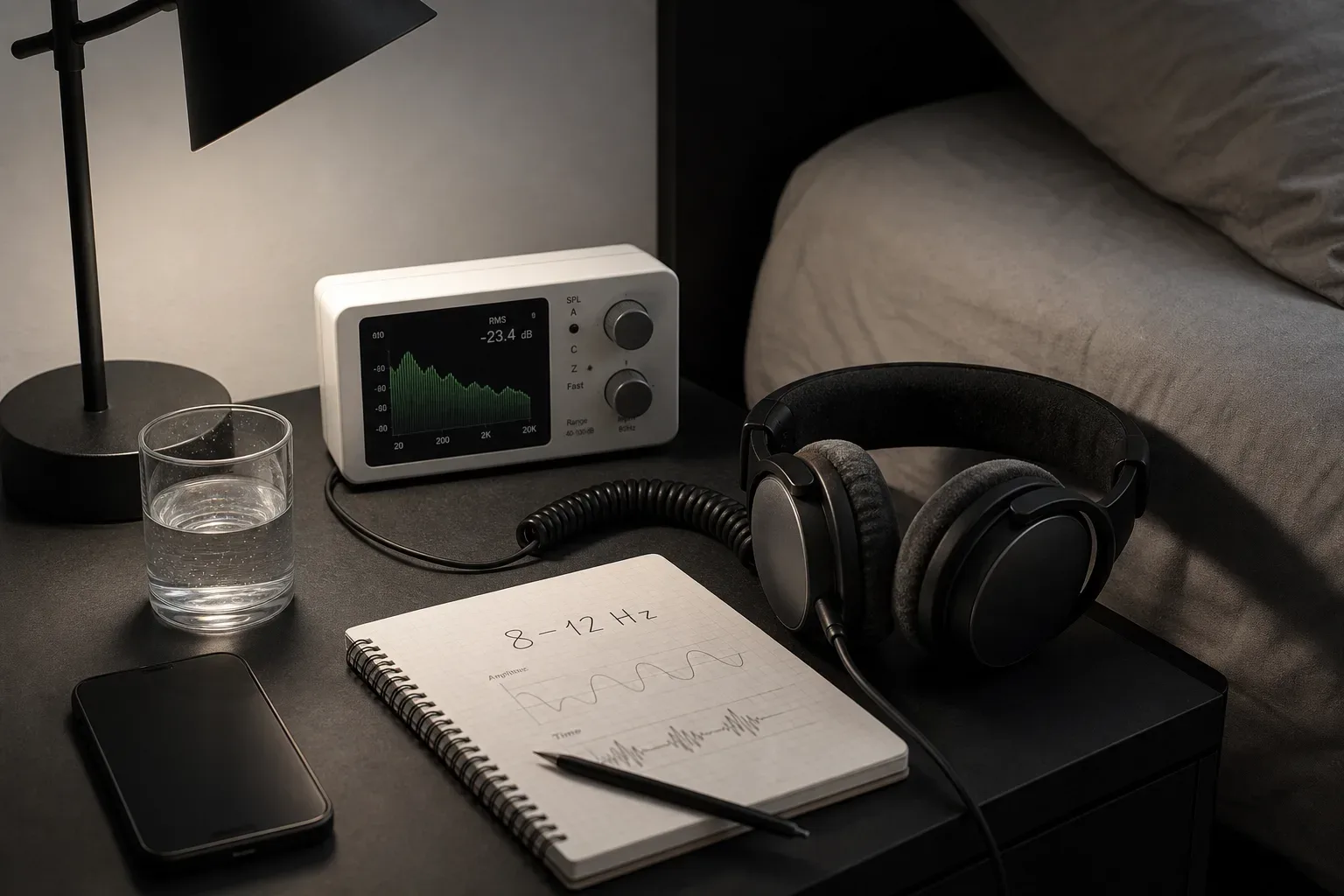
Alpha waves sleep tracks are best used before sleep, not as a deep-sleep engine. Alpha activity, roughly 8–12 Hz, belongs mostly to relaxed wakefulness. Under Dream-Self audio, keep it quiet, short, and behind the voice: useful for settling, less useful once you are already drifting.
What are alpha waves, and why do people connect them with sleep?
Alpha waves are 8–12 Hz brain rhythms linked most strongly with relaxed, eyes-closed wakefulness.
Hans Berger described the human alpha rhythm in 1929 using early EEG recordings, and the basic range still appears in clinical sleep language almost a century later. The American Academy of Sleep Medicine scoring manual separates relaxed waking rhythms from sleep stages: N1 tends to show low-amplitude mixed-frequency activity, often including theta around 4–7 Hz, while deeper N3 sleep is marked by slow waves around 0.5–2 Hz. That matters because alpha is not the signature of deep sleep.
The confusion is understandable. Alpha often shows up when the body is still and the eyes are closed, so it can feel sleep-adjacent. It is the doorstep, not the bedroom. A tone designed around 10 Hz may help some listeners move from alert planning into a quieter pre-sleep state, especially during the first 10–20 minutes of a wind-down.
A sound can prepare sleep without being sleep itself. That distinction keeps expectations plain. If an alpha track helps you stop checking the room, the phone, and the next day, it has already done useful work. If it keeps you measuring the pulse, counting the beat, or wondering whether it is working, it has become another task.
Alpha is not deeper sleep. It is a steadier edge of waking.
For tinnitus, sleep apnea, persistent insomnia, or sudden changes in hearing, use sound gently and speak with a qualified clinician. Audio can support a routine, but it should not be asked to diagnose or treat a medical condition.
Can alpha waves sit under Dream-Self audio without getting in the way?
Yes, alpha waves can sit under Dream-Self audio when the voice remains clearly in front and the rhythm stays almost forgettable.
The voice needs priority because the spoken recording is doing the main work. The AYA Method is a daily audio manifestation practice. Each day you listen to a short personalized recording, your Dream-Self Moment, narrated from the version of you who has already manifested the life you intend. Listening is the practice. Repetition is the work. The audio is the method.
Under that kind of recording, an alpha layer should behave like dim room tone. It should make the room feel less sharp without pulling language out of focus. In practical mixing terms, the spoken voice usually needs to sit several decibels above the bed. If you have to raise the volume to understand the words, the bed is too present.
A 2019 meta-analysis in Psychological Research reviewed 22 studies on binaural beats and found small effects across memory, attention, anxiety, and pain, with large variation between methods. That does not prove alpha beats will improve sleep, but it does support a cautious idea: rhythmic auditory stimulation can shift state for some people under some conditions. The condition matters.
Use this hierarchy when layering sound:
- Set the Dream-Self voice first, at a level you can hear without effort.
- Add the alpha bed until it is barely noticeable.
- Lower the bed another small step.
- Listen for 3 minutes, not 30 seconds, before judging it.
- If words blur, remove the bed.
The best background sound is the one that disappears at the exact moment attention needs the voice.
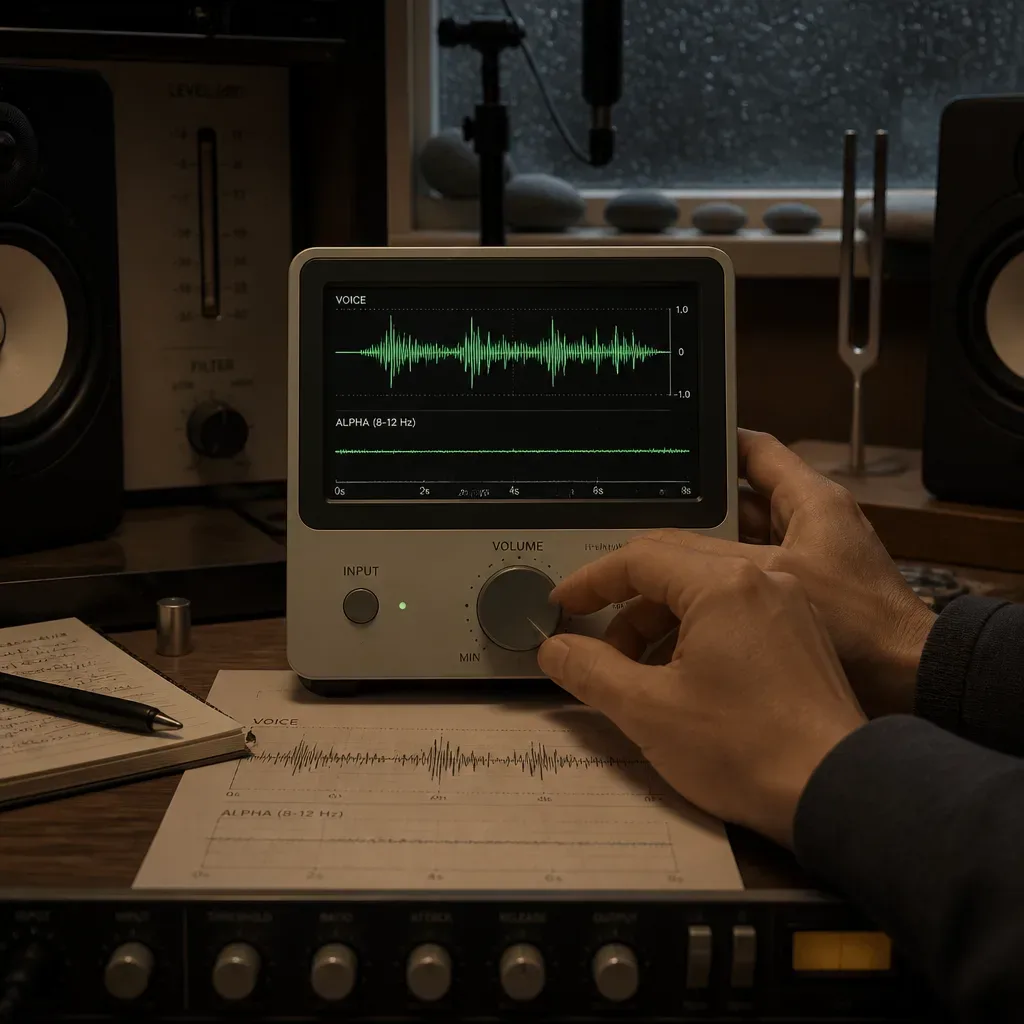
When should you use alpha waves in a night routine?
Use alpha waves during the first settling window, usually 10–30 minutes before you intend to sleep.
Timing is the quiet lever. If you play an alpha track while answering messages, the nervous system may pair that rhythm with alert behavior. If you start it after brushing teeth, lowering lights, and putting the phone away, the same 10 Hz pulse gets a cleaner job. The National Sleep Foundation has long recommended consistent bedtime routines, and many behavioral sleep protocols keep the final pre-bed period simple and repeatable.
For most listeners, alpha fits before lights-out audio or during a seated wind-down. It can sit under a Dream-Self Moment, a short breath count, or a slow stretch. Once you are lying in the dark and drifting, a steadier masking sound may be less intrusive than a noticeable beat. White noise masks across a broad band; brown noise puts more weight in low frequencies and tends to feel softer to people who dislike hiss.
Here is a plain comparison for tonight:
| Sound choice | Typical use | Frequency detail | Best moment |
|---|---|---|---|
| Alpha binaural beat | Relaxed wakefulness | 8–12 Hz perceived beat | Before sleep, under a voice |
| Theta-style beat | Drowsiness | 4–7 Hz perceived beat | After lights are low |
| Brown noise | Masking | More low-frequency content | All night if comfortable |
| Rain recording | Familiar masking | Broad, irregular spectrum | Wind-down or sleep |
| Silence | No added sound | 0 dB playback | If sound makes you monitor |
If you use headphones, keep the session short and low. For all-night playback, speakers are usually safer and less physically annoying. The World Health Organization has warned about unsafe listening levels in recreational audio; sleep use should sit far below daytime headphone habits.
What volume and mix settings protect the voice, the ear, and sleep?
Set the total playback low enough that the voice is clear but never intimate in the ear.
A useful pillow-side target is roughly 40–50 dB, if you can measure with a basic sound level app. Phone meters are not laboratory tools, but they are better than guessing. Normal conversation is often around 60 dB at 1 meter, and sleep audio usually belongs below that. If you wake and the recording feels loud, it was loud.
With binaural beats, headphones create the intended left-right difference, but headphones are not always the best sleep choice. They can press the ear, trap heat, and encourage higher levels because the sound feels private. If you use them, try a 10–20 minute timer. If you want sound through the night, a small speaker across the room is usually gentler.
For an alpha layer under spoken audio, think in foreground and floor. The voice is foreground. The alpha bed is the floor. A floor supports the room; it does not announce itself. Many audio engineers would start a background bed around 12–18 dB below a spoken vocal, then adjust by ear. You do not need software to copy the principle: set the voice, add the bed, then reduce the bed until it stops asking to be heard.
Watch for these signs that the mix is wrong:
- You strain to understand consonants.
- The beat feels like a flashing light.
- The carrier tone sounds sharp or nasal.
- You keep checking whether the track is working.
- You wake with tired ears or a tight jaw.
Your ear is not a willpower problem. If a sound irritates you at low volume, it is the wrong sound tonight.
Are binaural beats, solfeggio tones, or noise beds better for this use?
Binaural beats suit alpha timing most directly, while noise beds often work better when masking is the main need.
A binaural beat is an auditory illusion built from two nearby tones, one in each ear. For example, 200 Hz in the left ear and 210 Hz in the right ear can create a perceived 10 Hz beat. You can test the difference with a binaural beats generator, preferably at a low level and for a few minutes at a time. The illusion is real; the claims around it are mixed.
Noise is different. It does not try to suggest a brain rhythm. It masks change. A refrigerator click, a scooter outside, a partner turning over: these sounds become less distinct when a steady noise bed fills the gaps. That is why many people sleep better with white noise or brown noise than with a pure tone. The nervous system often responds less to a sound it can classify as steady.
Solfeggio tones have a different history. The tradition assigns meanings to frequencies such as 396 Hz, 528 Hz, and 639 Hz. Many listeners like them, and preference matters at bedtime. The evidence for specific solfeggio claims is limited, so it is clearest to treat them as tonal rituals rather than proven sleep tools. If you enjoy that frame, the Solfeggio frequencies guide explains the tradition without asking you to confuse story with measurement.
For Dream-Self audio, choose based on the job:
- Use alpha binaural beats when you want a short pre-sleep settling cue.
- Use brown noise when outside sound keeps breaking attention.
- Use rain when you want irregular softness and less mechanical repetition.
- Use silence when every layer starts to feel like work.
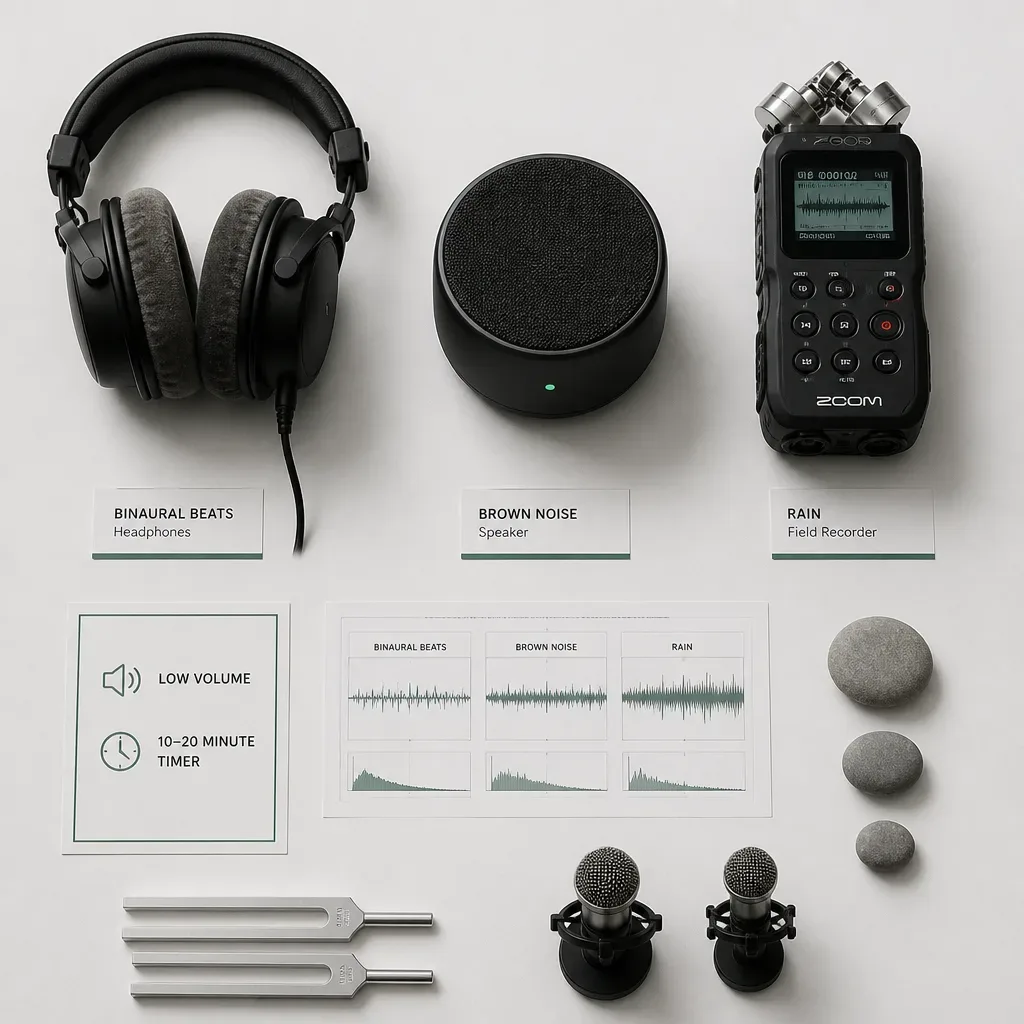
How do you know alpha waves are helping rather than keeping you awake?
Alpha waves are helping if you stop monitoring the sound and your bedtime behavior becomes simpler within a few nights.
Do not judge by one night. Sleep has normal variation, and the first night with any new sound is often a novelty test. A fair trial is 5–7 nights with the same timing, the same approximate volume, and the same track length. In behavioral sleep medicine, consistency is often more informative than a single strong reaction, especially when bedtime anxiety is involved.
Track only a few measures, because over-measuring sleep can become its own irritant. Note bedtime, approximate time to settle, number of remembered wake-ups, and how your ears felt in the morning. Four numbers are enough. If you use a wearable, treat its sleep-stage labels cautiously; consumer devices estimate stages indirectly and do not replace EEG.
A simple decision rule works better than chasing perfect data:
- Try the alpha layer for 5 nights.
- Keep the volume and timing stable.
- Remove it if it delays sleep on 2 or more nights.
- Keep it if it makes the routine easier without louder playback.
- Switch to noise or rain if masking is the real need.
The sign of a good sleep sound is not drama. It is fewer negotiations with the room.
If the Dream-Self voice feels clearer, the body settles sooner, and you are not tempted to adjust settings after pressing play, alpha is doing its small job. If you find yourself listening like a technician, take the hint. The cleanest bed may be brown noise, rain on canvas, or nothing at all.
Let the sound be small enough that sleep does not have to answer it.