sleep science
4-7-8 Breathing Sleep Routine Before Dream-Self Audio
A quiet 4-7-8 breathing sleep routine to settle your body before Dream-Self audio, with timing, volume guidance, and evidence notes.
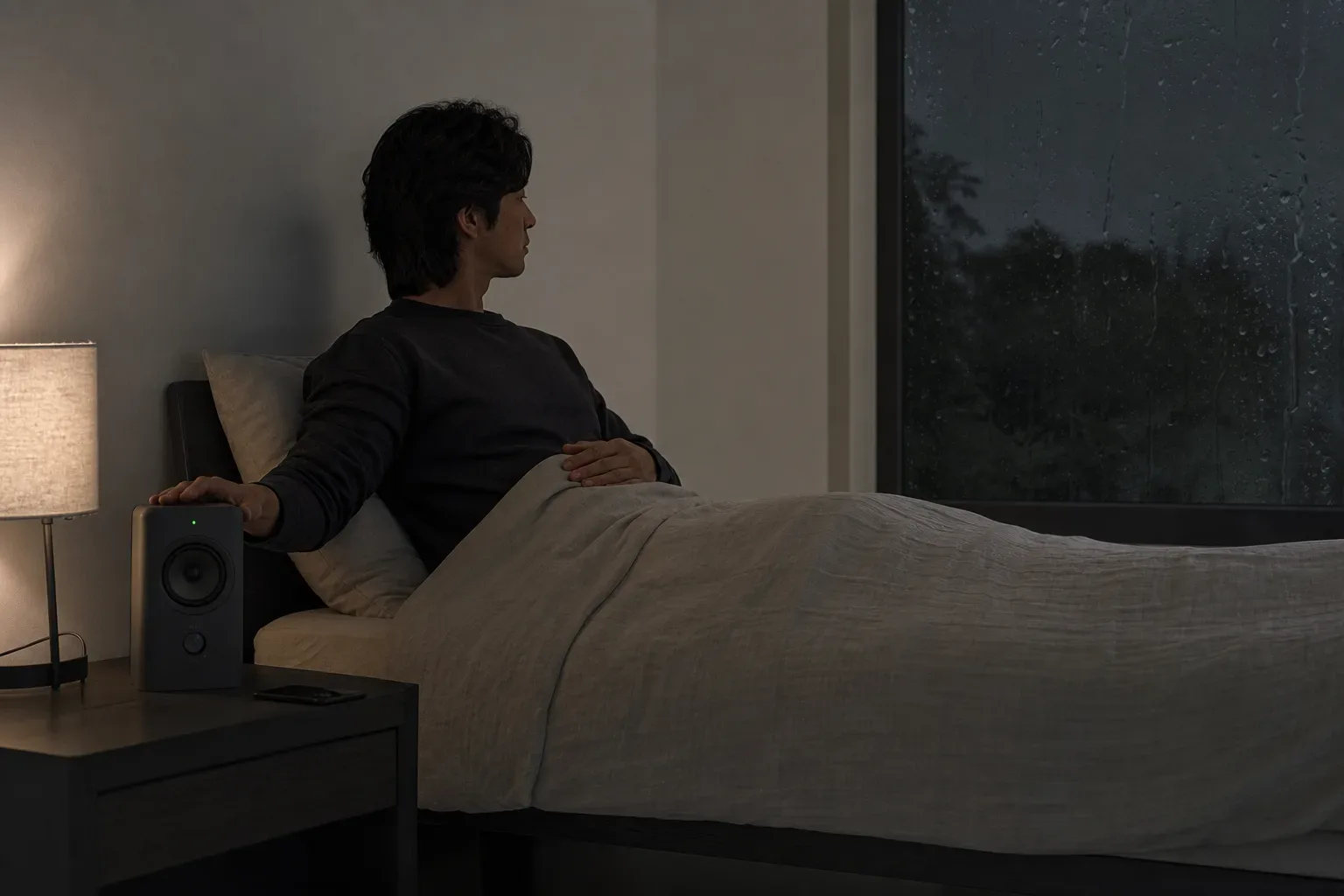
4-7-8 breathing sleep practice is a short pre-audio routine: inhale for 4 counts, hold for 7, exhale for 8, then press play on your Dream-Self audio at low volume. The breath pattern settles attention first, so the recording can be heard without mental strain.
What does 4-7-8 breathing do before sleep audio?
4-7-8 breathing gives the body a slow rhythm and gives the mind a simple count to hold.
The pattern is usually taught as 4 seconds in, 7 seconds held, and 8 seconds out. One full round takes about 19 seconds, so 4 rounds take roughly 76 seconds before pauses. Dr. Andrew Weil popularized this format, though the research base is stronger for slow breathing in general than for this exact ratio. A 2018 review by Zaccaro and colleagues in Frontiers in Human Neuroscience found that slow breathing practices tend to increase vagal activity and improve measures linked with calm attention.
Mechanically, the long exhale matters. Exhalation is associated with parasympathetic influence, often measured through heart-rate variability. Laborde, Mosley, and Thayer wrote in a 2017 review that HRV is one useful window into self-regulation, though it is not a mood meter. In practice, the count reduces choice. You are not deciding what to think about for 2 minutes. You are measuring air.
A breath count is a small rail for attention when the mind is too tired to steer.
Before Dream-Self audio, that rail is useful. Personalized audio asks for receptive listening. If the nervous system is still scanning the hallway, the inbox, or the baby monitor, the words have to compete. Slow breathing lowers the competition. It does not force sleep. It prepares a quieter channel.
If you get dizzy, shorten the hold. If you feel effort in the throat, soften the inhale. Breathwork should not feel like a lung test. The American Academy of Sleep Medicine and Sleep Research Society recommend at least 7 hours of sleep for most adults; a 2-minute breathing practice is not a replacement for enough time in bed.
How do you do the routine without making it another task?
Keep the routine under 8 minutes, repeat the same order, and remove decisions before you lie down.
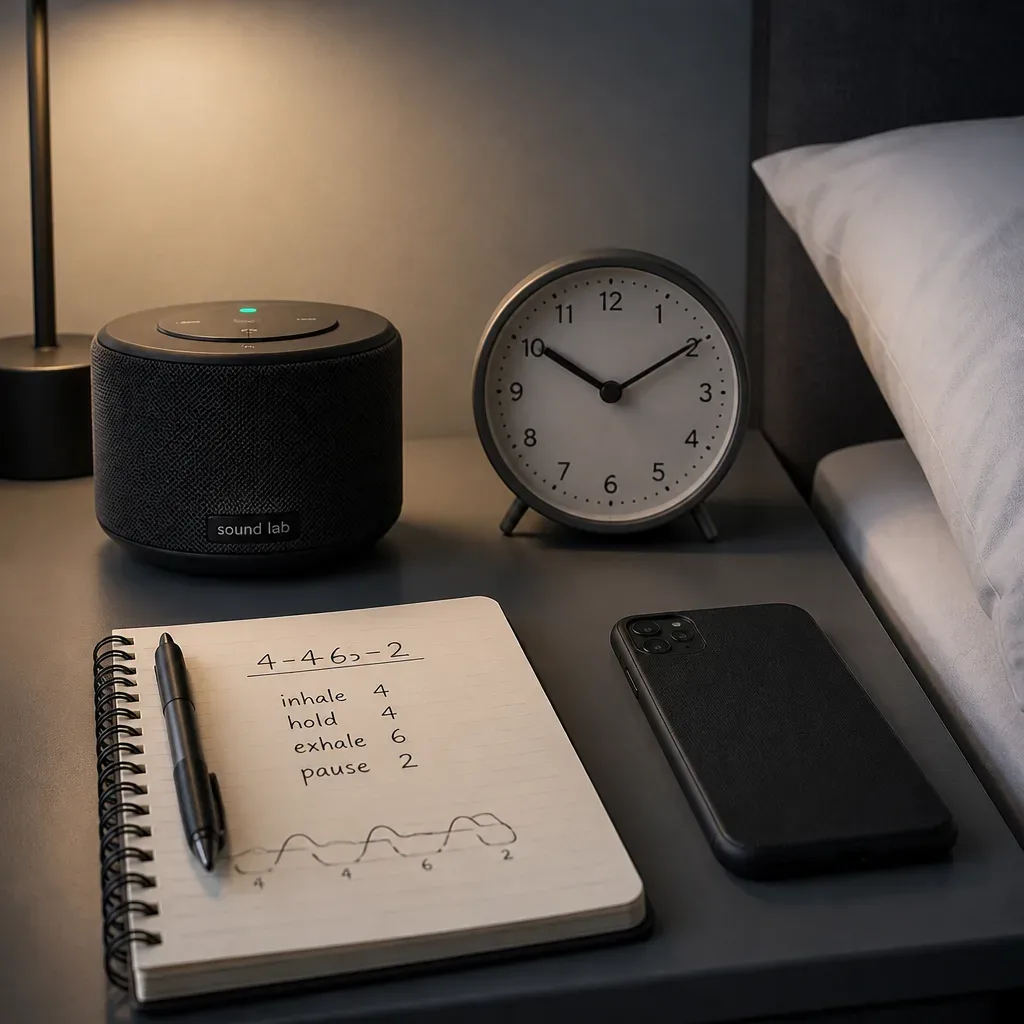
Here is the plain version I use when testing sleep audio with a decibel meter on the bedside table. It has 5 parts and no special gear. If you use a speaker, set it before the first breath so you do not wake yourself with a bright screen after the final exhale.
- Put the phone face down or lock the screen.
- Set your speaker or headphones to a soft level.
- Inhale through the nose for 4 counts.
- Hold for 7 counts, only if the hold is comfortable.
- Exhale for 8 counts, then repeat for 3 or 4 rounds.
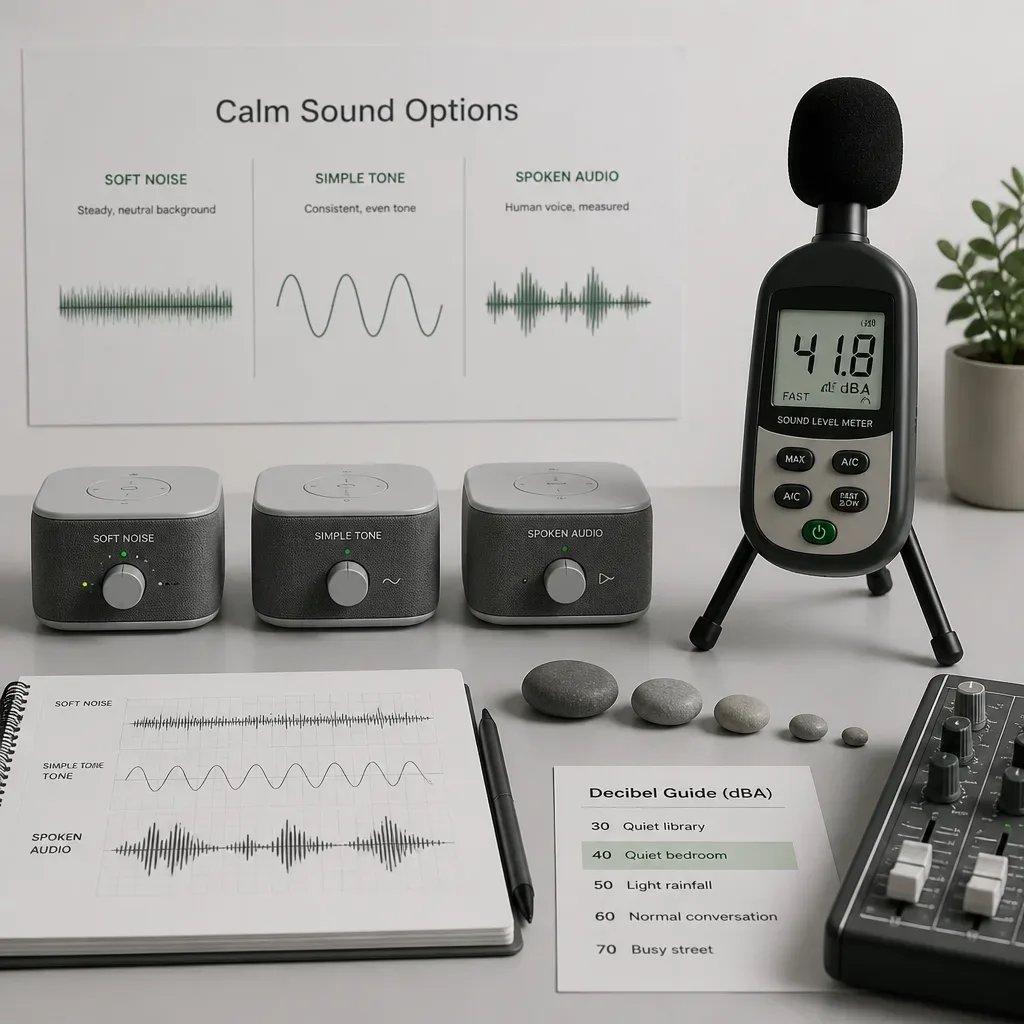
For volume, quiet is the design. Many bedrooms sit around 30 dBA at night. A soft audio level in the 35 to 45 dBA range is often enough if the room is already calm; 50 dBA may be reasonable if you are masking traffic, but louder is rarely better. The CDC notes that long or repeated exposure above 70 dBA can contribute to hearing risk over time. Keep sleep audio well below that.
If you are a parent, use extra care. A 2014 study in Pediatrics measured infant sleep machines and found some could exceed 85 dBA at close distance. That paper focused on babies, but the principle is useful for everyone: distance lowers risk. Put the speaker across the room, not beside an ear.
The routine should feel almost boring. Boring is not a flaw at bedtime. It is the point. A system that needs motivation at 11:40 p.m. is a system with too many parts.
Where does Dream-Self audio fit in the sequence?
Dream-Self audio fits after the breathing, when your attention has settled but you are still awake enough to listen.
This is where the AYA Method belongs in the routine. The AYA Method is a daily audio manifestation practice. Each day you listen to a short personalized recording, your Dream-Self Moment, narrated from the version of you who has already manifested the life you intend. Listening is the practice. Repetition is the work. The audio is the method.
That order matters. Breath first. Audio second. Sleep third if it comes. If you start the recording while your breathing is still irregular, you may spend the first minute managing your body instead of hearing the voice. If you wait too long after breathing, you may drift into planning or checking. A 10 to 20 second pause is enough.
Use this simple timing table:
| Part | Time | What to measure |
|---|---|---|
| Room setup | 1 minute | Light low, audio queued, volume soft |
| 4-7-8 breathing | 2 to 4 minutes | 3 or 4 comfortable rounds |
| Quiet pause | 10 to 20 seconds | No phone, no analysis |
| Dream-Self audio | 2 to 5 minutes | Listen once, at low volume |
| Sleep transition | As needed | Let silence or gentle masking continue |
There is no prize for perfect counting. If 4-7-8 feels too tight, use 3-5-6. If you are congested, breathe through the mouth. If you feel sleepy after 2 rounds, stop there and play the audio. A routine earns trust by fitting the body you brought to bed, not the body you planned to have.
If you have chronic insomnia, tinnitus that has changed recently, panic symptoms, or possible sleep apnea, ask a qualified clinician. Sleep audio can support a wind-down routine, but it should not hide symptoms that need care.
What should you play if your mind is still loud afterward?
Use masking sound only when it solves a real acoustic problem, and keep Dream-Self audio as the short intentional listen.
Some nights need a second layer. A neighbor’s television, plumbing knock, or road hiss can pull attention back out of the body. Masking works by reducing contrast. It does not erase the sound; it makes sudden changes less sharp. If that is your problem, press play below and listen for the difference with the White noise generator + guide. White noise contains equal intensity per hertz, which can sound bright. Pink and brown noise tilt lower and often feel softer for sleep.
For a steadier tone-based option, the Binaural beats generator + guide explains the mechanism plainly. A binaural beat is an auditory illusion created when each ear receives a slightly different tone. Research is mixed. Small studies report changes in relaxation or attention, while reviews often note varied methods and modest sample sizes. If you use binaural beats, headphones are required, and that makes overnight use less ideal for many sleepers.
Solfeggio tracks are different again. The Solfeggio frequencies guide covers the tradition respectfully and separates it from clinical claims. Many people like 528 Hz or 432 Hz because the tone feels steady and familiar. That preference is real as a listening preference. Evidence for specific sleep effects from named frequencies remains limited.
A quick comparison helps:
| Sound | Best use | Caution |
|---|---|---|
| White noise | Masking sharp room sounds | Can feel hissy if too loud |
| Pink or brown noise | Softer masking for sleep | Keep volume low |
| Binaural beats | Short focused listening | Requires headphones |
| Solfeggio tones | Ritual and steady tone preference | Tradition is not the same as clinical proof |
Sound prepares the room; the voice gives the practice its shape.
What does the evidence actually support?
The evidence supports slow breathing as a plausible calming practice, while the exact 4-7-8 formula and manifestation audio routines have less direct sleep-specific research.
That distinction keeps the routine honest. Slow breathing has measurable physiological pathways. Zaccaro et al., 2018, reviewed studies connecting slow breathing with autonomic, emotional, and attentional changes. The review did not say one ratio is best for everyone. It described a pattern: slower breathing often shifts the system toward regulation.
Sleep research also supports routine. The American Academy of Sleep Medicine’s adult sleep duration guidance sets 7 or more hours as the target for most adults. Cognitive Behavioral Therapy for Insomnia, or CBT-I, remains a first-line treatment for chronic insomnia in clinical guidelines because it addresses conditioning, schedule, and sleep-related thoughts. A 4-7-8 breathing sleep routine is smaller than CBT-I. It is a cue, not a cure.
Still, cues matter. In behavioral science, repetition in a stable context helps actions become more automatic. A 2009 study by Lally and colleagues in the European Journal of Social Psychology found habit formation varied widely, with an average of 66 days for a new behavior to become automatic. That number is often oversimplified, but the range is useful: your routine may need weeks, not 2 nights.
Audio has its own research limits. Music and sound interventions for sleep show mixed but promising results depending on population, protocol, and outcome measure. Many studies use self-reported sleep quality, which is useful but not the same as polysomnography. The safest claim is modest: quiet, predictable audio can help some people reduce arousal and mask disturbance.
The practical test is simple. Track 7 nights. Note bedtime, number of breathing rounds, audio volume, time to sleep by your best estimate, and wake-ups. A sleep diary recommended in CBT-I often uses similar plain observations. If the routine helps, keep it. If it becomes one more thing to worry about, simplify it.
How do you make the routine reliable tonight?
Make the first version small enough that you can do it when you are already tired.
Reliability is mostly design. Put the audio where one tap starts it. Use a speaker that remembers a safe volume after a power cut. If you use an app, open it before brushing your teeth. I learned this the hard way with a newborn: any tool that requires a login at 3 a.m. is not a sleep tool. It is a small lamp with paperwork.
Use these guardrails:
- Keep the full routine under 8 minutes.
- Do only 3 rounds if 4 rounds feels like work.
- Set volume before you lie down.
- Use a timer if masking sound might run all night.
- Choose one audio path for 7 nights before changing it.
- Keep children’s sleep sound lower and farther away than adult bedside audio.
If the room itself is the problem, fix the room first. A rattling window, bright charger light, or loud vent can defeat a good routine. For masking, the White noise generator + guide is a better first test than buying hardware. Listen for 60 seconds at low volume and ask one question: does the room feel less sharp?
Then run the sequence in the same order: dim, breathe, pause, audio, silence or masking. The order is the memory aid. The quieter it is, the more likely you will repeat it tomorrow.
The best sleep routine is not the most complete one. It is the one that still works when you are half asleep.
One breath, one count, one soft voice in the dark.