sleep science
Morning Sunlight Sleep: Set Up Tonight’s Audio
Use morning sunlight sleep timing to steady your circadian clock, protect your wind-down, and prepare tonight’s Dream-Self audio with less friction.
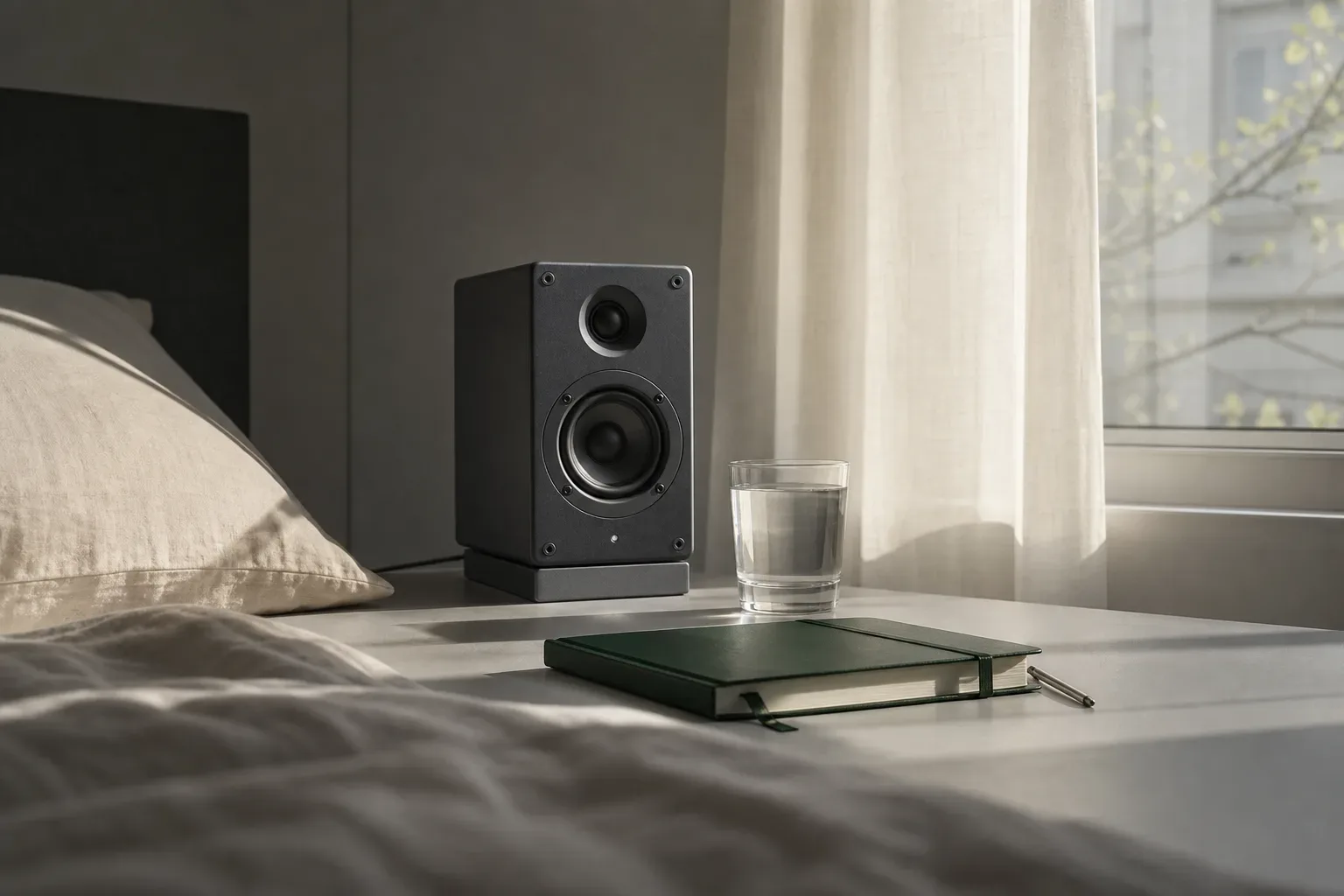
Morning sunlight sleep timing works because light is the strongest daily signal for your circadian clock. Get outside soon after waking, keep it brief and consistent, then make tonight’s audio decision before bedtime. The morning sets the timing; the evening sound keeps the room steady enough to hear your Dream-Self audio.
Why does morning sunlight sleep timing work?
Morning sunlight helps sleep by telling the brain what time the day has started.
The mechanism is plain and measurable. Light enters the eye and activates intrinsically photosensitive retinal ganglion cells, often shortened to ipRGCs. These cells contain melanopsin and send timing information to the suprachiasmatic nucleus, a small structure in the hypothalamus often described as the body’s master clock. A 2002 paper in Science helped establish these melanopsin-containing cells as a distinct light-sensing pathway, separate from ordinary image vision.
That clock signal matters later. When morning light is strong and consistent, the body tends to produce melatonin earlier in the evening and reduce it more cleanly in the morning. In controlled circadian studies, light can shift biological timing by hours, depending on when it arrives. Morning light usually advances the clock; bright light late at night usually delays it.
This is why sunlight is different from another sleep trick. It doesn’t sedate you. It doesn’t cover noise. It changes the timing conditions under which sleep becomes easier. The CDC has reported that roughly 1 in 3 U.S. adults get less than the recommended amount of sleep, and timing drift is one common pressure among many, along with work hours, stress, alcohol, and screens.
Morning light is not deeper sleep in a bottle. It is a time stamp your nervous system can read.
In practice, treat the morning as the setup for night. If your target bedtime is 10:30 p.m., the work starts at 7:00 a.m. with outdoor light, not at 10:25 p.m. with a phone in your hand and six audio choices open. Sleep likes fewer decisions.
How much morning light do you need, and when should you get it?
Most people should aim for 5 to 20 minutes of outdoor light within the first hour after waking.
That range is deliberately practical. Outdoor daylight can exceed 10,000 lux on a clear morning, while a typical indoor room may sit around 100 to 500 lux. Even cloudy outdoor light can be many times brighter than indoor light. You don’t need to stare at the sun. Stand or walk where the sky is visible, keep your eyes open naturally, and avoid sunglasses for those few minutes if it’s comfortable and safe.
The timing is more important than making it perfect. The circadian system responds to contrast: bright days, dim nights. In laboratory phase-response work, including studies by researchers such as Charles Czeisler and colleagues, light exposure at different clock times reliably shifted melatonin rhythms. The exact size of the shift depends on intensity, duration, prior light history, and your chronotype.
Use this simple table as a field guide, not a prescription:
| Morning condition | Practical exposure target | Notes |
|---|---|---|
| Clear outdoor light | 5–10 minutes | Face open sky; don’t stare at the sun |
| Cloudy outdoor light | 10–20 minutes | Usually still brighter than indoors |
| Through a window | 20–30 minutes | Weaker signal; useful when outside isn’t possible |
| Bright light box | Follow device guidance | Ask a clinician if you have risk factors |
If you wake before sunrise, keep indoor light low until natural light is available, then get outside when it’s safe. If you work night shifts, the rules change; timed light and darkness become more clinical, and a sleep specialist can help. Light is a tool. Tools need context.
What should you set up tonight so tomorrow morning works?
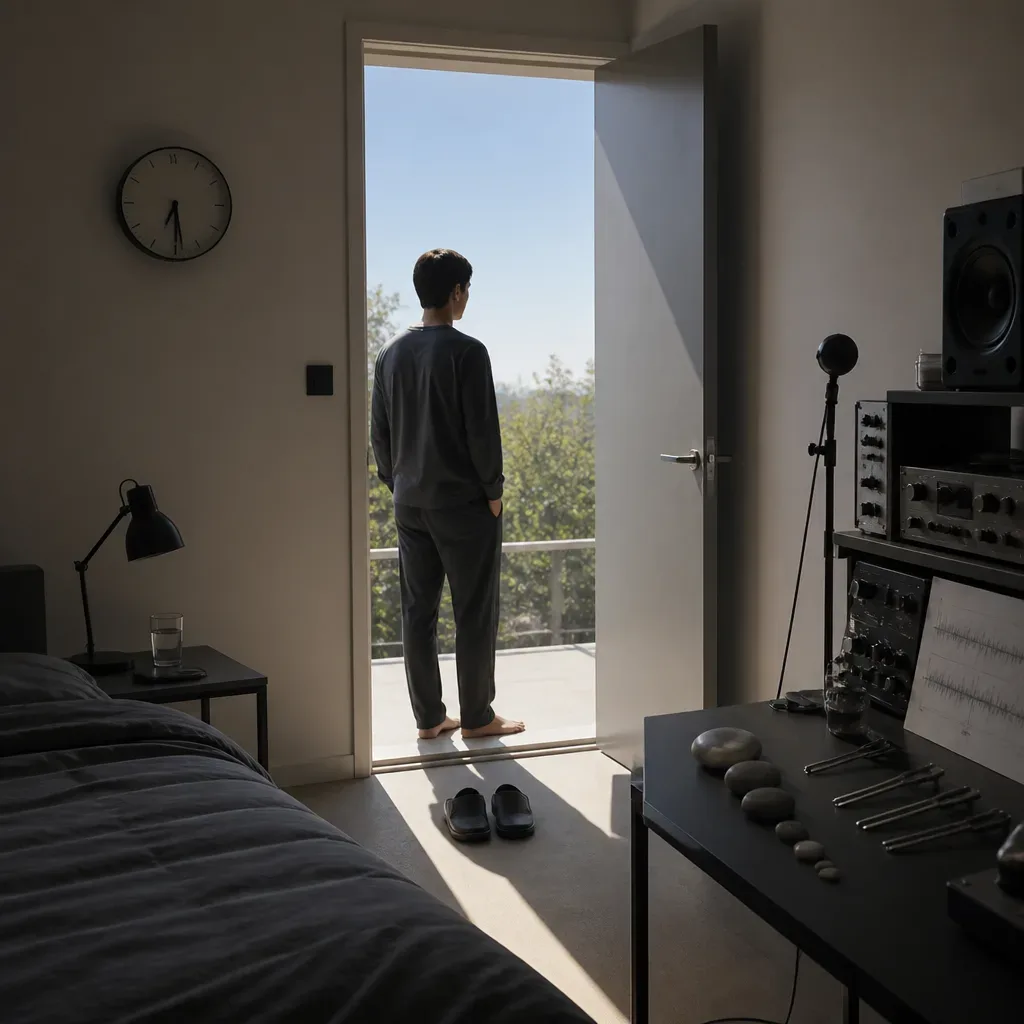
Tonight works better when you remove morning friction before you sleep.
The first decision is wake time. Pick one wake time you can hold within about 30 minutes for the next 7 days. AASM guidance recommends at least 7 hours of sleep for most adults, so count backward before you commit. If you need to wake at 6:45 a.m., a midnight bedtime gives you too little room even if your routine is quiet.
The second decision is the light path. Put shoes, a coat, or a mug where you’ll actually see them. If you have a balcony, front step, courtyard, or safe sidewalk loop, choose it now. Design beats willpower at 6:45 a.m. I learned this with a newborn: any routine that required searching for socks at 3 a.m. eventually failed.
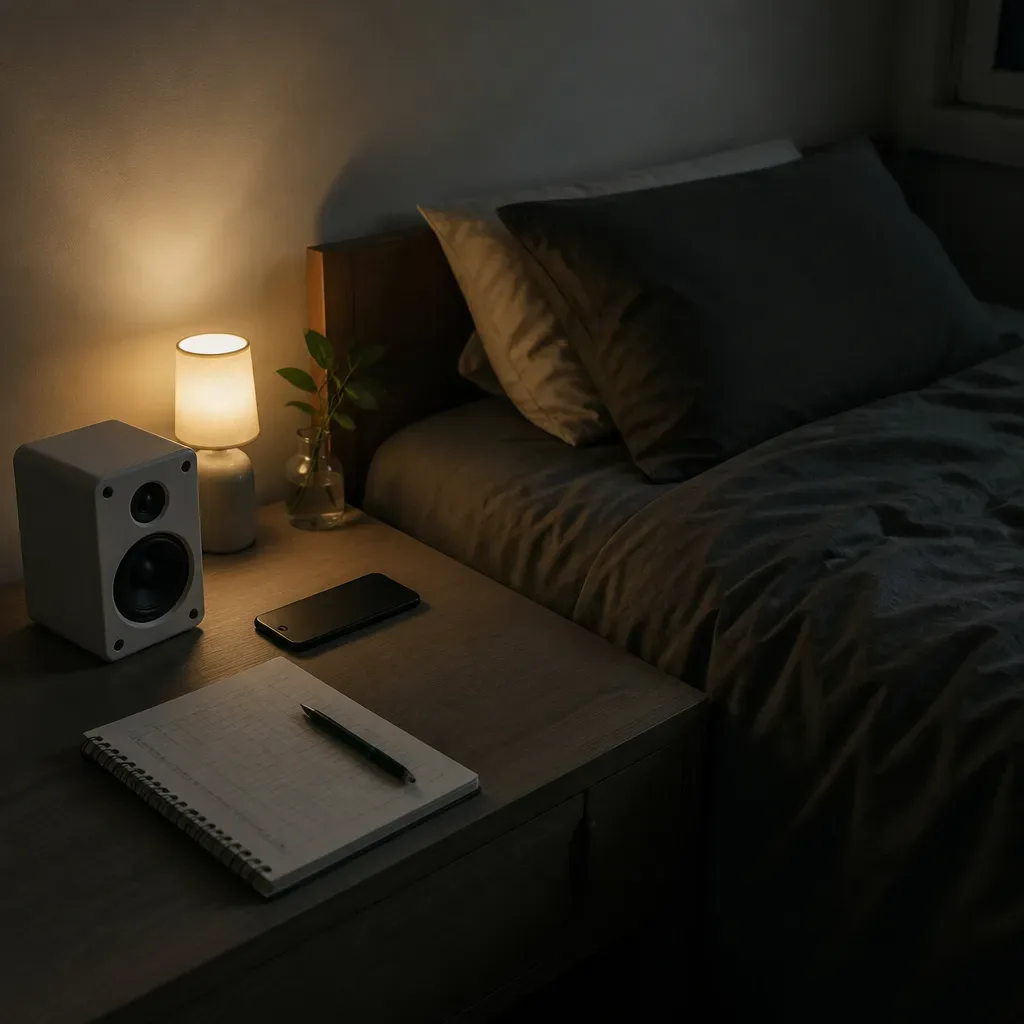
Set up the night side as well. Reduce bright overhead light in the last 60 minutes. Charge your phone away from the bed if you can. Queue tomorrow’s alarm and tonight’s audio before the wind-down starts. Blue-enriched light in the evening can suppress melatonin; a well-cited 2015 study in PNAS found that evening light-emitting e-reader use delayed circadian timing compared with print reading.
A clean setup can be this plain:
- Choose tomorrow’s wake time.
- Put outdoor clothes near the door.
- Set the alarm once.
- Queue one sound bed, not five.
- Place the speaker 1 to 2 meters from the bed.
- Lower the volume before pressing play.
The goal is not a perfect bedroom. The goal is fewer moving parts at the fragile minute.
How should sound support tonight’s Dream-Self audio?
Sound should prepare the room, then the Dream-Self audio should be easy to hear at a low volume.
Start with masking. If traffic, hallway doors, or a refrigerator edge keeps catching your attention, use a steady sound bed. White noise spreads sound across frequencies and can mask sudden changes; you can test it with the White noise generator + guide. Brown noise has more low-frequency weight and less high hiss, which some nervous systems prefer. Keep it soft. For children, the American Academy of Pediatrics has warned about infant sound machines that can exceed safe levels when placed too close or too loud; around 50 dB at the child’s ear is a conservative reference point.
Then decide whether tones help or distract. A binaural beat is an auditory illusion created when each ear receives a slightly different tone; the brain perceives a beat at the frequency difference. Evidence is mixed. A 2019 meta-analysis in Psychological Research reported small effects across studies, with large variation in methods. If you want to compare, use the Binaural beats generator + guide before bedtime, not after you’re already tired.
Solfeggio frequencies sit in a different category. The tradition assigns meaning to tones such as 396 Hz, 528 Hz, and 639 Hz. Many people like the sound and ritual; the clinical evidence for specific life outcomes is limited. We can respect the tradition and still measure the room. The Solfeggio frequencies guide is useful if you want a calm tone vocabulary without treating a number as medicine.
This is where the AYA Method fits naturally. The AYA Method is a daily audio manifestation practice. Each day you listen to a short personalized recording — your Dream-Self Moment — narrated from the version of you who has already manifested the life you intend. Listening is the practice. Repetition is the work. The audio is the method.
Noise masks the room. Tones can settle attention. The voice is the practice.
What is the 12-minute setup for morning sunlight sleep?
A 12-minute setup is enough to connect tomorrow’s light with tonight’s audio without turning bedtime into a project.
Use the routine below for one week. The 7-day length matters because a single night is noisy data. Sleep varies with meals, alcohol, conflict, temperature, illness, and childcare. In behavioral sleep research, diaries are often used for 1 to 2 weeks because patterns become clearer than any one night’s story.
The 12-minute setup
- Minute 0–2: choose tomorrow’s light window. Write the wake time and first outdoor moment. Example: wake 6:50 a.m., outside 7:05 a.m.
- Minute 2–4: remove one barrier. Put shoes, keys, glasses, or stroller supplies by the door.
- Minute 4–6: choose the sound bed. Pick white noise, brown noise, rain, or a plain tone. Don’t browse later.
- Minute 6–8: set safe volume. Start lower than you think. If you use a phone app meter, treat it as approximate, not clinical.
- Minute 8–10: queue Dream-Self audio. Place it after the sound bed or use a quiet background underneath.
- Minute 10–12: dim and stop adjusting. The last act is pressing play, not tuning.
Here is the operating logic:
| Part of the day | Input | Job |
|---|---|---|
| First hour after waking | Outdoor light | Set circadian timing |
| Afternoon | Caffeine cutoff, movement | Preserve sleep pressure |
| Last hour before bed | Dim light, steady sound | Reduce alerting signals |
| Bedtime audio | Dream-Self Moment | Daily listening practice |
Keep the speaker away from your head. I use 1 to 2 meters as a normal adult starting point and farther for children when possible. If you share a room, measure for the person closest to the speaker, not the person who controls the volume. The quietest effective level is the right level.
What if weather, children, or shift work interrupts the plan?
Use the strongest consistent cue available, then protect the next night rather than chasing perfection.
Bad weather is not failure. Cloudy outdoor light is still useful, and 10 minutes under a gray sky can beat 30 minutes under kitchen bulbs. If you can’t go outside, sit near the brightest window you have. If you use a light box, follow the manufacturer’s distance and duration instructions; many clinical devices are designed around 10,000 lux at a specified distance, but the dose changes quickly when you move it.
Children make this more mechanical. Put the stroller blanket, carrier, or toddler shoes by the door. Keep sound machines conservative. A 2014 study in Pediatrics measured several infant sleep machines and found that some could exceed recommended occupational noise limits when used at maximum volume close to the crib. The lesson is simple: distance and volume are not decorative details.
Shift work needs a different plan because morning sunlight after a night shift can wake the clock when you need it to stand down. If you drive home after sunrise, sunglasses may help reduce light exposure, but safety comes first. Chronic insomnia, sleep apnea symptoms, severe daytime sleepiness, tinnitus, or mood instability deserve professional care, not another audio tweak.
When a night breaks, don’t punish the morning. Get the next clear cue. Eat at normal times. Avoid a 90-minute late nap unless you truly need recovery. Then return to the same audio setup at night. A routine earns trust by surviving ordinary disruption.
How do you know if morning sunlight is improving sleep?
Track four numbers for 7 days and look for trend, not drama.
The four numbers are wake time, sunlight minutes, bedtime, and sleep latency, which means roughly how long it took to fall asleep. You can add night awakenings if you want, but don’t turn the diary into a second job. The National Sleep Foundation often describes 10 to 20 minutes as a common sleep-onset range for healthy sleepers, though normal nights vary.
Use a note like this:
| Day | Wake time | Outdoor light | Bedtime | Time to fall asleep |
|---|---|---|---|---|
| Mon | 6:50 | 12 min | 10:35 | 25 min |
| Tue | 6:45 | 15 min | 10:30 | 18 min |
| Wed | 7:05 | 8 min | 10:50 | 35 min |
After 7 days, ask three plain questions. Did wake time get steadier? Did sleepiness arrive earlier or with less force? Did audio setup become less fiddly? If the answer is yes, keep the structure and adjust only one thing at a time. If nothing changes after 2 weeks, check the obvious variables: evening light, caffeine after 2 p.m., alcohol, room temperature, and inconsistent wake time.
One more measurement helps: listen for irritation. If a tone makes you monitor it, change it. If white noise feels sharp, try a lower sound such as brown noise or rain. Sound is not better because it is more complex. Sound is better when it stops asking for attention.
Morning light gives the clock a clear mark; tonight, keep the room quiet enough to hear what you chose.