frequencies binaural
432 Hz Sleep Music Under Dream-Self Audio: Setup
How to use 432 hz sleep music under Dream-Self audio, what the claims can and can't say, and how to set safe levels tonight.
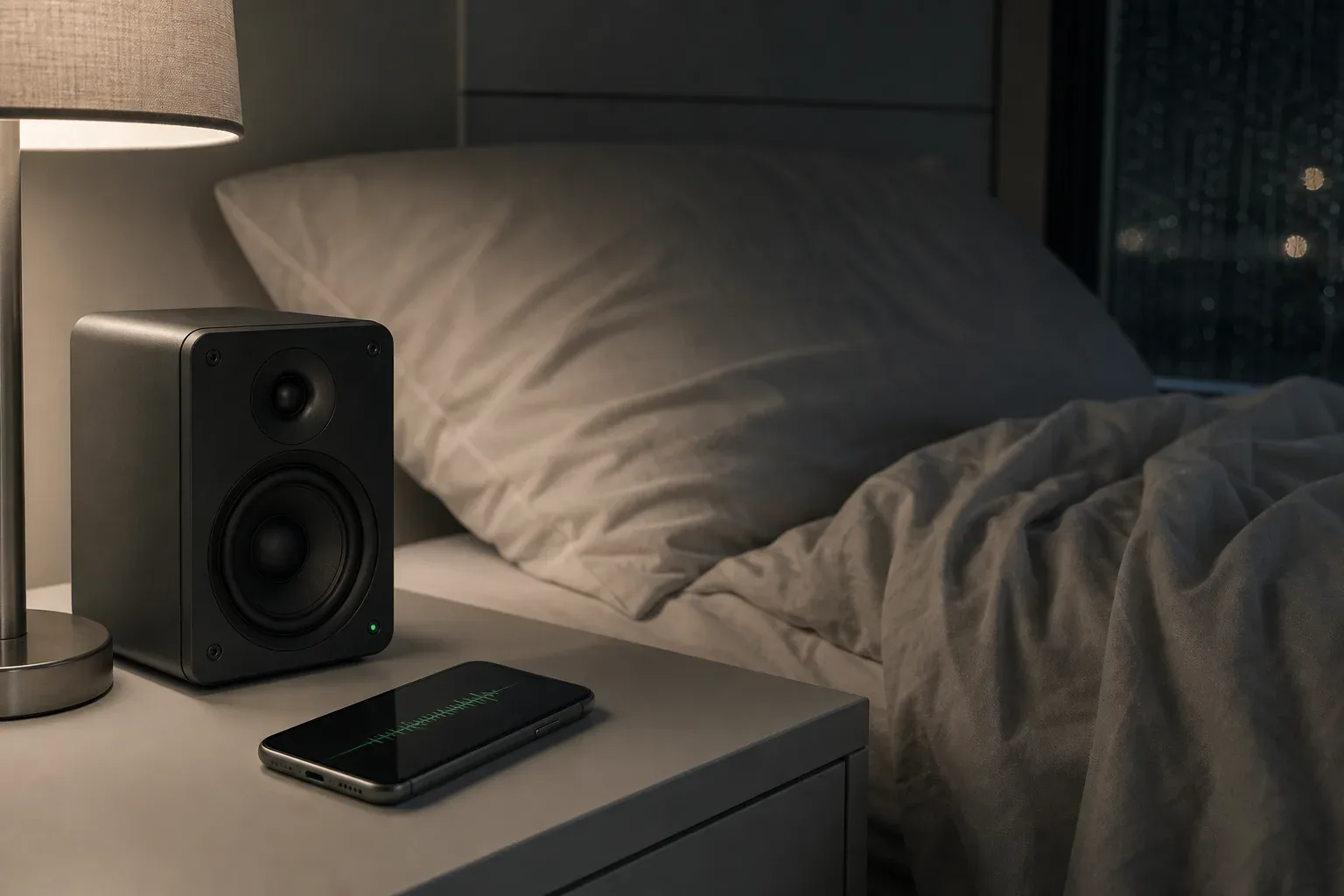
432 hz sleep music is music tuned so A4 sits at 432 Hz instead of the modern 440 Hz reference. It can work as a quiet bed under Dream-Self audio when it stays low, steady, and wordless. The evidence for 432 Hz itself is limited; the routine, volume, and repetition matter more.
What is 432 Hz sleep music, exactly?
432 Hz sleep music is ordinary music tuned to a different pitch reference, not a separate sleep technology.
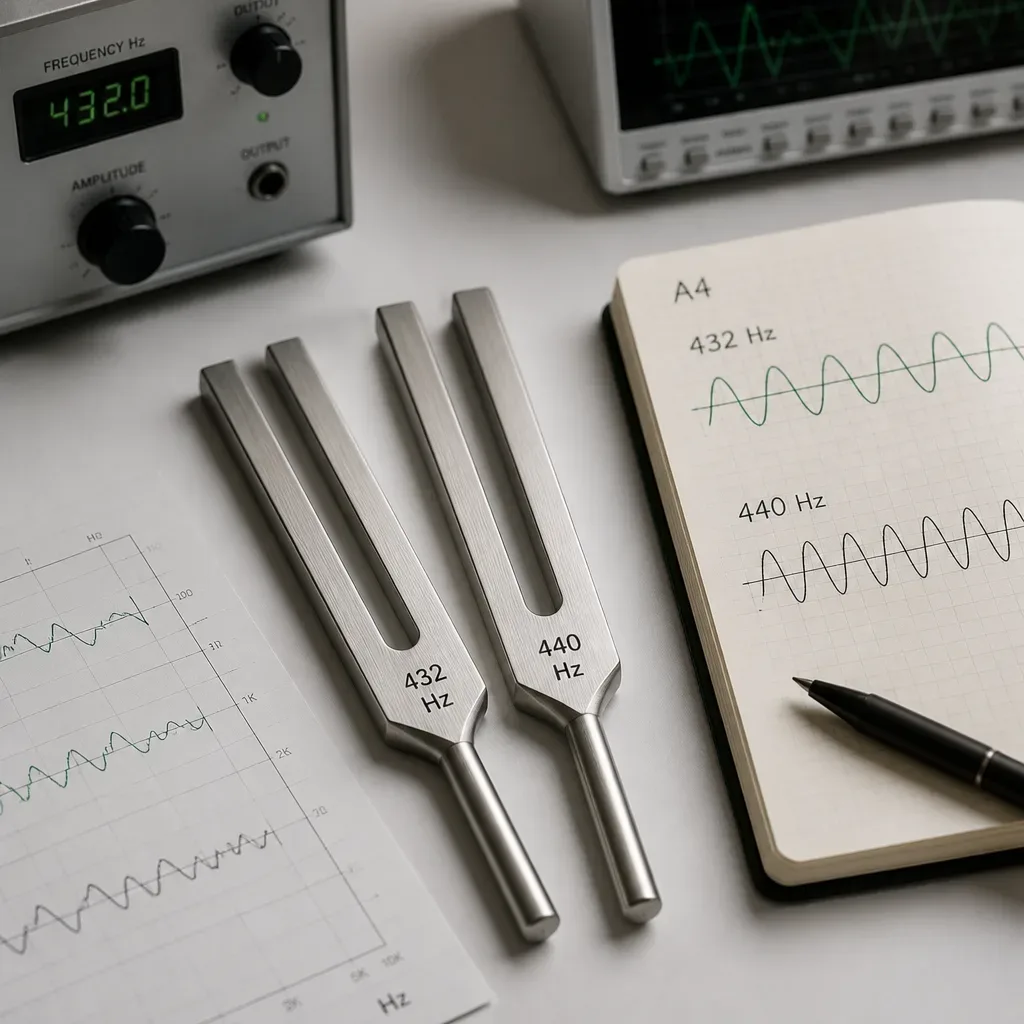
Most modern Western recordings use A4 = 440 Hz, a standard confirmed by ISO 16 in 1975 after decades of pitch variation across orchestras and broadcasters. In a 432 Hz recording, every note is tuned slightly lower, by about 31.8 cents, which is less than one third of a semitone. You may hear that as a softer or lower-feeling track, but the difference is modest when the arrangement, tempo, and instrument choices stay the same.
That matters because many claims about 432 Hz are really claims about slow music, lower volume, reduced brightness, and bedtime repetition. A piano track at 60 beats per minute, low-passed gently above 8 kHz, may feel more restful than a bright track at 96 beats per minute regardless of tuning. Pitch reference is one variable. Sleep sound has many.
432 Hz also sits near frequency traditions that listeners may already know, but it isn’t the same as the modern solfeggio list. The Solfeggio frequencies guide covers tones such as 396 Hz, 528 Hz, and 852 Hz, which come from a different modern lineage of claims. A ritual can be meaningful without being mechanically proven.
| Term | Plain meaning | What changes |
|---|---|---|
| 440 Hz tuning | A4 is set to 440 cycles per second | Current standard reference |
| 432 Hz tuning | A4 is set to 432 cycles per second | Whole track shifts slightly lower |
| 432 Hz tone | A single sine or drone at 432 Hz | One fixed pitch, not a full song |
| Sleep music | Slow, quiet music for bedtime | Tempo, texture, volume, repetition |
The sentence worth keeping is plain: 432 Hz is a tuning choice, not a sleep guarantee.
Are the claims about 432 Hz sleep music evidence-based?
The evidence for 432 Hz as a special sleep frequency is thin, while the evidence for calming music before sleep is stronger.
A Cochrane review on music for insomnia, first published in 2015, found that music may improve subjective sleep quality, but the included trials were small and varied in method. Later reviews have reached a similar practical point: music can help some people sleep, especially when it’s preferred, slow, and used consistently for several weeks. The number you can use tonight is simple: a 20 to 45 minute wind-down track is more realistic than an all-night experiment.
Direct 432 Hz research is much smaller. A frequently cited Italian pilot study by Calamassi and Pomponi in 2019 compared music tuned to 432 Hz and 440 Hz and reported changes in heart rate and blood pressure, but it involved a small sample and didn’t prove a sleep-specific mechanism. Small studies can point toward questions. They don’t close them.
There is also a measurement issue. If one 432 Hz track is slower, darker, and quieter than a 440 Hz comparison, listeners may prefer it for those reasons. In sleep teaching, I’ve seen the same thing since 2016: a fixed tone gives the mind less to follow, and a steady track gives the body fewer reasons to check the room.
A frequency can become useful because it gives attention one quiet place to rest. That’s different from saying the number itself repairs sleep.
Can 432 Hz sit under Dream-Self audio without distracting from it?
Yes, but the spoken recording should remain the clear foreground and the 432 Hz track should act like room tone.
This matters for the AYA Method, which is a daily audio manifestation practice. Each day you listen to a short personalized recording, your Dream-Self Moment, narrated from the version of you who has already manifested the life you intend. Listening is the practice. Repetition is the work. The audio is the method.
Because the voice carries the method, the music can’t compete with it. Speech intelligibility depends heavily on the 1 kHz to 4 kHz range, where consonants live. Many soft pads and guitar harmonics also occupy that band. If the music is too bright, the nervous system has to separate signal from background, which is the opposite of bedtime economy.
A practical mix target is to place the music about 12 to 18 dB lower than the narration. In plain hearing terms, the voice should feel close and the music should feel behind the wall. If you’re using two apps or two devices, set the Dream-Self audio first, then raise the 432 Hz sleep music until you notice it, then lower it one step.
Use tracks with no lyrics. The brain tends to parse language automatically, even at low volume. A 2021 review in the journal Sleep Medicine Reviews noted that cognitive arousal is a common part of insomnia patterns; adding extra words gives the mind more objects to hold. For Dream-Self audio, one voice is enough.
A good bed supports the sentence without asking to be heard.
How should you set up the levels tonight?
Set the voice first, keep the music low, and protect your ears more than you chase the perfect tone.
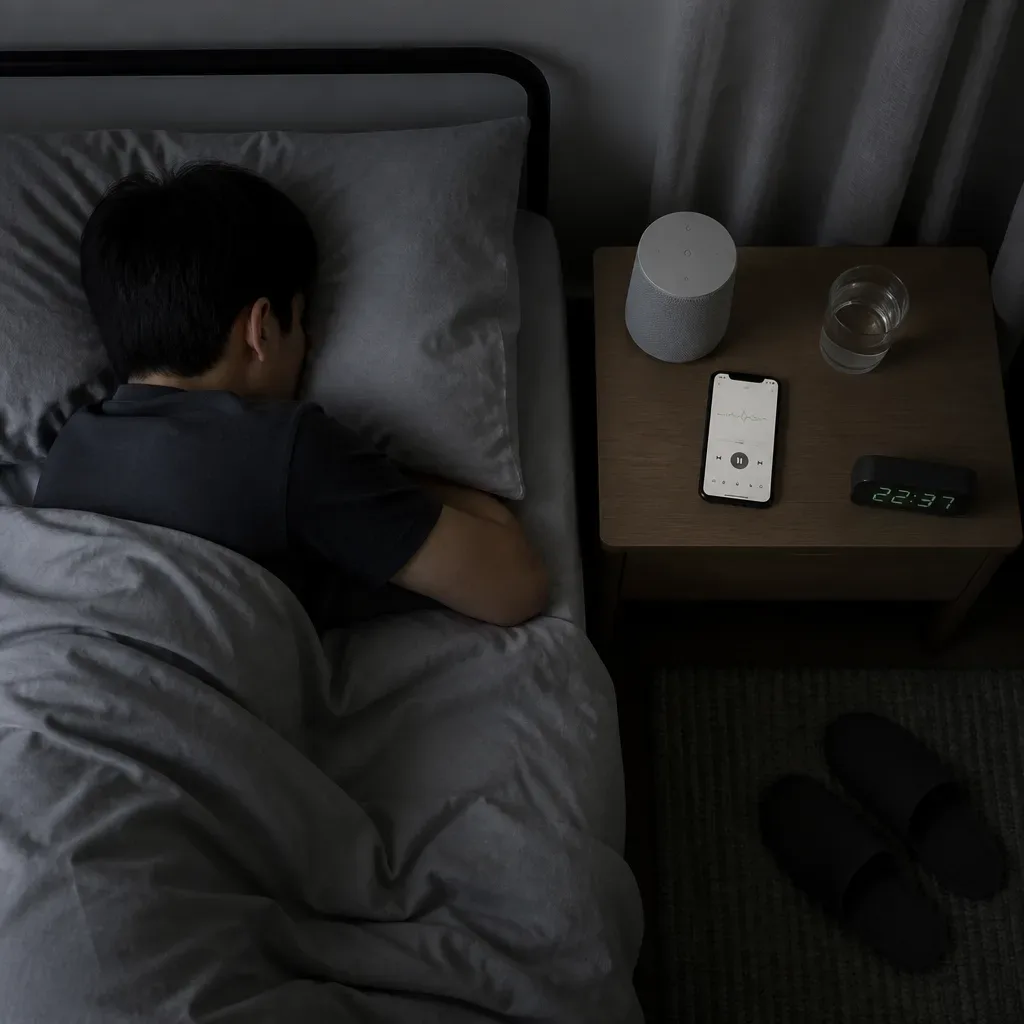
The safest setup is usually a small speaker placed 1 to 2 meters from the bed, angled away from your head. A basic phone sound meter isn’t laboratory equipment, but it can help you avoid creeping volume. For many bedrooms, 45 to 55 dBA at the pillow is enough for narration plus a soft music bed. The World Health Organization’s 2009 night noise guidance uses 40 dB Lnight outside as a public-health reference, and indoor playback should stay conservative.
Headphones need more care. WHO and ITU safe-listening guidance often uses 80 dB for 40 hours per week as an adult exposure reference, but sleep listening shouldn’t live near that ceiling. Don’t sleep in sealed earbuds if you tend to raise volume to cover the room. If tinnitus, ear pain, apnea symptoms, or chronic insomnia are present, bring the pattern to a qualified professional.
Use this order:
- Start your Dream-Self audio at the lowest clear volume.
- Add 432 Hz sleep music and keep it barely present.
- Check whether every word is effortless to hear.
- Reduce bass if the room starts to throb or rattle.
- Set a 20 to 45 minute timer unless all-night sound is already known to help you.
- Repeat the exact setup for 7 nights before judging it.
If masking is the actual need, music may not be the best tool. A steady White noise generator + guide can cover traffic or hallway sound more evenly. If you’re testing beat-based relaxation, the Binaural beats generator + guide explains why headphones are required and why claims should stay measured.
The right sleep volume is the one you can forget.
What should you listen for in the first ten minutes?
Listen for effort, not drama: the right setup makes the body monitor less.
In the first 2 minutes, notice whether your jaw, tongue, and eyes soften or whether you start analyzing the track. A fixed 432 Hz bed can be useful because it removes musical surprise. Yoga nidra often uses a single thread of sound or voice for the same reason: attention settles more easily when there are fewer changes to predict.
By minute 5, the narration should still feel closer than the music. If you miss a phrase, lower the 432 Hz bed. If the low end feels pleasant but heavy, reduce bass or choose a thinner arrangement. Low frequencies travel through walls and furniture; a 100 Hz bump can feel larger in a small bedroom than it does in headphones.
By minute 10, you’re looking for plain signs:
- Breathing is slower without being forced.
- The face feels less arranged.
- You can hear the words without reaching for them.
- The music doesn’t create images you have to follow.
- You don’t feel the need to change tracks.
The modern frequency tradition gives many listeners a ritual handle. That can be valuable. The Solfeggio frequencies guide makes the distinction carefully: tradition, number, and evidence aren’t the same category. When we keep those separate, the practice gets cleaner.
If 432 Hz feels neutral, that’s not failure. Neutral is often the correct bedtime tone. The body doesn’t need to be impressed before it rests.
When is another sound better than 432 Hz sleep music?
Another sound is better when it solves the actual problem with less attention.
If the problem is outside noise, a music bed may leave gaps. A fan-like noise can mask intermittent sounds because it fills more of the spectrum continuously. If the problem is mental alertness, spoken guidance or a slow body scan may help more than any tuning reference. If the problem is silence feeling too exposed, then a low hum or simple drone may be enough.
Here’s the cleaner comparison:
| Need tonight | Better first choice | Why it may work |
|---|---|---|
| Traffic or neighbors | White noise generator + guide | Broad masking covers sudden changes |
| Low room hum feels comforting | Brown or pink noise | More low-frequency weight, less hiss |
| Curiosity about beat perception | Binaural beats generator + guide | Tests a specific auditory illusion |
| Ritual tone with soft music | 432 Hz sleep music | Gives one tuning frame and a steady bed |
| Voice-led manifestation practice | Dream-Self audio alone or with low music | Keeps language in the foreground |
A 2018 Pew report found that roughly 27 percent of U.S. adults said they sometimes had trouble sleeping most or every night. The number is large enough to explain why people test sounds seriously. It’s also large enough to deserve precision. Not every restless night needs a frequency answer.
In practice, choose the least complex sound that meets the need. If silence works, use silence. If speech works, don’t bury it. If 432 Hz sleep music gives the room a stable edge, keep it low and repeat it.
Sleep sound should reduce decisions, not create a new control panel.
What should you remember before pressing play?
Remember that 432 Hz can be a useful support, but the daily audio remains the practice.
For Dream-Self listening, the hierarchy is simple: voice first, music second, claims last. The most common mistake is building a beautiful sound stack that makes the sentence harder to hear. The second mistake is changing tracks every night. Sleep learns through repetition. In behavioral sleep medicine, stimulus control and consistent cues are central ideas because the brain pairs places, times, and routines over repeated nights, not from one perfect setup.
Use a 7-night test. Keep the same Dream-Self audio, the same 432 Hz track, the same speaker placement, and nearly the same volume. Make one small note in the morning: settled faster, no change, or more alert. Three marks are enough. A complicated sleep log can become another task, and bedtime already has enough jobs.
If you share a bed, ask the other person before using sound all night. If a child is in the room, go lower than you think and avoid headphones. If there is snoring with pauses, gasping, panic on waking, or months of insomnia, sound can support care but shouldn’t replace it.
The honest claim is still a good one: 432 Hz sleep music may help some listeners settle when it is slow, quiet, wordless, and placed under the voice with care.
Set the tone low, and let the voice be enough.