frequencies binaural
528 Hz Frequency at Night: Claims and Safety
A plain guide to 528 hz frequency at night: what tradition claims, what evidence says, and how to listen safely without overpromising results.
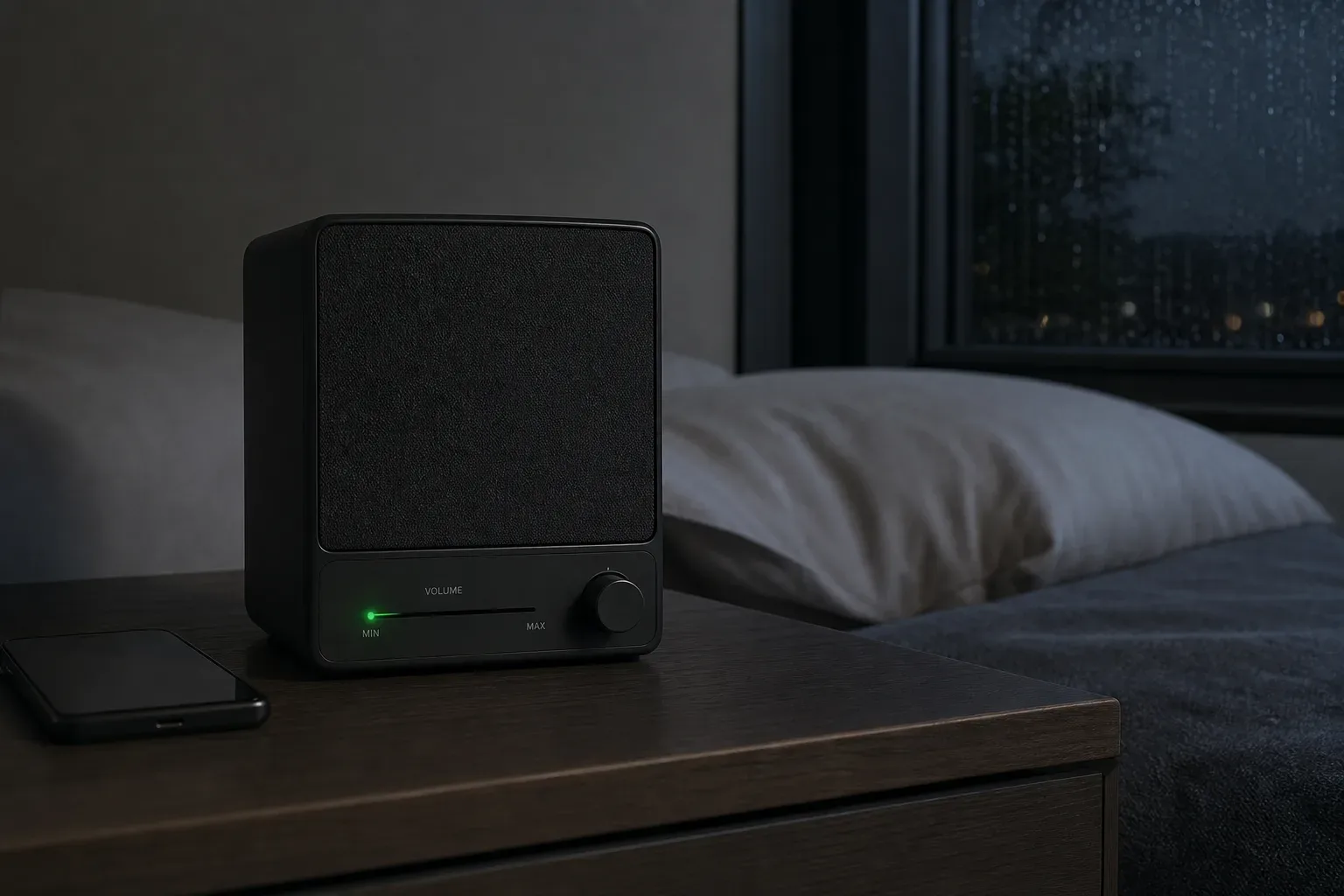
The 528 Hz frequency is a tone associated with Solfeggio tradition and often used in night audio for calm focus. The claims around it are larger than the evidence. If you like it, use it quietly, safely, and without treating it as medicine or a guaranteed sleep tool.
What is the 528 Hz frequency, exactly?
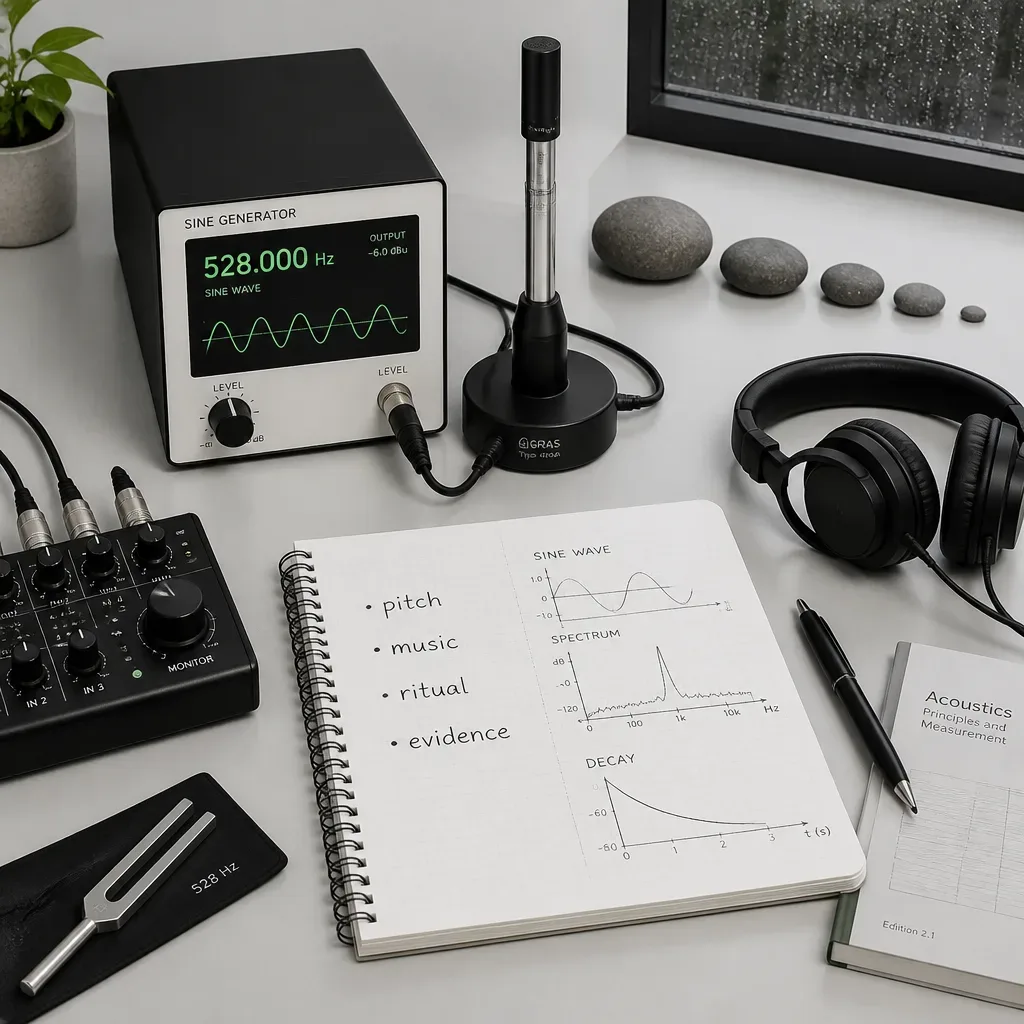
The 528 Hz frequency is a pitch: 528 cycles per second, often presented as part of the modern Solfeggio frequency set.
A frequency is a measurement, not a promise. If a speaker moves air back and forth 528 times per second, you hear a musical pitch a little above the note C5 in standard concert tuning. In standard equal temperament, C5 is about 523.25 Hz, so 528 Hz sits close enough that many listeners hear it as a bright, steady tone rather than a strange sound.
The Solfeggio association is a tradition, not a settled scientific category. Modern lists usually include 396, 417, 528, 639, 741, and 852 Hz, though different teachers and recordings vary. If you want the wider map, our Solfeggio frequencies guide explains the set, the lore, and the difference between tradition and evidence.
The common online claims for 528 Hz include stress reduction, cellular repair, and emotional balance. The first is plausible as a listening outcome for some people; the second is not established by human sleep research. A tone can be meaningful without being medical. Preference is not proof, but it is still useful data at bedtime.
There are three useful ways to think about 528 Hz at night:
- As pitch: a steady tone your auditory system can track.
- As music: a tuning center used inside pads, drones, or ambient recordings.
- As ritual: a repeated cue that tells the body the day is ending.
For sleep, the third category may matter most. Habits become cues after repetition. Sleep medicine often uses stable pre-sleep routines because regular timing and repeated signals help reduce arousal; CBT-I protocols commonly keep consistent wake times and wind-down patterns over several weeks.
What does the evidence say about 528 Hz at night?
The evidence for 528 Hz specifically is small, while the evidence for calming audio and relaxation is broader but still mixed.
One often cited paper is Akimoto and colleagues’ 2018 study in the Journal of Evidence-Based Integrative Medicine. It tested 528 Hz music against 440 Hz music in a small crossover design with 9 participants and reported changes in markers related to stress and autonomic activity. That is interesting. It is also very small. Nine people can suggest a question; they can’t settle it.
Sleep studies usually ask broader questions than one frequency. Reviews of music for sleep have found modest benefits in some groups, especially when music is slow, predictable, and listened to regularly. A 2022 review in Sleep Medicine Reviews discussed music as a low-risk sleep aid but noted wide variation in study quality, track type, and participant groups. In plain terms: sound can help some sleepers, but the exact recipe is not fixed.
Natural sounds have a better evidence base for recovery than single-tone lore. Buxton and colleagues published a 2021 PNAS synthesis of natural sound research, drawing from 36 publications, and found associations with reduced stress and improved mood in several settings. That doesn’t prove 528 Hz works at night, but it reminds us that the ear often settles when sound is steady, nonthreatening, and not too loud.
There is also a measurement problem. A track labeled 528 Hz may contain a 528 Hz tone, a musical scale tuned around 528 Hz, or no clear 528 Hz component after streaming compression and speaker playback. Phone speakers, for example, often roll off low frequencies below about 100 to 150 Hz, and small speakers can distort sustained tones when played too loud.
The plain reading is this: 528 Hz has a tradition and a few small studies, but not strong sleep proof. If it helps you breathe more slowly for 10 minutes, that’s enough reason to use it carefully. It just isn’t enough reason to make medical claims.
How is 528 Hz different from white noise, pink noise, and binaural beats?
528 Hz is a single pitch or tuning center, while noise colors and binaural beats work through different acoustic mechanisms.
White noise contains equal sound level across frequencies, which makes it hissy and bright. Pink noise reduces level as frequency rises, so it tends to feel softer. Brown noise tilts even lower, with more low hum and less high hiss. These sounds mask sudden changes: a door click, a passing scooter, a pipe tap. You can test the difference in the White noise generator + guide by switching colors at the same volume.
Binaural beats are another category. They require headphones: one tone in the left ear, a slightly different tone in the right. If the left ear hears 520 Hz and the right hears 528 Hz, the brain may perceive an 8 Hz beat. A 2019 meta-analysis by Garcia-Argibay and colleagues in Psychological Research reviewed 22 studies and found small effects in some cognitive and anxiety measures, with results depending on beat frequency and timing. That is not the same as proving sleep onset.
Here is the practical comparison:
| Sound type | What it is | Best use at night | Caution |
|---|---|---|---|
| 528 Hz tone | One steady pitch or tuning center | A simple focus point during wind-down | Can feel piercing if too loud |
| White noise | Equal level across frequencies | Masking sharp household sounds | Bright hiss may fatigue some ears |
| Pink noise | Balanced noise with less high hiss | Gentle masking for many sleepers | Claims for deep sleep are still mixed |
| Brown noise | Lower, rounder noise | Rooms with traffic or low rumble | Can cover alarms if too loud |
| Binaural beats | Two tones creating a perceived beat | Short sessions with headphones before sleep | Avoid if headphones bother you |
The safest night sound is the one you can forget. A beautiful tone that keeps asking for attention is a poor sleep tool. A plain hum that lets the room disappear is doing its job.
If you want to compare mechanisms, try a 528 Hz track one night and the Binaural beats generator + guide another night, keeping volume and timing similar. Change one variable at a time. Field recordists learn this early: when everything changes, you learn almost nothing.
Is it safe to play 528 Hz while sleeping?
It is usually safe to play 528 Hz quietly at night, but volume, duration, and listening method matter more than the frequency number.
The ear doesn’t grant a special exemption to pleasant sound. WHO safe-listening guidance uses 80 dB for 40 hours per week as a common adult recreational exposure limit. Sleep audio should sit far below that because exposure can last for hours and because you can’t monitor discomfort while asleep. For a bedroom, many people do well with 30 to 45 dB at pillow level, roughly the range of a quiet room to soft background sound.
At night, lower is usually better than clearer. If you need to raise the volume to hear a pure 528 Hz tone over traffic, use masking noise instead. A steady pink or brown noise bed can cover the traffic without forcing one midrange pitch to dominate the room. The White noise generator + guide is built for that kind of comparison.
Use speakers rather than headphones for all-night listening. Earbuds can press into the ear canal, block air movement, and make it harder to judge level. Headphones also make binaural tracks possible, but that doesn’t mean they belong on your head for 8 hours. If you want a binaural session, keep it short before sleep and then switch to speaker playback or silence.
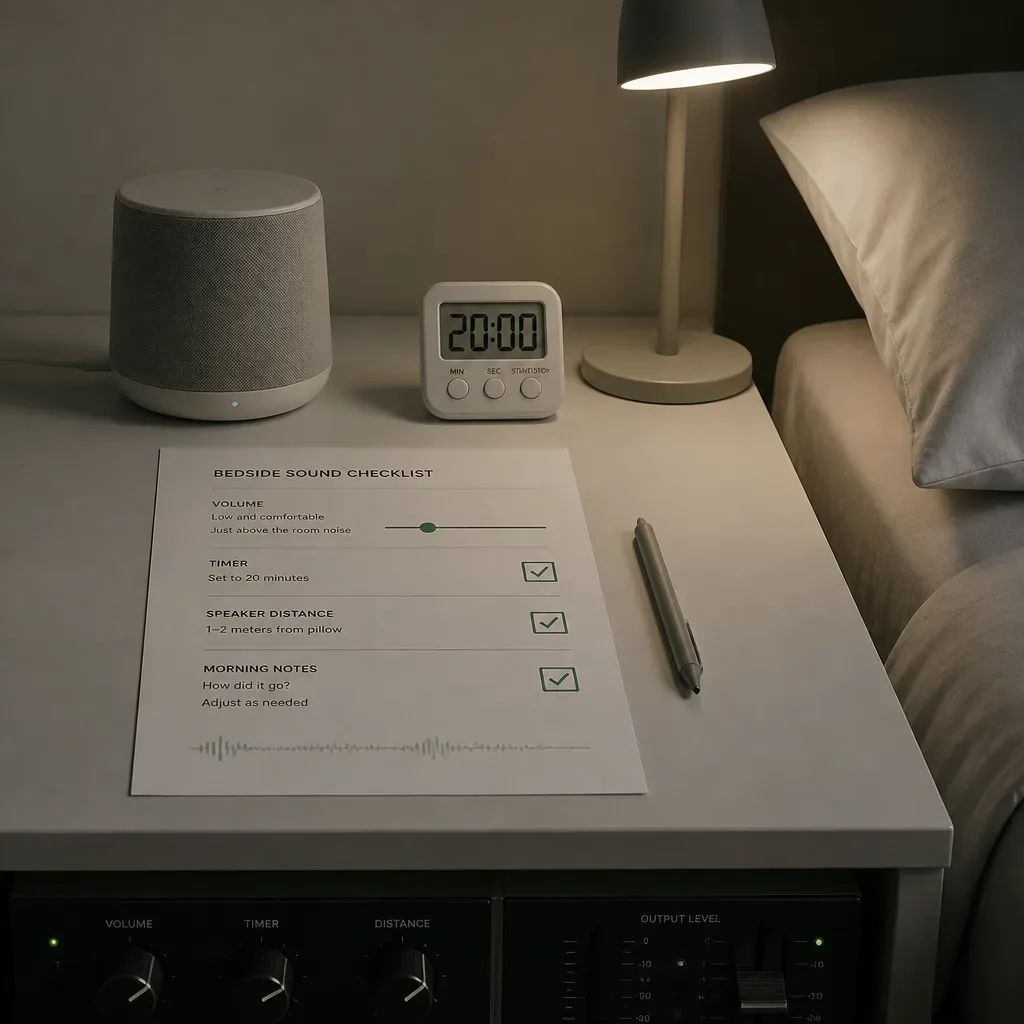
A simple safe-listening setup looks like this:
- Set the volume while lying down. Pillow position changes what you hear by several decibels.
- Use a timer. Start with 20 or 30 minutes, not an all-night loop.
- Keep the speaker away from your head. One to two meters is often enough in a small room.
- Check the morning result. If your ears feel full, irritated, or tired, lower the level or stop.
- Protect alarms. Make sure smoke alarms, baby monitors, and necessary alerts remain audible.
If you have tinnitus, sound sensitivity, chronic insomnia, suspected sleep apnea, or sudden hearing changes, ask a qualified clinician rather than trying to solve it with frequency audio. Sound can be a useful companion; it isn’t a diagnosis.
How should you use 528 Hz in a night routine?
Use 528 Hz as a short, quiet cue before sleep, not as a test you have to pass.
Start with a small window: 10 to 30 minutes. That covers the part of the night when attention is still active and the room still has edges. Sleep cycles are often described as roughly 90 minutes, but sleep onset itself is more variable; the National Sleep Foundation notes that many adults fall asleep within about 10 to 20 minutes when sleep pressure and timing are favorable. Your audio doesn’t need to run through the whole night to help that first descent.
The order matters. Put practical tasks first: lower lights, set the alarm, charge the phone away from the pillow, reduce the room temperature if needed. Then play the tone. If you begin audio while still sending messages, checking metrics, or negotiating tomorrow’s calendar, the tone becomes background for alertness.
A measured routine might look like this:
- 5 minutes: lights down, room prepared, no new input.
- 10 minutes: 528 Hz tone or soft music tuned around it.
- 3 minutes: breath settles without counting if counting feels busy.
- 1 minute: stop the track or let a timer fade it.
This is also where the AYA Method can fit naturally. The AYA Method is a daily audio manifestation practice. Each day you listen to a short personalized recording, your Dream-Self Moment, narrated from the version of you who has already manifested the life you intend. Listening is the practice. Repetition is the work. The audio is the method. Sound prepares the room; a voice fills it.
If you use both, keep the sequence plain: masking sound if the room is noisy, then the personalized audio, then silence or a low tone. Don’t stack five tracks and call it discipline. The nervous system often prefers fewer instructions.
Track results for 7 nights, not one. Rate three things in the morning on a 1 to 5 scale: ease of falling asleep, number of remembered awakenings, and how rested you feel. Seven data points won’t publish a paper, but they will tell you more than a single dramatic night.
What should you listen for in a good 528 Hz track?
A good 528 Hz night track should sound steady, soft-edged, and easy to ignore after the first few minutes.
Listen first for harshness. The 500 to 600 Hz area sits in a part of hearing that can feel forward on small speakers. If the track has a bare sine tone at 528 Hz, it may become tiring, especially in a dry room with reflective walls. A pad, quiet rain layer, or softened harmonic texture often sits better than a naked tone.
Second, listen for looping. As a field recordist, I distrust loops that don’t breathe. A 60-second loop with a repeated swell teaches the ear to predict the edit point. Once you hear it, sleep has one more object to inspect. Longer recordings, gentle variation, and imperfect natural layers tend to feel more believable. In the field, a distant car can make a rain take feel more real because the world hasn’t been polished into plastic.
Third, check the low end. Even if the named frequency is 528 Hz, the recording still needs body. Tracks with no low support can feel thin at night. Tracks with too much low rumble can mask important sounds or shake cheap speakers. A balanced file should hold its shape at low volume.
Use this quick test before committing to a night:
| Test | What to do | Keep it if |
|---|---|---|
| 2-minute attention test | Sit still and play it quietly | Your attention releases the tone |
| Pillow test | Lie in your real sleep position | The pitch doesn’t poke forward |
| Timer test | Fade after 20 minutes | You don’t feel the need to restart |
| Morning test | Check ears and mood | No fullness, irritation, or grogginess |
For related tone traditions, compare the labeling in our Solfeggio frequencies guide. For beat-based tracks, compare with the Binaural beats generator + guide and notice how headphones change the whole method. The number on the label matters less than what your ear and morning notes report.
Keep it low enough that the room still feels like itself.