frequencies binaural
639 hz frequency Before Dream-Self Audio
Use the 639 hz frequency with clear expectations: tradition-based claims, safe volume, and a plain setup before your Dream-Self audio.
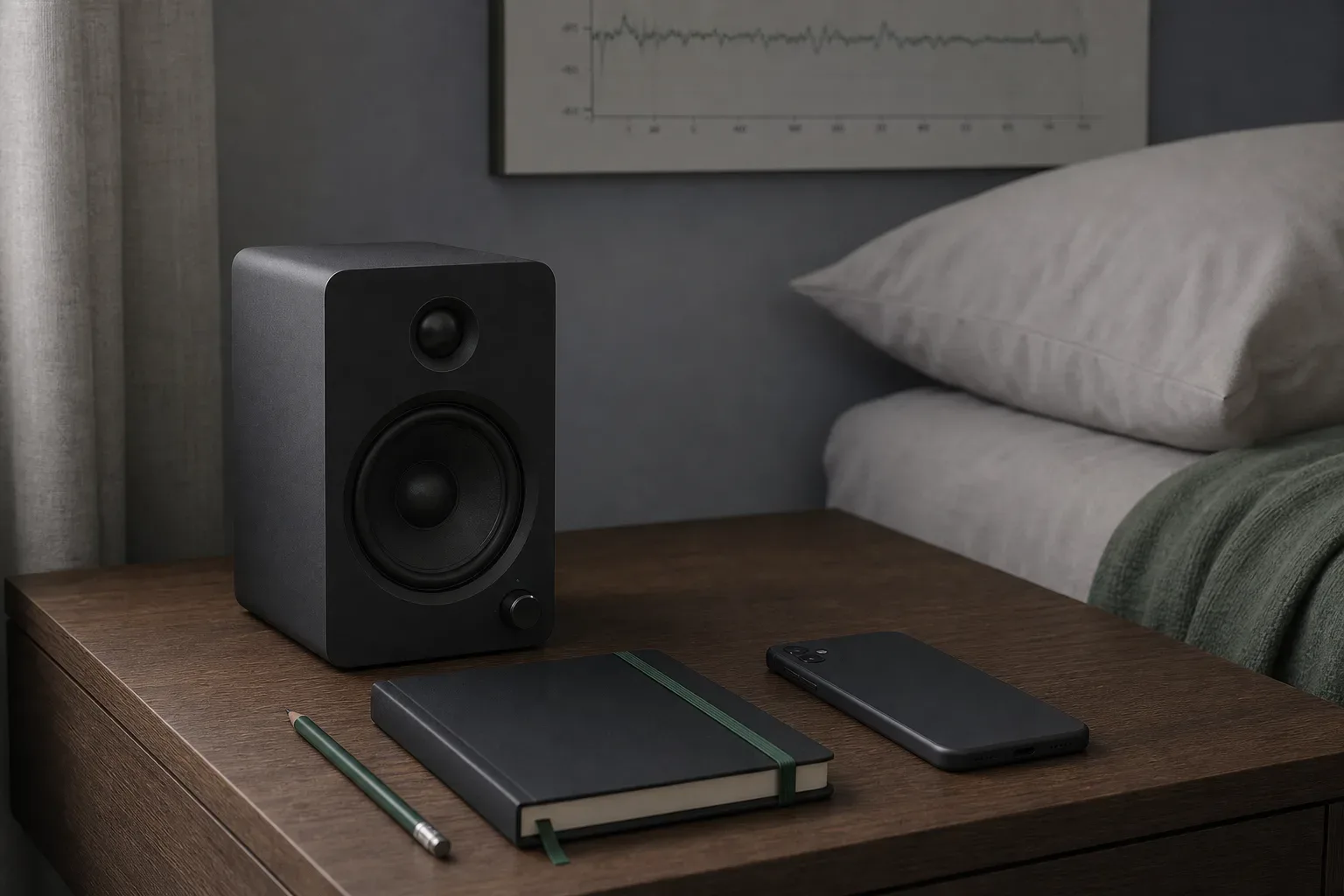
The 639 hz frequency is a modern Solfeggio tone associated with connection and repair, but those claims are traditional rather than clinically proven. Before Dream-Self audio, use it as a short settling sound: low volume, 3 to 7 minutes, then play the personalized recording that carries the actual practice.
What does the 639 Hz frequency claim to do?
The 639 Hz frequency is claimed, in modern Solfeggio tradition, to support harmony in relationships and a calmer sense of connection.
In that tradition, 639 Hz sits among a group of named tones, commonly listed as 396, 417, 528, 639, 741, and 852 Hz. The list circulated widely in the late 20th century through sound-healing communities and later through streaming platforms. It is not a medical scale, and it is not part of standard acoustics in the way 440 Hz concert A or octave ratios are. It is a cultural sound practice with a specific story attached.
The claim around 639 Hz is usually relational: forgiveness, communication, repair, or feeling less guarded. Those are large human tasks. A sine tone cannot do the work of a sincere apology, clear boundaries, or therapy. Still, a steady tone can mark a change in state. It can say, without words, that the next few minutes are not for scrolling, arguing, or rehearsing old scenes.
This distinction matters. A frequency can prepare attention; it cannot live your values for you. In music, we know this plainly. A tempo near 60 beats per minute tends to feel slower than a tempo near 120 beats per minute because the body has more time between events. A single tone does less than a composition, but it can still create a quiet frame.
There is better evidence for general mechanisms than for 639 Hz itself. Reviews of music and relaxation, including work discussed in journals such as the Journal of Behavioral Medicine, often point toward reduced perceived stress and improved mood in some settings. The measured intervention is usually music, guided relaxation, or structured listening, not one isolated frequency. That is why the careful sentence is: 639 Hz may help some people settle, but the relational meaning comes from tradition.
If you already like the sound, you do not need to discard it because the evidence is modest. You only need to use the right label. Tradition is allowed to be meaningful. Claims are allowed to be measured.
Is 639 Hz scientifically different from other calming sounds?
639 Hz is acoustically different as a pitch, but there is no strong evidence that it has a unique relationship-specific effect compared with nearby tones.
A 639 Hz sine wave vibrates 639 times per second. That places it above the E-flat5 region and below E5 in equal temperament, depending on tuning reference. To many ears, it sounds clear, mid-high, and more present than a low hum. It is not especially deep. If you expect a womb-like rumble, 639 Hz will probably surprise you; brown noise or low drones sit much lower, often with more acoustic energy below 250 Hz.
The ear also does not hear all frequencies equally. Equal-loudness research, formalized in ISO 226:2003, shows that human hearing is especially sensitive in the midrange, roughly 2 to 5 kHz, and less sensitive in the low bass. 639 Hz is below that most sensitive band, but it is still more exposed than a low 80 Hz tone. This is why volume matters. A tone that is technically quiet can feel mentally bright if it has no texture around it.
For sleep and pre-sleep use, the question is not whether 639 Hz is special. The question is whether it helps your nervous system reduce input. Some people prefer the plain line of a sine wave. Others find it too bare and do better with a White noise generator + guide, pink noise, brown noise, or slow ambient music.
Here is the practical comparison:
| Sound type | What you hear | Best use | Evidence status |
|---|---|---|---|
| 639 Hz tone | A steady mid-frequency pitch | Short pre-practice settling | Tradition-based claims |
| 639 Hz music bed | A tone blended into soft music | Longer wind-down | Evidence relates more to music than the pitch |
| Pink or brown noise | Broad noise with less sharpness | Masking rooms, neighbors, HVAC | Moderate practical support for masking |
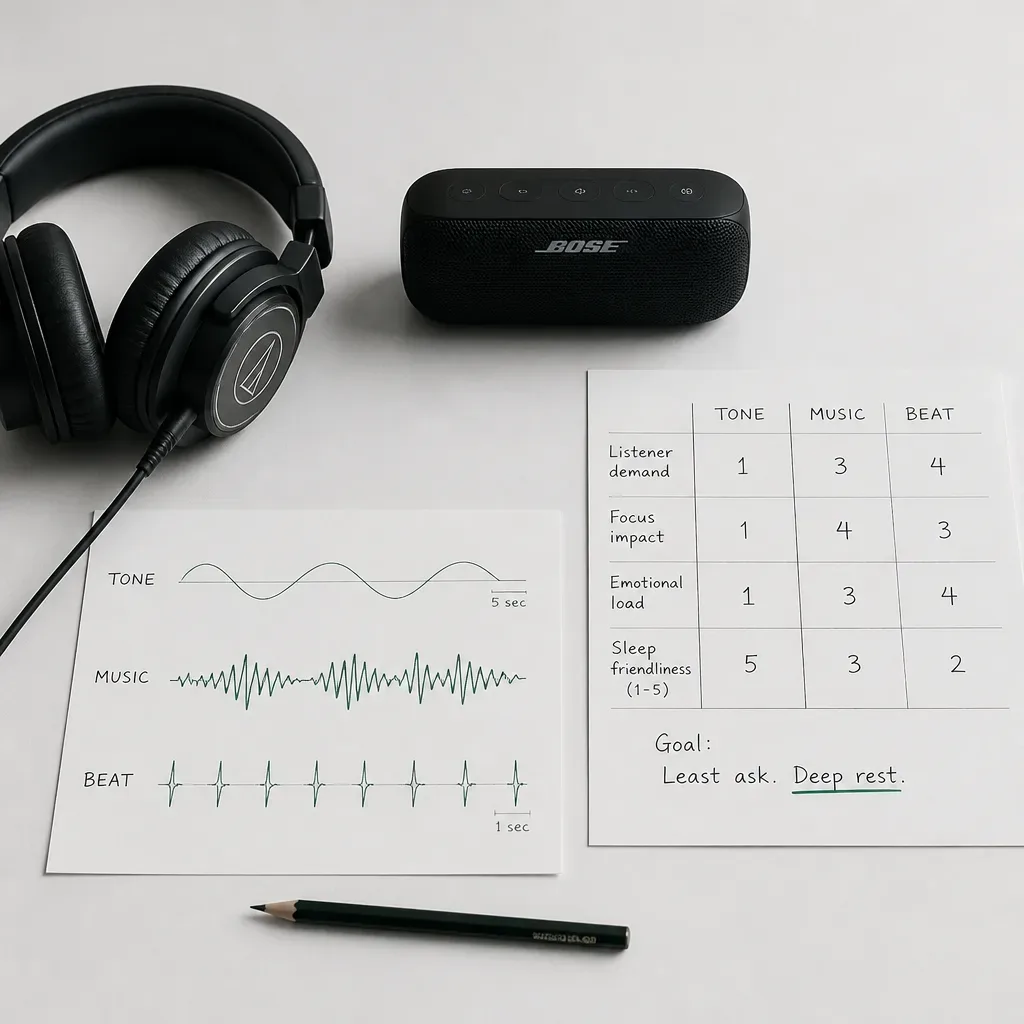
| Binaural beat using 639 Hz | Two close tones in headphones | Focused listening tests | Mixed evidence, method-dependent |
The best sound is not the one with the grandest claim. It is the one your body stops arguing with. Try each option for 3 nights rather than 30 seconds. The first reaction tells you preference; repeated nights tell you usefulness.
How should you set up 639 Hz before Dream-Self audio?
Use 639 Hz as a brief sound primer, then let the Dream-Self audio take the foreground.
A clean setup is simple. Choose one 639 Hz source, set it low, and give it a fixed duration. Three to 7 minutes is enough for most people because the goal is not immersion; it is transition. After that, stop the tone or fade it under the next audio. If the Dream-Self recording contains a voice, the voice should be easy to hear without strain.
This is where the AYA Method has a clear order. The AYA Method is a daily audio manifestation practice. Each day you listen to a short personalized recording, your Dream-Self Moment, narrated from the version of you who has already manifested the life you intend. Listening is the practice. Repetition is the work. The audio is the method.
The frequency is not the method. It is more like dimming a lamp before reading. Useful, sometimes beautiful, but not the text. If a 639 Hz tone makes the room feel less crowded, use it. If it makes you monitor your reaction too closely, skip it and begin with the Dream-Self Moment.
A plain sequence works well:
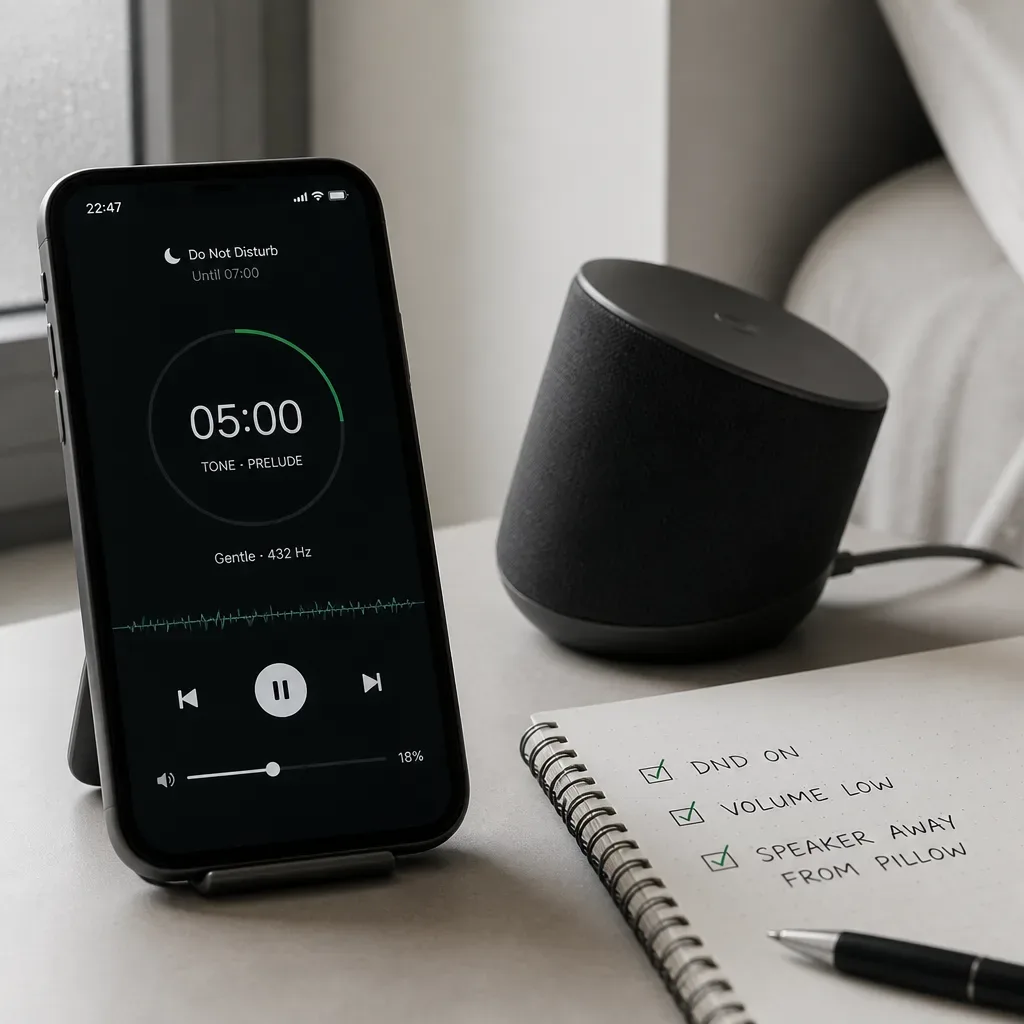
- Put your phone on Do Not Disturb for at least 10 minutes.
- Set the 639 Hz track at a low volume, ideally below normal speaking level.
- Listen for 3 to 7 minutes without checking whether it is working.
- Fade or stop the tone.
- Play your Dream-Self audio once, with the voice clearly audible.
- End without adding more input for 30 to 60 seconds.
The 30 to 60 second quiet ending matters. In recording studios, reverb tails reveal the room after the note is gone. In practice, silence reveals whether you were soothed or merely occupied. The after-sound is part of the measurement.
If you use other frequency tools, keep the chain short. A 639 Hz tone, then Binaural beats generator + guide, then a Solfeggio playlist, then the Dream-Self audio is usually too much. A nervous system can get tired from being managed.
What volume is safe for 639 Hz listening?
The safest volume is the lowest level that remains clear, with extra caution for headphones and nightly repetition.
For a practical reference, NIOSH sets 85 dBA as an 8-hour recommended exposure limit for occupational noise, with exposure time halving for every 3 dB increase. That limit is not a sleep target. It is a workplace safety boundary. Rest audio should sit far below it, often under 60 dBA in a quiet room and lower if you are using earbuds.
A simple test is better than guessing. Start at zero, raise the volume until the tone is barely audible, then increase one small step if needed. If you can hear the 639 Hz tone over a running shower, it is probably too loud for pre-sleep listening. If someone beside you would need to raise their voice to speak over it, it is too loud.
Children need stricter care. Their listening habits are still forming, and headphones can place sound very close to the ear canal. The World Health Organization has warned for years that unsafe listening practices affect more than 1 billion young people globally. That number mostly concerns loud entertainment and personal audio devices, but the habit principle applies: quiet audio should stay quiet.
Watch for fatigue signs. A 639 Hz sine wave can feel piercing after a while because it has little variation. If your jaw tightens, your forehead narrows, or you begin waiting for the track to end, reduce the volume or switch to a softer bed. Many people find 639 Hz more tolerable when it is embedded in slow music rather than presented as a naked tone.
These conservative limits are not fear-based. They are respect for the ear. The ear is not a motivational device; it is delicate tissue doing electrical work. You do not need loudness to signal seriousness. A quiet tone repeated daily will teach the room faster than a loud tone endured once.
Should you use pure 639 Hz, Solfeggio music, or binaural beats?
Choose the format by the job: pure tone for testing, music for comfort, binaural beats for a specific headphone-based experiment.
A pure 639 Hz tone is the cleanest way to hear the frequency itself. It is also the least forgiving. Without harmony, breath, room tone, or soft attack, the sound can feel clinical. Use it when you want to compare your response across 2 or 3 evenings. Keep the duration short, especially before voice-based audio.
Solfeggio music is usually easier for rest. A composer may tuck the 639 Hz pitch into pads, piano overtones, or a drone while the rest of the track moves slowly around it. The claim may still name 639 Hz, but the calming effect often comes from ordinary musical factors: slow tempo, limited dynamic range, few surprises, and repetition. In sleep music, no sudden entrance is a form of kindness.
Binaural beats are different. They require headphones. If one ear receives 639 Hz and the other receives 643 Hz, the brain may perceive a 4 Hz beat. A 2019 meta-analysis by Garcia-Argibay, Santed, and Reales in Psychological Research reviewed 22 studies and found effects that varied by frequency, duration, and timing. The evidence is mixed, not empty, and not settled.
Use this quick decision list:
- Use pure 639 Hz if you want a short, measurable prelude.
- Use 639 Hz music if you want comfort and less edge.
- Use binaural beats if you have headphones and want to compare a beat frequency carefully.
- Use noise if your main issue is masking traffic, voices, or appliances.
- Use silence if sound has become another task.
For tradition and context, the Solfeggio frequencies guide explains how tones like 528 Hz and 639 Hz are commonly described. For mechanism and careful testing, the Binaural beats generator + guide is the better companion.
A sound practice gets cleaner when each sound has one job. Do not ask a tone to mask a neighbor, repair a conversation, induce sleep, and prepare manifestation all at once. Give 639 Hz the narrow job of settling the first few minutes.
What should you notice while listening?
Notice changes in breath, attention, and resistance rather than searching for a dramatic sign.
A useful check-in has 3 points: before, during, and after. Before the 639 Hz tone, rate your state from 1 to 5 for mental noise, body tension, and willingness to listen. During the tone, do not keep scoring. Just hear. After the Dream-Self audio, rate the same 3 items again. That gives you 6 numbers per night, enough to see a pattern after 7 nights.
The numbers do not need to be scientific to be useful. In behavioral practice, repeated self-ratings often reveal trends that memory smooths over. You may discover that 639 Hz helps on evenings after social stress but not after caffeine. You may find that brown noise works better when the room is loud. A plain log prevents the mind from turning one good night into a rule.
Try this 7-night note format:
| Night | Setup | Volume | Before tension 1 to 5 | After tension 1 to 5 | Keep or change? |
|---|---|---|---|---|---|
| 1 | 639 Hz tone, 5 min | Low | 4 | 3 | Keep |
| 2 | 639 Hz music, 5 min | Low | 3 | 2 | Keep |
| 3 | No prelude | None | 3 | 3 | Compare |
Keep the language plain. “I felt warm in my chest” is better than a borrowed phrase. “The tone annoyed me after minute 4” is also good data. Preference is not failure; it is the instrument reporting back.
If you have tinnitus, sound sensitivity, chronic insomnia, panic symptoms, or suspected sleep apnea, use sound gently and speak with a qualified clinician. Audio can support a routine, but it should not be used to avoid care. The American Academy of Sleep Medicine treats ongoing insomnia and apnea as clinical issues, not playlist problems.
For masking rather than meaning, test the White noise generator + guide on another night. For tradition-based tone practice, compare with the Solfeggio frequencies guide. One change at a time is slower, but it tells the truth.
What is the simplest routine for tonight?
Tonight, use a low 639 Hz prelude for 5 minutes, then play your Dream-Self audio once and stop adding sound.
Set the room first. Lower bright light 20 to 30 minutes before bed if you can. Dr. Andrew Huberman often points to light timing as a strong input for circadian rhythm, and while evening routines vary, light reduction is one of the least complicated changes. Sound works better when the room is not arguing against it.
Then set the audio chain. Do not build a ceremony so large that you resist starting. A phone speaker across the room is often better than earbuds if you are tired, because it keeps sound outside the head. If the recording has spoken words, test the level with one sentence before lying down. The voice should be clear at a quiet volume.
Use this version:
- Sit or lie down.
- Play 639 Hz for 5 minutes at a low level.
- Take 6 slow breaths, with no counting goal beyond staying gentle.
- Stop or fade the tone.
- Play the Dream-Self audio once.
- Let there be 1 minute of quiet after it ends.
That is enough. The daily rhythm matters more than the ornament around it. Pew Research Center reported in 2024 that large shares of adults still keep phones near them at night, and the practical problem is obvious: the same device that plays your audio can also break your attention. Use Do Not Disturb. Put the screen face down. Measure the routine by whether you return tomorrow.
If 639 Hz feels clean and kind, keep it for a week. If it feels thin, bright, or effortful, replace it with soft music, pink noise, or silence. The practice is not proven by suffering through the sound. The practice is proven by returning without force.
Press play softly, then let the room do less.