sleep science
Best Temperature for Sleep Before Dream-Self Audio
Best temperature for sleep before Dream-Self audio is usually cool, steady, and personal. Learn room settings, body cooling, and safe sound timing.
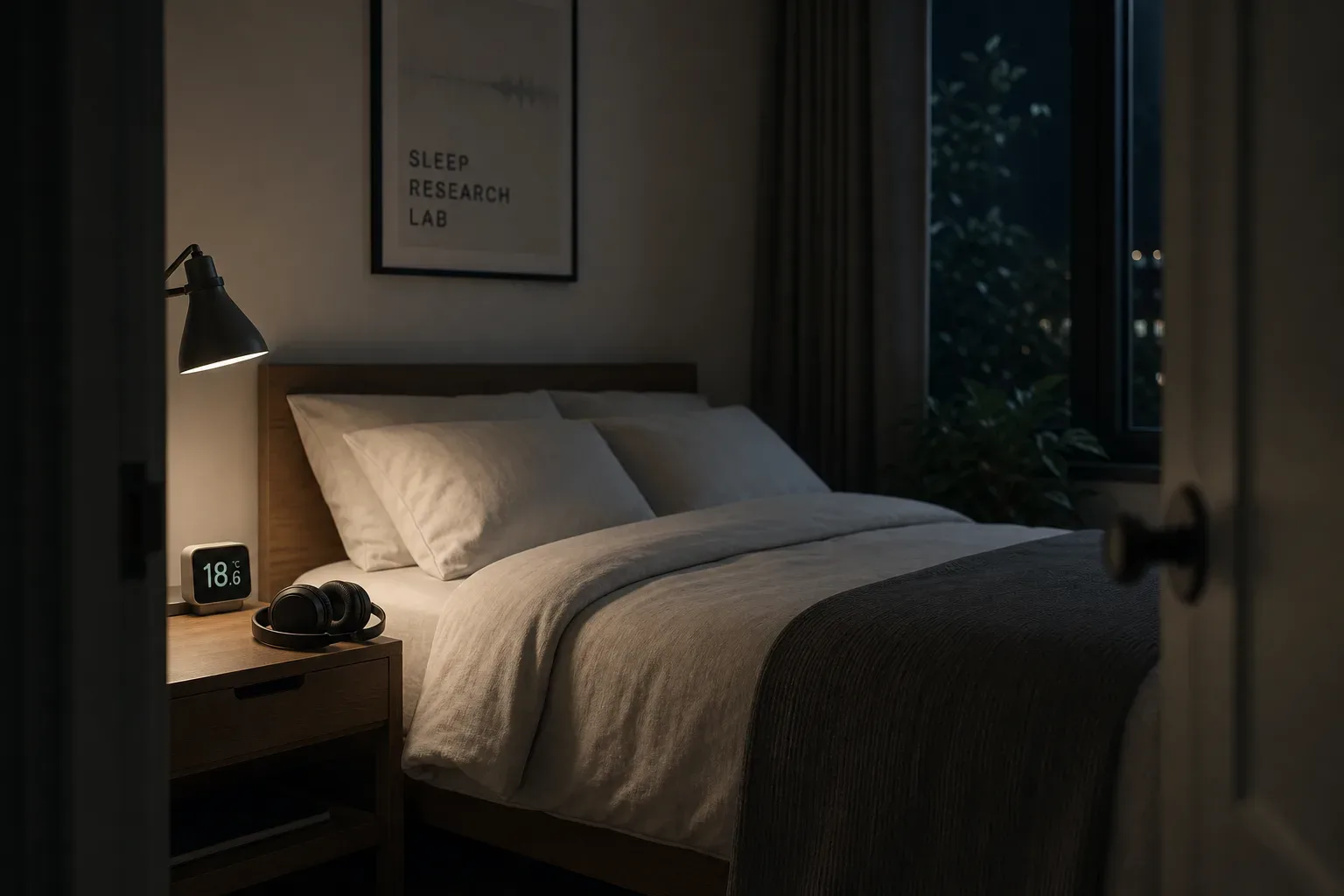
The best temperature for sleep is usually 60 to 67°F, or 16 to 19°C, before Dream-Self audio. A cool room helps core body temperature fall, while warm hands and feet signal safety. Set the room first, settle the body next, then press play when the conditions are quiet.
What room temperature helps the body fall asleep?
Most adults sleep best when the bedroom air is cool, usually around 60 to 67°F, because sleep onset depends partly on a small drop in core body temperature.
The body doesn’t fall asleep by will alone. It changes state. Core temperature tends to decline by roughly 1 to 2°F across the night, while skin temperature at the hands and feet rises as blood vessels widen. A 2012 review in Physiology & Behavior described this heat redistribution as one of the reliable physical markers around sleep onset. Cool room air supports that pattern without asking your body to fight heat.
Sleep researchers often point to thermoneutral comfort rather than one perfect number. The National Sleep Foundation commonly gives 60 to 67°F as a practical adult range, but bedding, pajamas, humidity, age, medication, and hormones all move the target. A person under a heavy duvet at 66°F may be warmer than a person under a sheet at 70°F. The thermostat is only one instrument in the room.
Use this plain test tonight: your face should feel cool, your torso should feel neutral, and your feet should not feel icy. If your toes are cold, sleep can take longer because distal warming helps the body release heat. A small study published in Nature in 1999 found that warmer hands and feet predicted faster sleep onset better than many other measured variables.
A cool room is not the same as a cold body.
For Dream-Self audio, the goal is not laboratory precision. It is steadiness. You want the body to stop negotiating with the room before the voice begins. If you are still flipping the pillow, kicking off covers, or opening a window, the sound is arriving too early.
How should you set the room before Dream-Self audio?
Set the room 10 to 20 minutes before listening, then make only small changes once the audio begins.
Start with a number, not a mood. If you have central air or heat, set the thermostat between 64 and 67°F for three nights. If you run warm, try 62 to 64°F. If you sleep cold, begin near 67°F and use lighter bedding rather than raising the room to 72°F. In sleep lab protocols, even small temperature differences of 2 to 3°C can change comfort ratings and wakefulness, especially in the first half of the night.
Then reduce the variables. Close the door if hallway heat drifts in. Crack a window only if outdoor noise and air quality are acceptable. Keep a fan pointed across the room rather than directly at your face. Air movement can help perceived coolness, but direct airflow may dry the nose or irritate eyes within 30 to 60 minutes.
A simple sequence works better than constant adjustment:
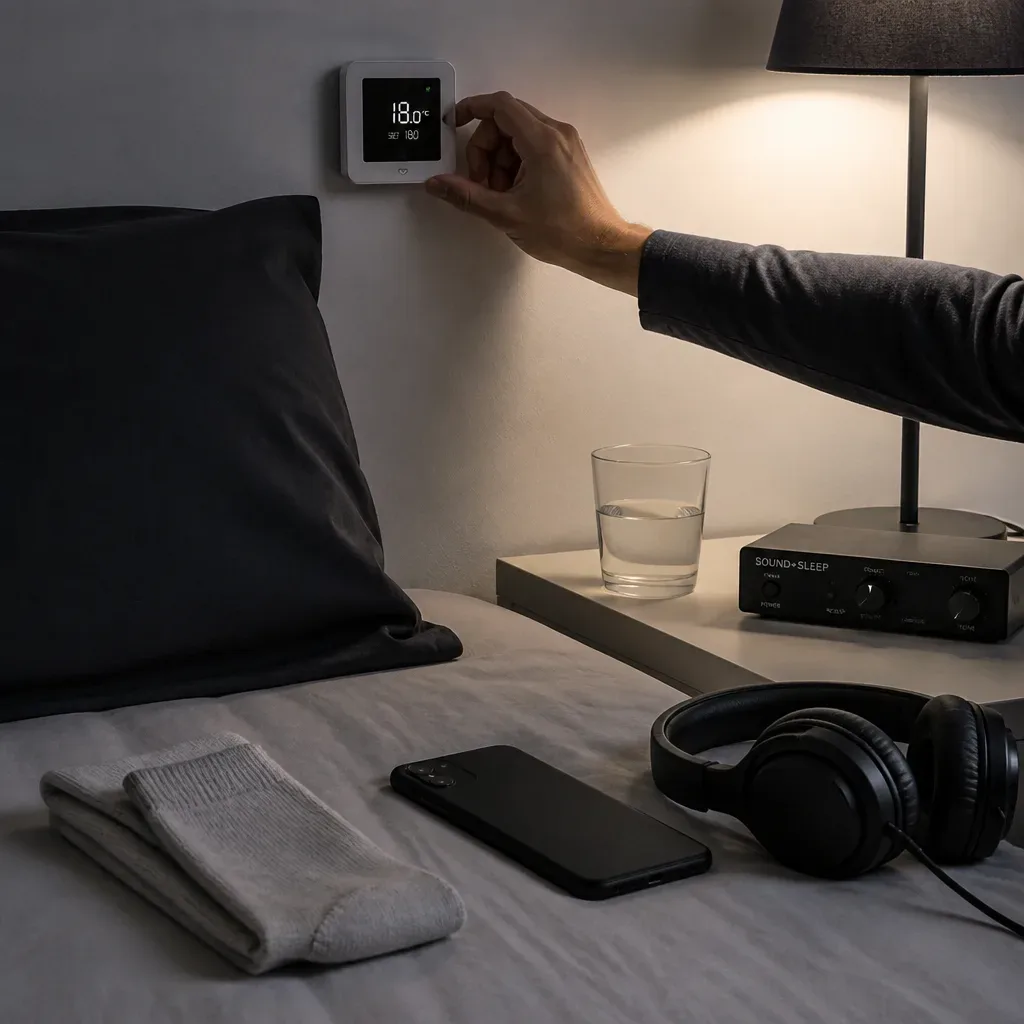
- Set the thermostat or window 20 minutes before bed.
- Choose socks or no socks before you lie down.
- Put water, headphones, and phone within reach.
- Dim the screen before opening audio.
- Press play only after you stop changing the room.
If sound masking helps, set it before the Dream-Self track. The White noise generator + guide is useful when traffic, neighbors, or heating pipes interrupt the room. Keep it quiet: many audiologists advise staying below about 60 dB for long listening, and lower is better at bedtime.
The fewer decisions left in the room, the more cleanly the audio can do its work.
What if your feet are cold but the room is right?
If your feet are cold in a cool room, warm the edges of the body rather than heating the whole bedroom.
Cold feet are a common reason people reject the 60 to 67°F range. The fix is usually local warming. Socks, a warm footbath, or a lighter blanket folded over the lower legs can raise skin comfort without pushing the air temperature too high. In practice, this supports the same physiology: warm extremities help the body release internal heat.
A small Swiss study in Nature reported that distal-proximal skin temperature gradient predicted how quickly participants fell asleep. That means the difference between hand and foot temperature versus trunk temperature mattered. The finding doesn’t mean socks cure insomnia. It means skin heat distribution is part of the sleep switch.
Try this table as a starting point:
| What you notice | Likely issue | Tonight’s adjustment |
|---|---|---|
| Cold toes, cool face | Good room, cold edges | Add thin socks or warm feet for 5 minutes |
| Warm face, restless legs | Room too warm | Lower 2°F or remove one layer |
| Dry nose, cool room | Airflow too direct | Turn fan away or add humidity |
| Waking at 3 a.m. sweaty | Bedding too warm | Keep room steady, lighten covers |
If you use a hot bath, timing matters. A 2019 meta-analysis in Sleep Medicine Reviews found that warm bathing 1 to 2 hours before bed was associated with shorter sleep onset latency, with water around 40 to 42.5°C in the reviewed studies. The bath warms skin, then the post-bath cooling helps the body drop toward sleep.
Do not use heat as a contest. Electric blankets, heating pads, and hot water bottles need caution, especially for children, older adults, and anyone with reduced sensation. Warm enough is the target. More heat is often worse after the first sleep cycle, which lasts around 90 minutes.
How do sound and temperature work together?
Temperature prepares the body, and sound gives attention a steady place to rest.
They act through different pathways. Cool air and warm extremities support thermoregulation. Steady sound reduces contrast between quiet and interruption. A hum from a fan or a shaped noise track can mask sudden changes, which is why many people sleep better near a consistent low sound than in a silent room with occasional clicks.
White noise contains equal acoustic power per hertz, so it can sound bright or hissy. Pink noise reduces power as frequency rises, and brown noise tilts even lower. Some nervous systems prefer the low hum. The evidence is mixed but not empty: small studies have found that pink noise timed to slow-wave sleep may increase slow oscillation activity, though those protocols are more controlled than a bedroom speaker.
If you use tones, keep the claims modest. A binaural beat is an auditory illusion produced when each ear receives a slightly different frequency. The brainstem tracks the difference, but that doesn’t guarantee a specific mental state. Reviews of binaural beat research report variable effects on anxiety, attention, and sleep, often with small samples. If you want to test it gently, use the Binaural beats generator + guide at low volume with headphones that feel comfortable on your pillow.
Solfeggio frequencies sit in a different category. They come from a modern frequency tradition, not from strong sleep physiology evidence. If 528 Hz or 396 Hz helps you settle, that preference is valid as a ritual and sound choice. The Solfeggio frequencies guide explains the lore plainly without turning it into a medical claim.
For volume, choose conservative levels. If someone next to you can hear your headphones clearly, they are too loud. For children, avoid headphones for overnight use unless a clinician has advised it, and keep speakers quiet enough that speech would still be easy at 1 meter.
When should you play the AYA Method recording?
Play it after the room is cool, your body is comfortable, and background sound is already set.
The AYA Method is a daily audio manifestation practice. Each day you listen to a short personalized recording, your Dream-Self Moment, narrated from the version of you who has already manifested the life you intend. Listening is the practice. Repetition is the work. The audio is the method.
That definition matters for timing. If the audio is the method, don’t bury it under chores. Don’t make it compete with thermostat changes, message checking, or a search for the right pillow. Put the physical room in order first. Then give the recording a clean 3 to 7 minutes, or whatever length your track uses.
A good order looks like this:
- 20 minutes before: set room temperature and bedding.
- 10 minutes before: start masking sound if needed, such as low white noise.
- 5 minutes before: lower lights and put the phone face down.
- At bedtime: listen to the Dream-Self audio once.
- Afterward: leave the room conditions alone unless you are clearly uncomfortable.
Behavioral sleep medicine often treats regularity as more useful than intensity. Cognitive behavioral therapy for insomnia, or CBT-I, uses consistent timing, stimulus control, and reduced sleep effort across several weeks. Your Dream-Self audio is not CBT-I, and it should not be sold as treatment. But it can borrow one useful principle: repeat the same cue in the same state, night after night.
The best routine is the one your body can recognize without negotiation.
If you have chronic insomnia lasting more than 3 months, loud snoring, gasping, restless legs, panic at bedtime, or tinnitus that worsens with sound, speak with a qualified professional. A bedroom routine can support care. It shouldn’t replace care.
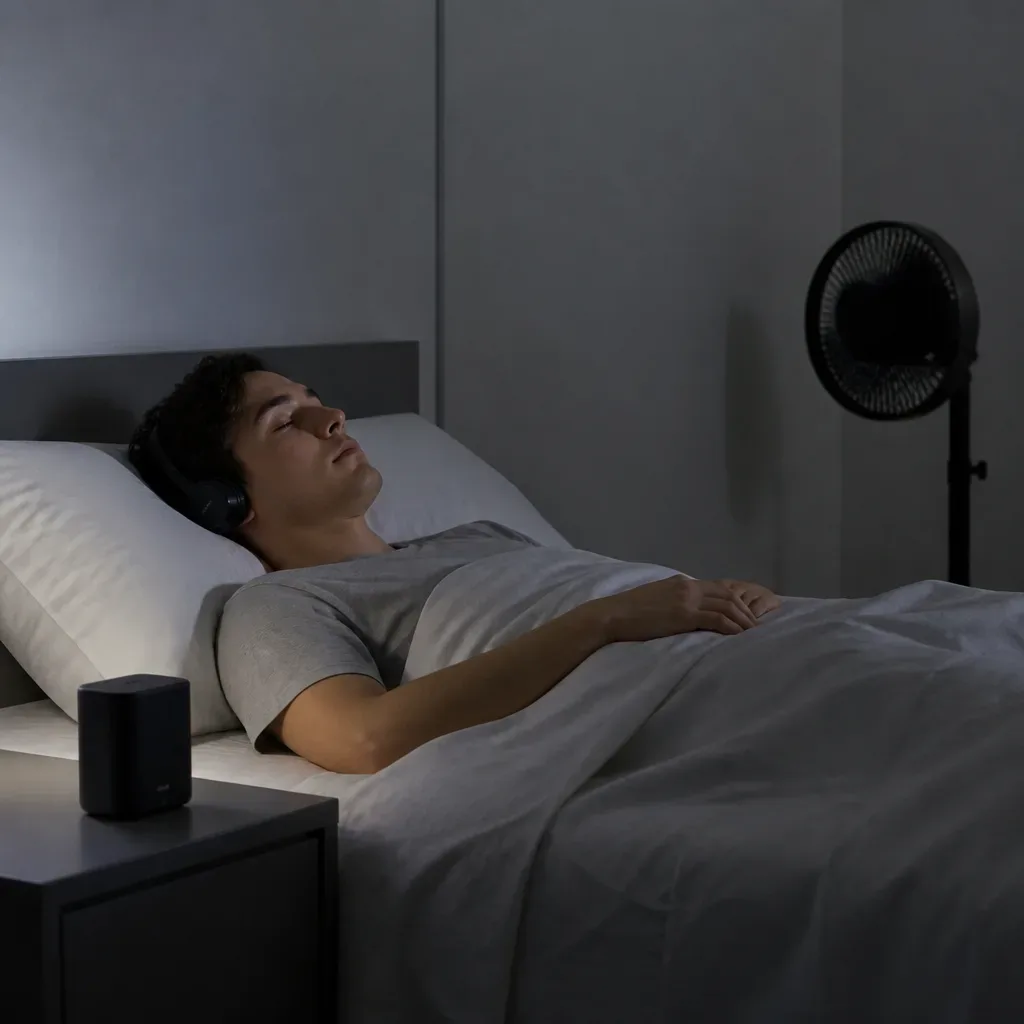
How do you find your own best temperature for sleep?
Test one variable at a time for three nights, then keep the setting that gives you easier sleep onset and fewer warm awakenings.
Personal calibration beats copying someone else’s thermostat. Start with 65°F, or 18°C, for three nights. Keep bedtime, bedding, pajamas, and audio the same. Each morning, write down three numbers: minutes to fall asleep, number of awakenings you remember, and whether you woke too hot, too cold, or neutral. This takes under 60 seconds and gives you better data than memory alone.
After three nights, adjust by only 2°F or 1°C. If you were too warm, go cooler or reduce bedding. If you were too cold, add socks before raising the room. Continue for another three nights. Within 9 nights, most people can identify a practical range, even if it shifts with seasons or menstrual cycle phase.
Use this measurement plan:
- Nights 1 to 3: 65°F, same bedding, same audio.
- Nights 4 to 6: adjust by 2°F based on warmth or cold.
- Nights 7 to 9: keep the better setting and refine bedding.
- Night 10 onward: stop measuring unless sleep changes.
Humidity deserves one note. Many sleep clinicians suggest indoor humidity around 30 to 50 percent for comfort, though climate and building conditions matter. Air that is too dry can irritate the nose. Air that is too damp can feel heavy and may worsen mold risk. A small digital hygrometer often costs less than a sleep gadget and gives a clear number.
Do not chase perfect sleep. Normal sleepers wake briefly many times, often without remembering it. Consumer sleep trackers can estimate patterns, but wrist devices infer sleep from movement and heart rate rather than measuring brain waves directly. Treat them as rough instruments, not judges.
What should you do tonight in 20 minutes?
Tonight, make the room cool, warm your edges, set quiet sound, and play the Dream-Self audio last.
Here is the 20-minute version. At minute 0, set the room between 60 and 67°F. If you don’t control the thermostat, open or close the door, adjust the window, change layers, or move the fan. At minute 5, choose bedding that will still feel comfortable after the first 90-minute sleep cycle.
At minute 10, handle sound. If the room has intermittent noise, use a low masking track from the White noise generator + guide. If you prefer a tone-based focus, try a quiet track from the Binaural beats generator + guide, but keep expectations measured. If a traditional frequency track helps you settle, choose one from the Solfeggio frequencies guide because you like how it sounds, not because it promises a biological guarantee.
At minute 15, stop tuning. Put the phone where you can reach it without scrolling. If you use headphones, choose a safe volume and a position that doesn’t press the ear. If you use a speaker, set it low enough that the sound blends with the room rather than taking it over.
At minute 20, play the Dream-Self Moment. Let the cool air do what cool air does. Let the voice do what the voice does. If you need to adjust the room afterward, make one small change, then leave it alone.
A steady room teaches the body that nothing else needs solving.
Keep the room cool enough to hear yourself settle.