frequencies binaural
Binaural Beats Headphones Under Dream-Self Audio?
Do binaural beats headphones matter under Dream-Self audio? Learn when stereo separation helps, when it distracts, and safer volume settings.
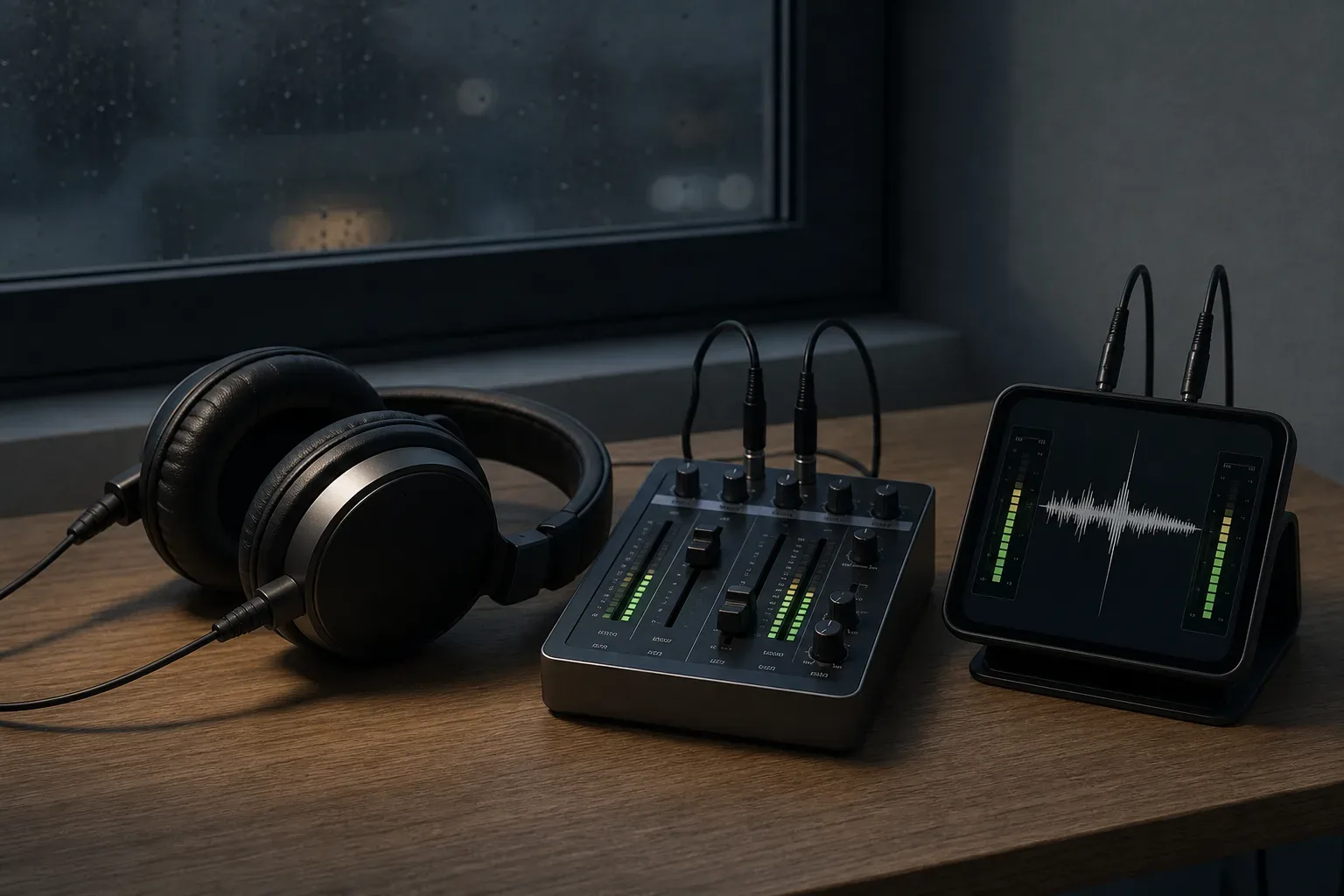
Binaural beats headphones matter because the beat is created by your brain from two different tones, one per ear. Under Dream-Self audio, headphones are optional only if the beat layer isn’t truly binaural. If the voice is the practice, keep the tones quiet, stereo, and secondary.
Do binaural beats headphones actually change what you hear?
Yes, headphones change the signal because true binaural beats require left and right ear separation.
A binaural beat is not a recorded thump. It’s a perceptual effect. If your left ear receives 200 Hz and your right ear receives 210 Hz, many listeners perceive a 10 Hz fluctuation that is not physically present in either channel. Gerald Oster’s 1973 paper in Scientific American helped make this distinction plain: the beat is constructed by the auditory system, not mixed in the air.
With speakers, the two tones meet in the room before they reach your ears. At that point, you may hear acoustic beating, room reflections, comb filtering, or a soft wobble, but it isn’t the same controlled left-ear/right-ear stimulus. A 2 meter speaker distance, a 30 centimeter head width, and wall reflections can all alter timing and level before the signal arrives.
This is why the phrase binaural beats headphones is not just accessory advice. It’s part of the mechanism. The headphones don’t make the beat stronger by being close to your head. They preserve the two-channel difference long enough for the auditory pathway to compare it.
A binaural beat is not hidden inside the audio file. It happens when two ears receive two different tones and the brain does the subtraction.
The practical rule is simple: if the audio is labeled binaural, use stereo headphones or earbuds. If the track is isochronic, monaural, pink noise, brown noise, or ordinary sleep music, speakers may be fine. The label matters less than the signal design, but the signal design decides what playback equipment can reproduce.
Can binaural beats sit underneath Dream-Self audio without getting in the way?
Yes, but the spoken Dream-Self recording should remain the clear foreground signal.
The AYA Method is a daily audio manifestation practice. Each day you listen to a short personalized recording, your Dream-Self Moment, narrated from the version of you who has already manifested the life you intend. Listening is the practice. Repetition is the work. The audio is the method.
That definition matters for mixing. If a binaural layer makes the words harder to hear, the layer is doing too much. Speech intelligibility depends heavily on the 1 kHz to 4 kHz region, where consonants carry detail. Many earbuds also emphasize this range by several decibels, which can make a tone bed feel more intrusive than it looked on a waveform.
A gentle binaural layer under voice should be low, steady, and uninteresting. It should not demand attention. In practice, I’d start 12 to 18 dB below the spoken voice and adjust downward if any syllable feels masked. Broadcast mixers often treat a 6 dB change as clearly noticeable; for background tone beds, small adjustments matter.
Here is the clean order of importance:
- Hear every word without effort.
- Keep headphone volume conservative, around 50 to 60 dB SPL when possible.
- Use a true stereo file if you want a true binaural beat.
- Stop if the tones create tension, pulsing discomfort, or ringing.
- Repeat the same simple setup long enough to know how your body responds.
A voice recording is already a precise object. Add sound only if it helps the listening happen.
What happens if you play binaural beats through speakers instead?
Through speakers, true binaural separation mostly collapses, and the room becomes part of the signal.
When two loudspeakers play slightly different tones, both ears hear both tones. That can create ordinary amplitude beating in the air, especially if the tones are close in frequency. A 200 Hz tone and a 210 Hz tone can still create a 10 Hz loudness fluctuation, but that is not the same as giving one tone to each ear. It’s monaural or acoustic beating, depending on the file and playback setup.
Rooms also interfere. A 200 Hz wavelength is about 1.7 meters in air at room temperature. Move your head 20 centimeters and the balance can shift. Sit near a wall and the reflected sound changes the apparent low end. This is ordinary acoustics, not a flaw in your practice.
| Playback method | True binaural effect | Best use | Main risk |
|---|---|---|---|
| Stereo headphones | High | Binaural beats under quiet listening | Too loud or too busy |
| Open speakers | Low | Ambient tone beds, sleep music | Room reflections change the beat |
| One small speaker | None | White noise, simple masking | No stereo separation |
| Bone-conduction headphones | Uncertain | Speech when ears stay open | Channel separation varies by device |
If you prefer speakers at night, choose a sound designed for speakers. White noise or brown noise can mask small room sounds without requiring stereo separation. A 2021 review in Sleep Medicine Reviews found the evidence for continuous noise and sleep was mixed, but many people still use it because masking is immediate and measurable: a steady sound can cover a 35 dB refrigerator click or a 40 dB hallway footstep.
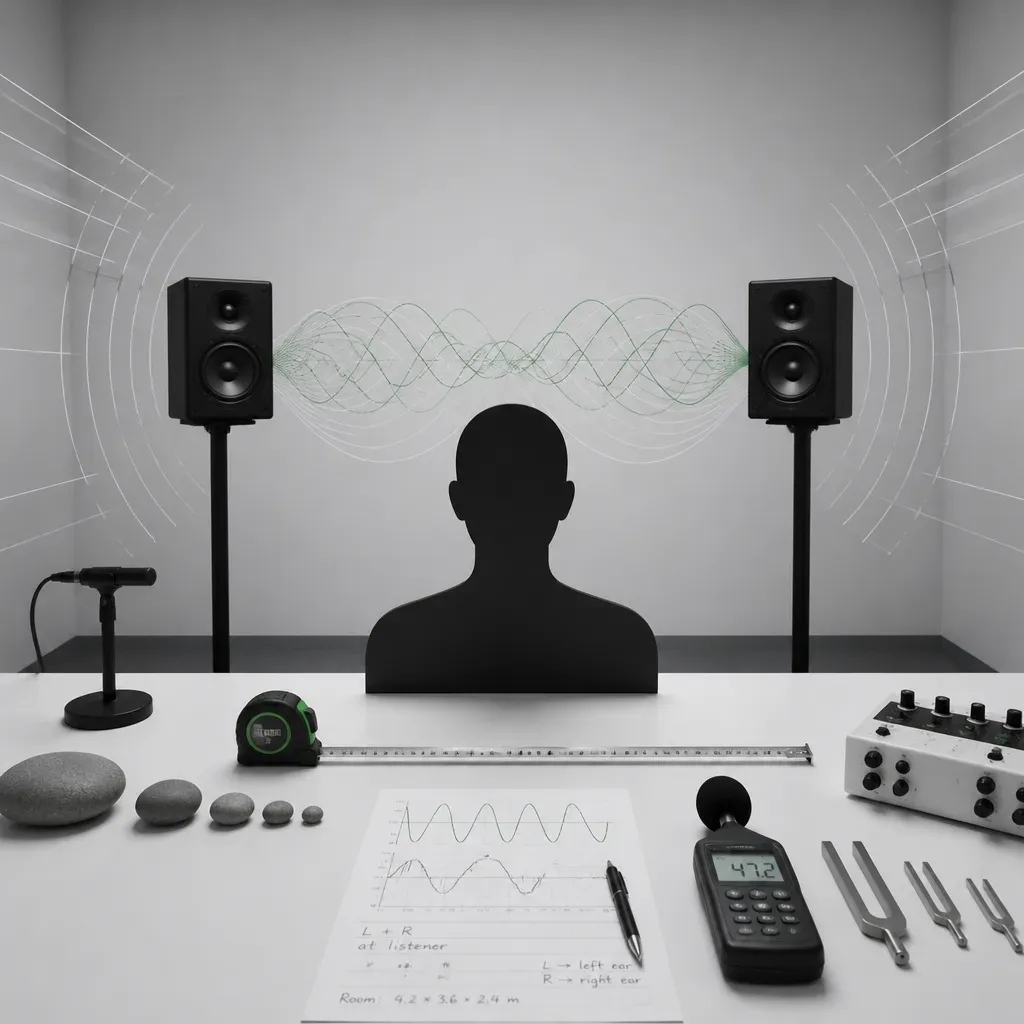
Press play on a generator and listen for the difference before you add it to spoken audio. The ear is a measurement instrument, but it adapts quickly. Give each setting at least 60 seconds before judging.
How loud should binaural beats be under a voice track?
They should be quieter than you think, with the voice at comfortable speech level and the beat clearly in the background.
The safest useful volume is usually conversational, not cinematic. Normal conversation is often measured around 60 dB SPL at 1 meter. The World Health Organization and many hearing-conservation sources warn that risk rises with both level and duration, especially above 80 to 85 dB. For sleep-adjacent listening, there is rarely a reason to approach that range.
Headphones make this harder because phone volume sliders don’t report sound pressure at the eardrum. Earbud fit, track mastering, and device output all change the actual level. If you have an Apple Watch, a phone safety meter, or a simple sound level meter for speakers, use it as a rough guide. If not, use the plain test: you should be able to speak over the audio without raising your voice.
For Dream-Self audio, set the voice first. Then raise the binaural layer from silence until you barely notice it, and lower it one step. A beat does not need to be obvious to be present. If it becomes the most interesting part of the recording, it’s too loud.
Useful volume checks:
- Speech clarity: every consonant is easy to hear.
- Body response: your jaw, forehead, and breath stay soft.
- Aftereffect: no ringing, pressure, or irritation after 10 minutes.
- Sleep fit: you could remove the headphones without feeling startled.
Dr. Andrew Huberman often separates arousal management from sleep itself in his public teaching: tools can prepare the body, but forcing sleep tends to backfire. The same restraint applies here. A lower-volume signal gives the nervous system less to solve.
Which frequencies make sense under spoken manifestation audio?
Slow, simple difference frequencies are the least likely to distract, but no frequency guarantees a mental state.
Binaural beat products often use EEG band language. Delta is roughly 0.5 to 4 Hz, theta about 4 to 8 Hz, alpha about 8 to 12 Hz, beta about 13 to 30 Hz, and gamma above 30 Hz. These are measurement bands used in brain recordings. They are not buttons. A 6 Hz beat does not force a theta state any more than a metronome makes a room dance.
The evidence is mixed. A 2015 review in Frontiers in Human Neuroscience discussed brainwave entrainment claims and noted variability across methods and outcomes. A 2019 meta-analysis by García-Argibay and colleagues in Psychological Research reported small effects of binaural beats on anxiety, cognition, and pain perception, with results depending on exposure duration and frequency. Small effects are not nothing. They’re also not guarantees.
Under spoken audio, I’d avoid high carrier tones that whistle or sit near speech brightness. Carrier tones between about 100 Hz and 400 Hz are often easier to tuck under a voice, though earbuds vary. A 220 Hz left tone and a 226 Hz right tone creates a 6 Hz beat difference. The listener hears low tone plus subtle fluctuation, not a separate 6 Hz sound wave.
If you’re comparing options, use the binaural beats generator for 2 or 3 minutes at a time. Then try a non-binaural reference, such as Solfeggio frequencies, which come from a sound tradition rather than the same left-right auditory mechanism. Some listeners like 528 Hz or 396 Hz as tonal anchors. The tradition deserves respect, but the evidence for specific outcomes remains limited.
A good background tone is not impressive. It is stable enough to disappear.
Are headphones safe for nightly Dream-Self listening?
They can be safe for many adults if the level is low, the fit is comfortable, and the session is not all night.
The first safety issue is sound level. The U.S. National Institute for Occupational Safety and Health recommends an 85 dBA exposure limit over 8 hours for workplace noise, with a 3 dB exchange rate. That is not a sleep target. It’s a risk-management ceiling for occupational settings. For private listening before bed, quieter is better.
The second issue is fit. Sleeping with hard earbuds can create pressure points in the ear canal or outer ear. Over-ear headphones can trap heat. True wireless earbuds can fall out and become uncomfortable. If you listen lying down, a flat sleep headband or pillow speaker may be more comfortable, but remember: a pillow speaker won’t preserve binaural separation as reliably as headphones.
The third issue is content. Spoken manifestation audio asks for attention, even if the tone is calm. If you notice that listening in bed makes you mentally rehearse, move the session earlier by 20 to 30 minutes. Many behavioral sleep clinicians use stimulus-control principles: bed should stay strongly associated with sleep. That idea appears in cognitive behavioral therapy for insomnia, which the American College of Physicians recommended as first-line treatment for chronic insomnia in 2016.
Use this conservative nightly pattern:
- Sit or lie comfortably before lights-out.
- Set voice volume to soft speech.
- Add binaural tone only if it does not mask words.
- Listen once.
- Remove headphones before sleep if they create pressure or vigilance.
If you have tinnitus, seizures, sound sensitivity, sleep apnea, or chronic insomnia, ask a qualified professional before using tones nightly. Sound tools are not medical care.
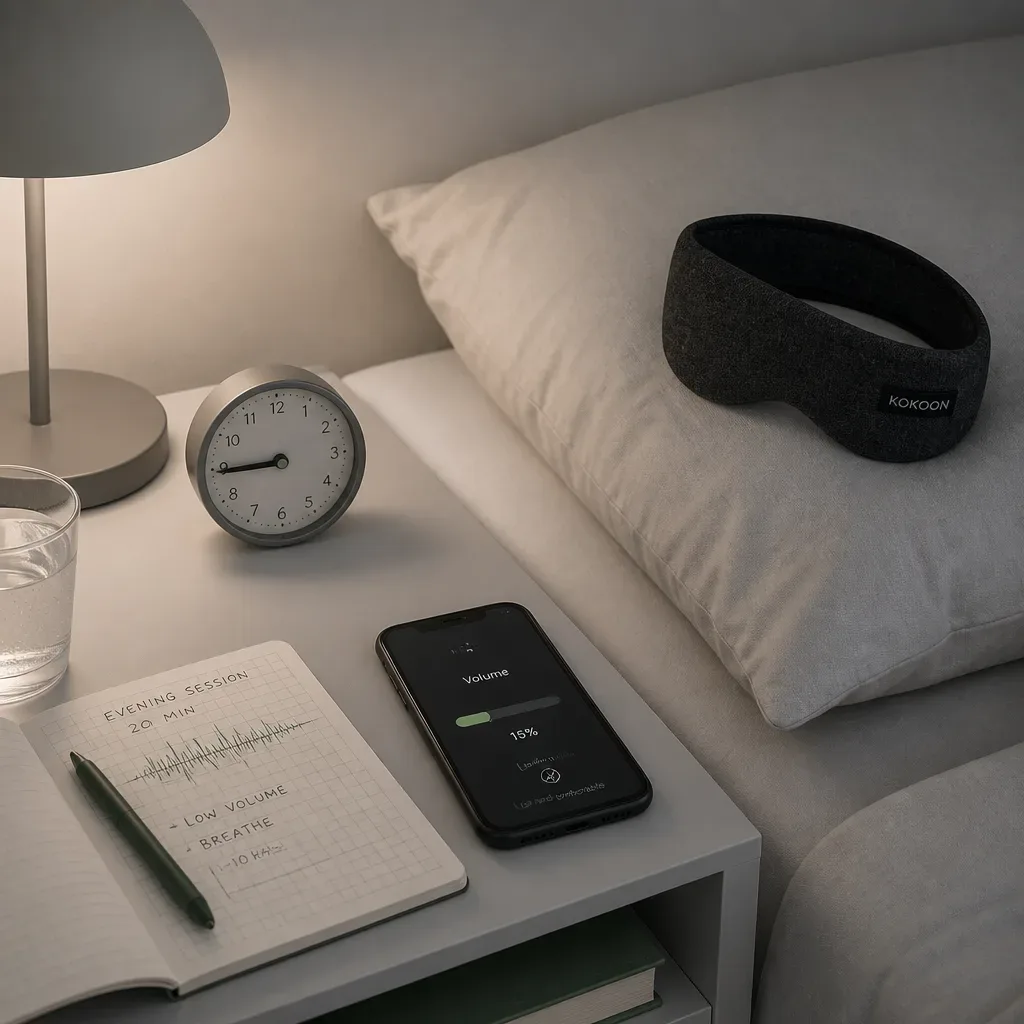
What is the best setup tonight if you want both beats and Dream-Self audio?
Use stereo headphones, keep the Dream-Self voice central and clear, and set the binaural bed just below conscious interest.
A practical setup beats a complicated one. Start with one variable: either plain voice, voice plus low binaural tone, or voice after a masking sound. Don’t stack rain, brown noise, 528 Hz, a 7 Hz beat, and a voice on the first night. If something helps, you won’t know which part helped. Good listening practice is closer to lab work than decoration.
Here is a measured 10-minute test:
- Minute 0 to 2: play the Dream-Self audio alone.
- Minute 2 to 4: add the binaural layer 18 dB below the voice if you can mix it, or at the lowest audible phone setting if you can’t.
- Minute 4 to 6: pause and check speech memory. Could you repeat the last sentence?
- Minute 6 to 8: lower the tone one step and notice whether the body settles more easily.
- Minute 8 to 10: decide which version you would repeat for 7 nights.
If masking is the real need, use the white noise generator and guide before the voice, not under it. If tonal settling is the need, test the binaural beats generator and guide separately first. If you like frequency lore as a ritual container, read the Solfeggio frequencies guide with the evidence labels intact.
The cleanest answer is still the quietest one: headphones are needed for true binaural beats, but they are not needed for the Dream-Self recording itself. The voice can work through speakers, earbuds, or a phone on a nightstand if you can hear it clearly and return to it daily.
A repeatable signal is better than an elaborate signal you abandon after three nights.
Keep the voice clear, the tone low, and the room kind to your ears.