noise colors
Black Noise for Sleep Before Dream-Self Audio
Black noise for sleep is near-silence used as a settling layer before spoken audio. Learn when it helps, when it doesn't, and how to use it safely.
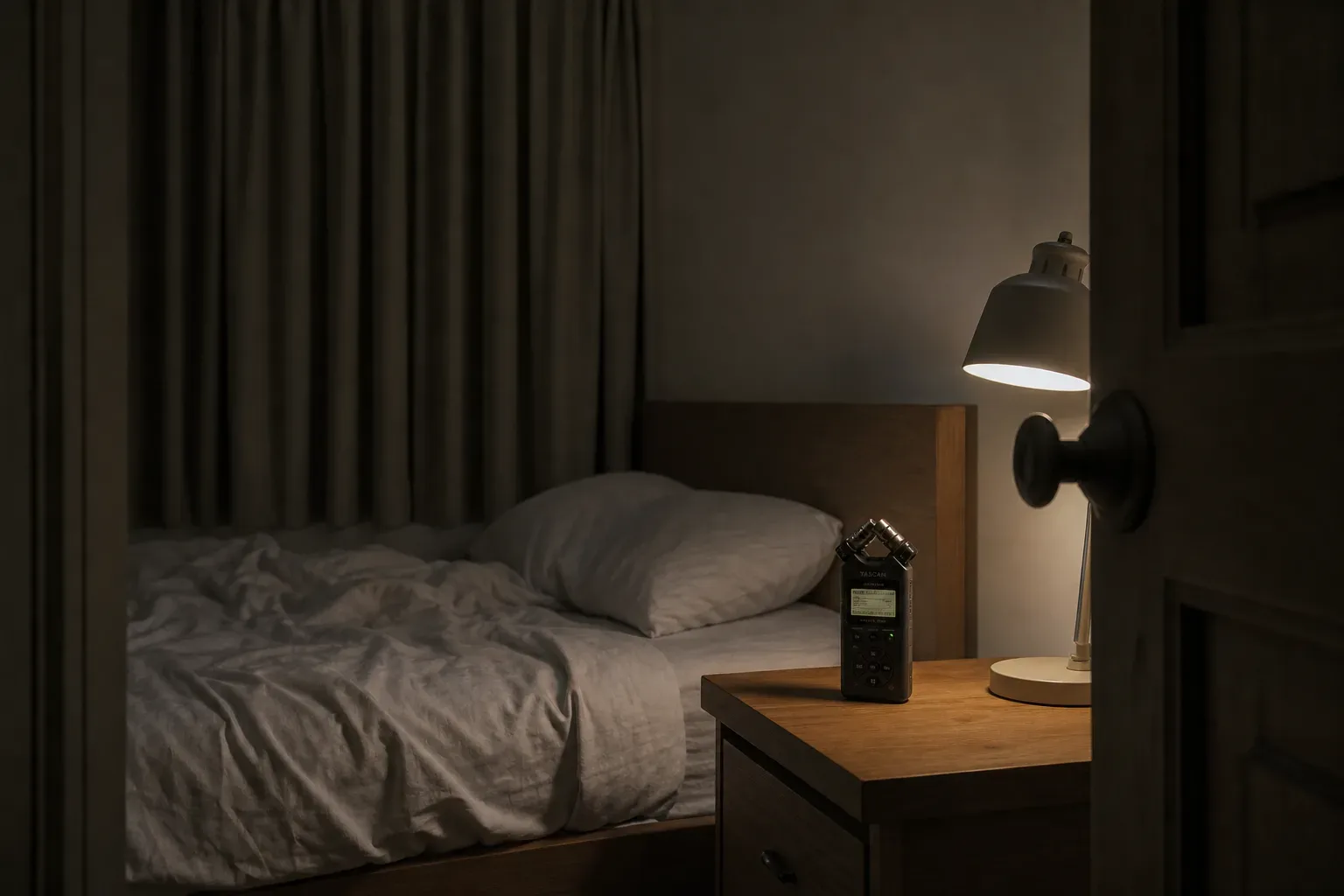
Black noise for sleep is best understood as near-silence: a very low-level sound bed, or no added sound at all, used to reduce stimulation before rest. It can help when white noise feels too bright, but it works by subtraction, not by masking. Use it quietly, briefly, and with honest attention.
What does black noise for sleep actually mean?
Black noise for sleep usually means a quiet field with little audible content, not a fixed scientific standard.
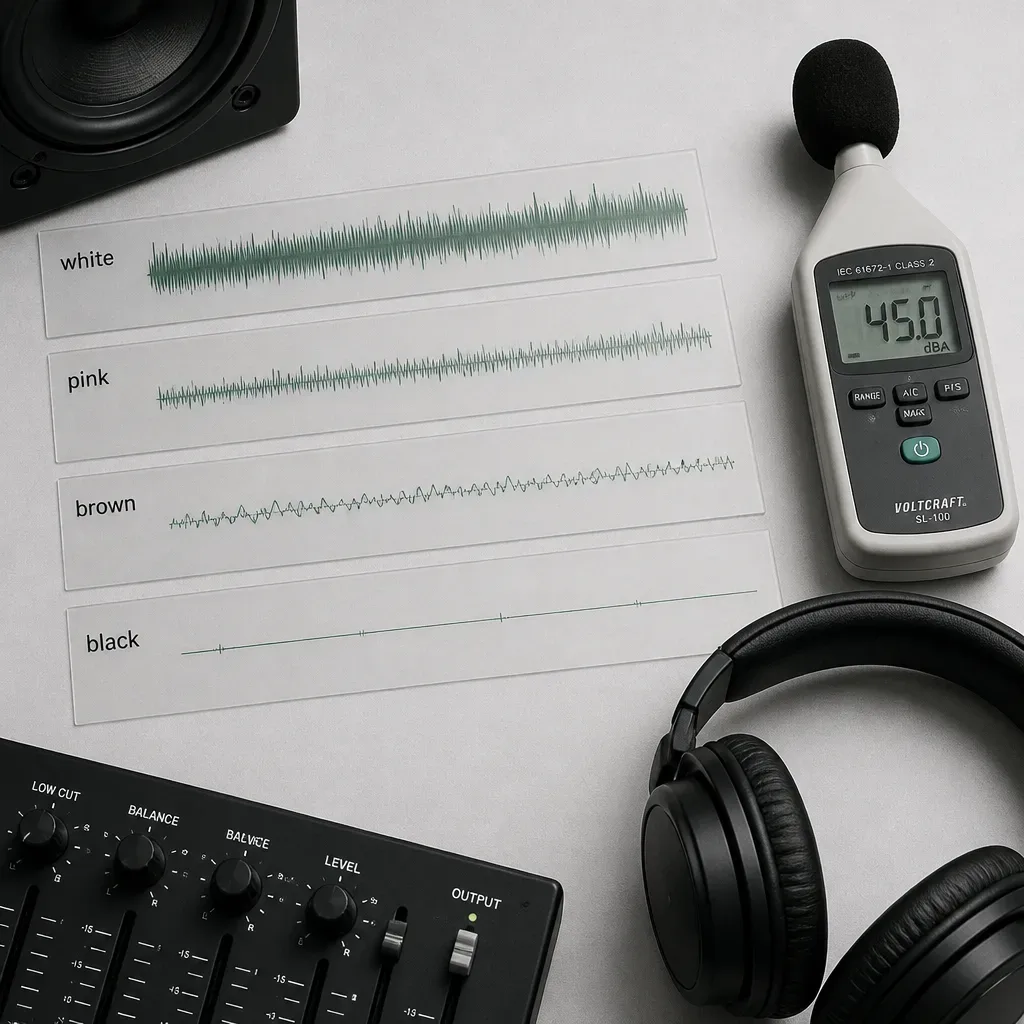
In audio engineering, color names describe spectral shape. White noise spreads acoustic power broadly across frequencies. Pink noise drops about 3 dB per octave. Brown noise drops about 6 dB per octave. Black noise is less settled as a term. Some textbooks use it for silence or near-zero signal. Some online sleep libraries use it for recordings with long quiet gaps and rare soft events.
That distinction matters because sleep tools should be measurable. A room at night might sit near 30 dBA if it is quiet, while a refrigerator hum can lift it to 40 dBA or more. The World Health Organization’s 2009 night noise guidance names 40 dB Lnight outside as a protective target and 55 dB as a level where adverse effects become more likely. Black noise should live closer to the first number than the second.
The ear still works in quiet. During sleep, the brain keeps sorting sound for relevance; a 2012 hospital study by Buxton and colleagues found that certain noises increased heart rate even when people did not fully wake. Silence is not a switch. It is a lower workload.
A useful definition is plain: black noise is the sound you use when you want the room to stop asking for attention. It may be a very low recording of air, a long field take with almost no movement, or simply the device turned off after a few minutes of settling.
Black noise is not deeper sound. It is less sound, used deliberately.
How is black noise different from white, pink, and brown noise?
Black noise differs by removing most audible information, while other noise colors shape information across the frequency spectrum.
White noise sounds bright because it gives equal power per hertz across the measured band. To human ears, that often reads as hiss. Pink noise sounds softer because each octave carries roughly equal power, closer to how we perceive many natural sounds. Brown noise leans lower still, with more weight in bass and less top-end spray. Black noise avoids the comparison by offering very little continuous signal.
| Sound type | What you hear | Common sleep use | Watch point |
|---|---|---|---|
| White noise | Bright hiss, fan-like static | Masking traffic, voices, doors | Can feel sharp above 4 kHz |
| Pink noise | Balanced rain-like hush | Gentle masking, steady rooms | Some tracks loop too obviously |
| Brown noise | Low hum, distant surf tone | Reducing high-frequency irritation | Too much low end can rumble |
| Black noise | Near-silence, faint room tone | Settling before audio or sleep | May reveal tinnitus or anxious scanning |
Research is stronger for masking sounds than for black noise specifically. A small 2005 Sleep Medicine study by Stanchina and colleagues reported fewer awakenings with white noise during simulated hospital noise. Pink noise has also been studied in small sleep-memory experiments, including work on slow-wave sleep stimulation, though methods vary and samples are often under 30 people.
Black noise has less direct evidence because it is not one repeatable stimulus. It is closer to a practice condition: reduce the signal, lower the volume, make fewer demands. If you need a steady comparison, press play on the white noise generator + guide, then reduce the volume until it barely exists. That edge is where many people mean black noise.
The best sleep sound is not the one with the rarest name. It is the one your attention stops checking.
Why might near-silence help before Dream-Self audio?
Near-silence can help before Dream-Self audio because it clears the auditory foreground before a spoken voice becomes the main object of listening.
Spoken audio asks the brain to follow language. That is different from masking noise. A voice has timing, meaning, breath, and emotional contour. If you begin while the room is still full of notifications, fan hiss, hallway sound, and mental rehearsal, the voice has to compete. Three to ten minutes of black noise gives the auditory system fewer edges to inspect.
This is where the method boundary stays important. The AYA Method is a daily audio manifestation practice. Each day you listen to a short personalized recording, your Dream-Self Moment, narrated from the version of you who has already manifested the life you intend. Listening is the practice. Repetition is the work. The audio is the method. Black noise is only the room preparation.
A simple routine can be measured in minutes:
- Set your device volume to the lowest setting you can still hear, or use no sound if the room is already quiet.
- Sit or lie down for 3 minutes and notice the lowest stable sound in the room.
- If your mind starts monitoring every creak, add a softer masking sound instead of forcing silence.
- Start the Dream-Self audio before you become sleepy enough to miss the words.
- Stop the device or set a timer if you do not want sound running all night.
The number is modest on purpose. Sleep cycles average around 90 minutes, but a pre-sleep cue does not need a whole cycle to work. Behavioral sleep medicine often uses repeatable cues because the nervous system learns timing through repetition. A 10-minute wind-down done daily is easier to condition than a 60-minute ritual done twice a week.
Silence before a voice can make the voice feel less like content and more like instruction.
When does black noise make sleep worse?
Black noise can make sleep worse when quiet turns into monitoring.
Some ears dislike empty rooms. Tinnitus is the clearest example. The American Tinnitus Association estimates that about 10 to 15 percent of adults report tinnitus, and for some of them, silence makes the internal tone more noticeable. In that case, black noise is not calming. It removes the cover. A low fan, rain recording, or brown noise track may be kinder.
Anxiety can behave the same way. Without a soft mask, the mind may start indexing every small sound: pipe tick, neighbor step, dog movement, distant engine. Basner and colleagues, writing in The Lancet in 2014, reviewed evidence that environmental noise affects sleep, cardiovascular measures, and annoyance. The point for practice is not that every sound is dangerous. It is that unpredictable sound carries more load than steady sound.
Children need extra caution. Their ears are smaller, and they may sleep closer to devices than adults realize. A 2014 Pediatrics study measured infant sleep machines and found that some could exceed recommended limits at close range. Keep any speaker well away from the pillow, use low volume, and do not use earbuds for sleeping children.
Black noise is also a poor fit when the bedroom itself is unsafe or medically complicated. Loud snoring, gasping, chronic insomnia longer than 3 months, severe tinnitus, or panic symptoms at night deserve professional care. Sound can support rest. It should not become a way to avoid assessment.
Use this plain test: if quiet makes you listen harder, it is not quiet enough for you tonight.
How should you set volume and timing safely?
Set black noise at the lowest useful level, and treat duration as a small dose rather than an all-night requirement.
A phone sound meter is not a laboratory instrument, but it can teach scale. If your bedroom reads 28 to 35 dBA, you are already in a quiet range for many homes. If traffic or neighbors push the room toward 45 dBA, black noise may not mask enough. You may need pink or brown noise at a conservative level instead. For comparison, normal conversation is often around 60 dBA at 1 meter.
Headphones deserve restraint. The U.S. National Institute for Occupational Safety and Health uses 85 dBA over 8 hours as an occupational exposure limit, with safer listening well below that. Sleep listening should be much quieter because exposure can last for hours and because you cannot monitor discomfort while asleep. If you use earbuds, set a timer and keep the level barely audible.
A practical timing range looks like this:
- 3 minutes: enough to mark a boundary between day and night.
- 7 minutes: useful before spoken audio, breath work, or prayer.
- 15 minutes: reasonable if the room takes time to settle.
- All night: better reserved for steady masking sounds when the environment requires it.
If you prefer tone-based listening, compare black noise with the binaural beats generator + guide. Binaural beats require headphones and present two slightly different tones, such as 200 Hz in one ear and 204 Hz in the other, creating a perceived 4 Hz beat. Evidence is mixed, but the mechanism is at least describable. Black noise has no beat to entrain to. It is absence as a cue.
Volume is not a sign of commitment. The quieter setting is usually the more skilled one.
What should you listen for in a good black noise track?
A good black noise track should feel steady, low in detail, and free from obvious looping.
Field recordists talk about room tone because no place is truly blank. A chapel has air. A parked car has fabric, glass, and distant road pressure. A winter field has a high hush when snow is falling and a denser hush after it stops. Good black noise keeps enough of that life to prevent the ear from distrusting it, but not enough to become a story.
Loop quality matters. The sleeping brain is good at pattern detection. If a 45-second file repeats with the same faint click every pass, you may not notice it at first, then suddenly you cannot stop hearing it. Long takes help. In my own field work, I prefer source recordings of at least 20 minutes before editing, because the air changes at a human pace rather than a software pace.
Listen for these faults before you use a track at night:
- A hard edit or click at the loop point.
- High hiss that becomes sharp when the room is quiet.
- Low rumble that vibrates the pillow or floor.
- Sudden wildlife, speech, or traffic that pulls attention forward.
- Heavy compression that makes the noise pump or breathe unnaturally.
Natural sound research gives a useful clue here. A 2021 Proceedings of the National Academy of Sciences review led by Buxton found that natural sounds were associated with improved health outcomes and stress reduction across multiple studies, with water sounds often linked to positive affect and bird sounds to reduced stress. That does not prove black noise induces sleep, but it supports the idea that the ear responds to acoustic context, not only volume.
If silence feels too bare, you might test a quiet rain file, low surf, or the Solfeggio frequencies guide if you like traditional tone practices. Solfeggio frequency lore is a tradition, not a settled sleep medicine claim. Liking 528 Hz is allowed. Calling it a guaranteed sleep treatment is not.
How can you test black noise tonight without overcomplicating it?
Test black noise tonight by comparing it against one steady alternative at the same low volume.
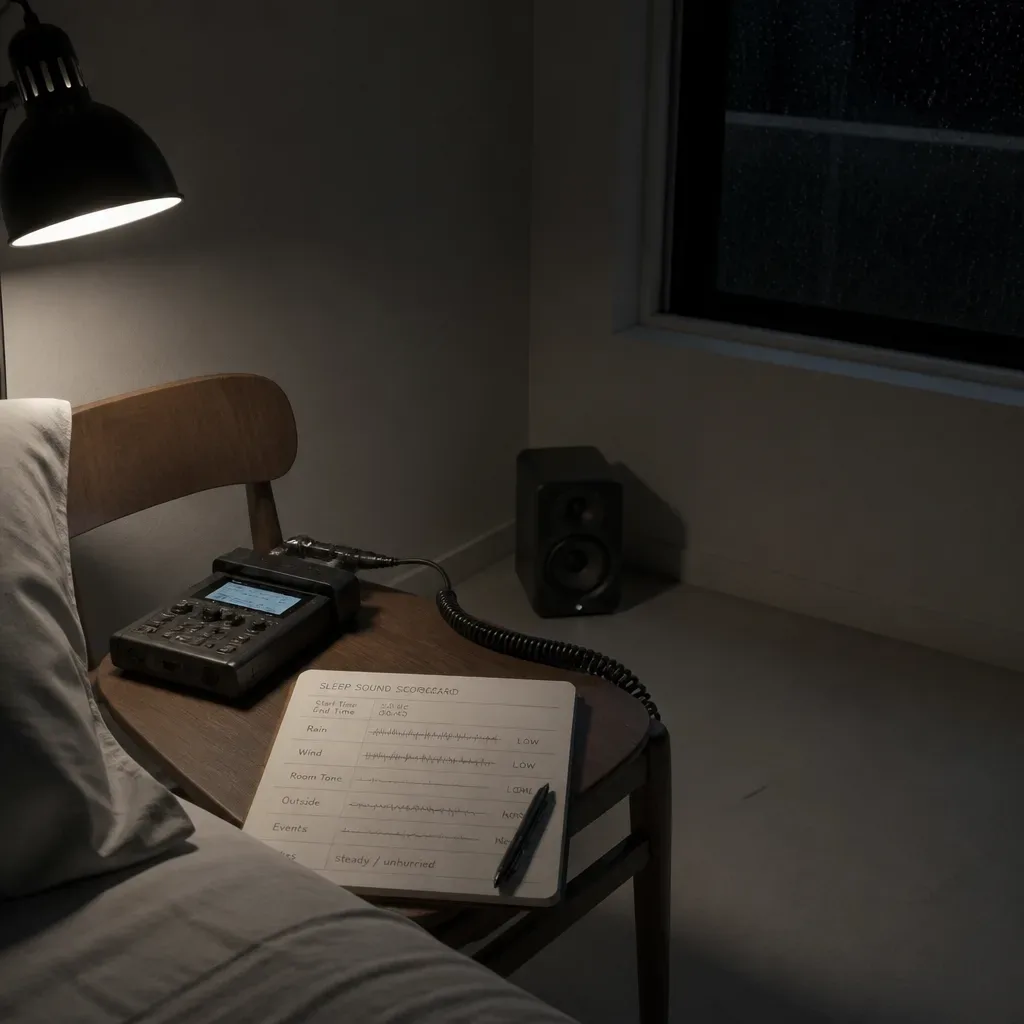
Keep the experiment small. Use two nights, or two 10-minute trials before bed if you do not want to wait. On night one, use near-silence or a black noise track. On night two, use a steady low sound such as pink noise, brown noise, or quiet rain. Keep bedtime, caffeine timing, screen cutoff, and volume as similar as you can. The Sleep Foundation often notes that consistency matters because sleep timing is regulated by circadian rhythm and learned cues.
Use a simple scorecard, not a full sleep diary:
| Measure | Morning note |
|---|---|
| Time to feel sleepy | Under 10 min, 10 to 30 min, over 30 min |
| Awakenings noticed | 0, 1 to 2, 3 or more |
| Sound irritation | None, mild, strong |
| Dream-Self audio attention | Heard clearly, drifted, resisted |
| Want to repeat | Yes, no, unsure |
If black noise loses, that is useful data. Many people sleep better with a low continuous mask. The binaural beats generator + guide can teach you how tone differences feel, while the white noise generator + guide makes masking obvious in seconds. Your job is not to choose the most minimal tool. Your job is to choose the tool that lets the night stop negotiating.
For Dream-Self listening, I would keep the order plain: room quieting first, spoken audio second, device off or timer third. If you use an affirmation or visual board elsewhere in your day, keep it separate from the sleep sound test. The audio remains the central practice.
The room gets quiet enough, and then you listen.