noise colors
Blue Noise for Sleep: Why It Fights Dream-Self Audio
Blue noise for sleep can sound crisp and masking, but its high-frequency tilt may compete with spoken Dream-Self audio instead of supporting it.
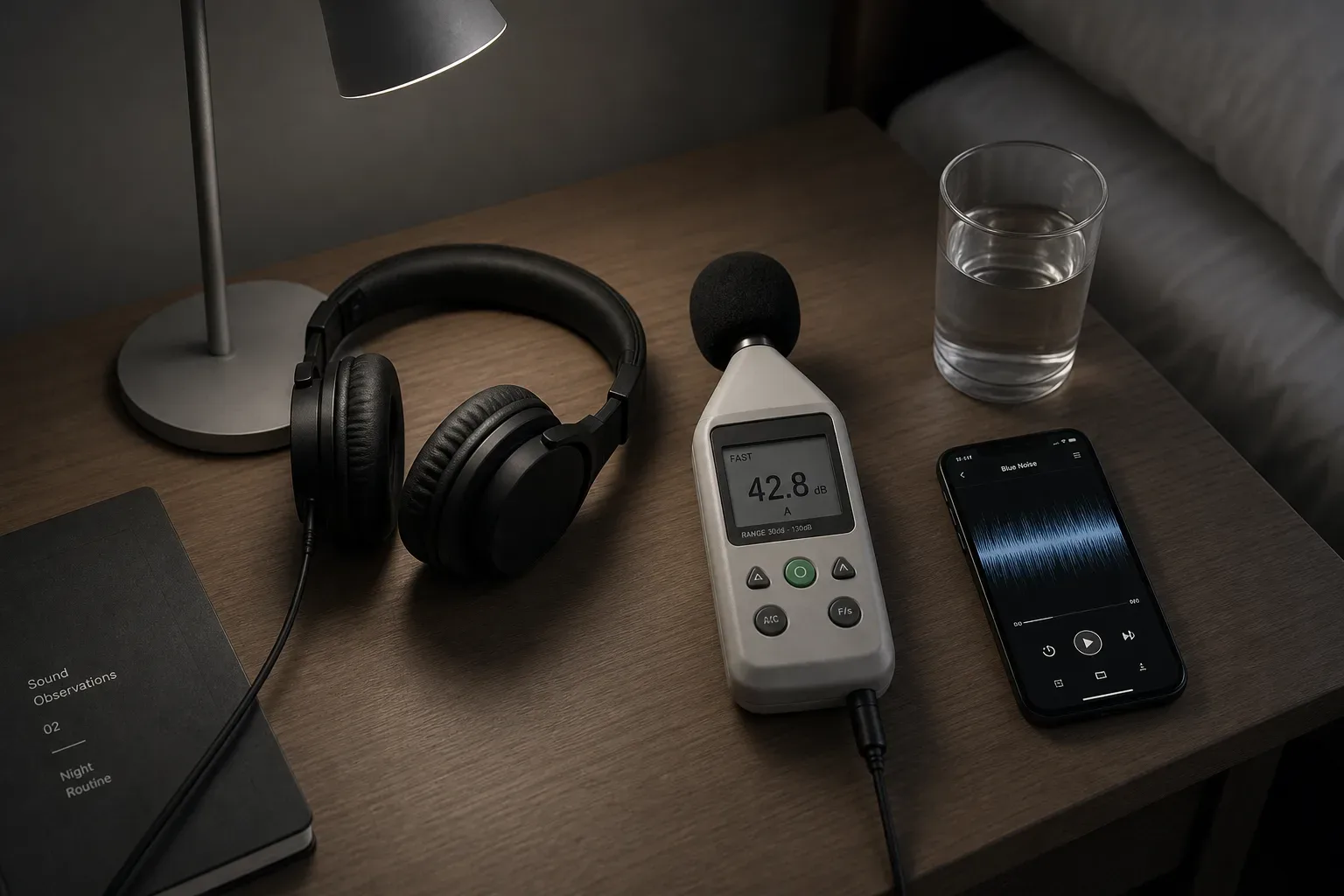
Blue noise for sleep is a bright, high-frequency-weighted noise that can mask crisp sounds, but it often works against spoken Dream-Self audio. Because its strongest area overlaps with speech consonants, it may make a personalized recording harder to hear, less restful, and less useful at bedtime.
What is blue noise, and why does it sound so bright?
Blue noise is random sound with more acoustic energy in the high frequencies than the low ones.
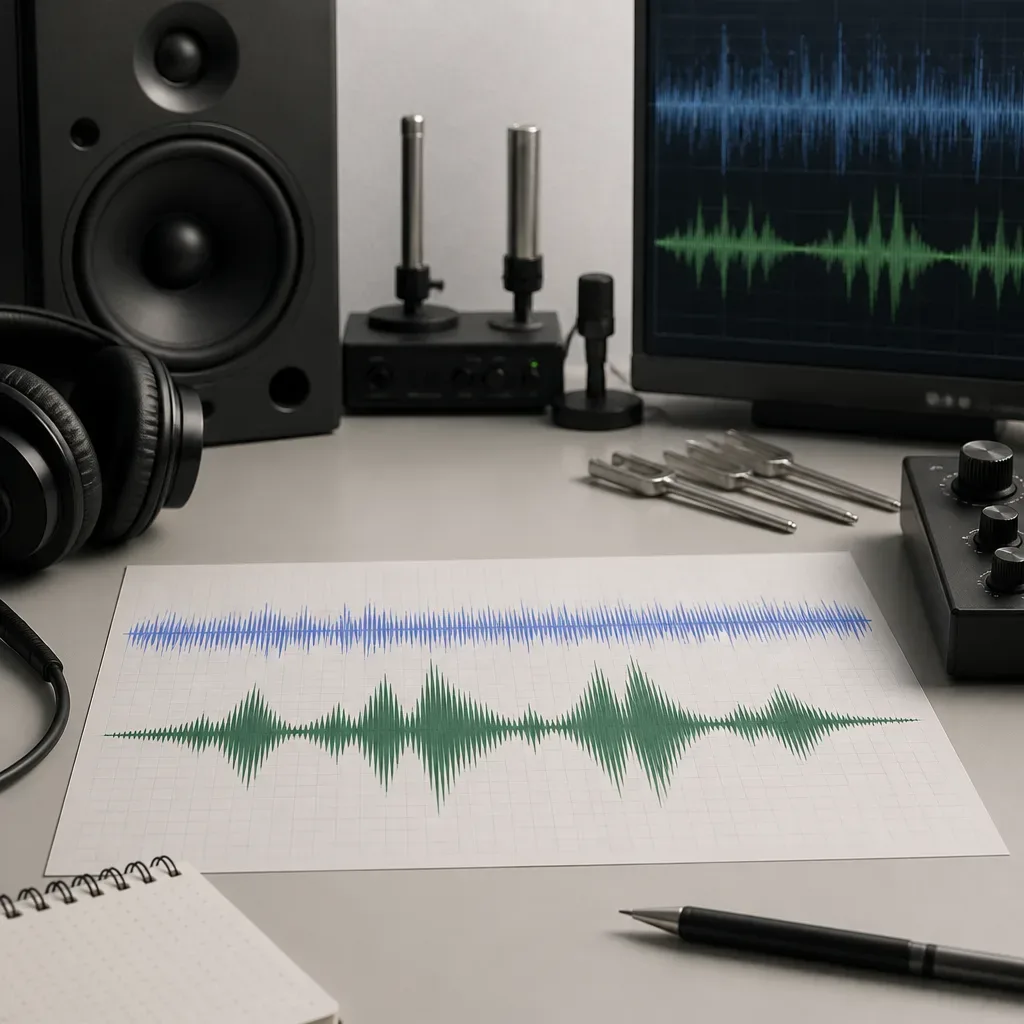
In simple terms, blue noise rises by about 3 dB per octave. If white noise is equal power per hertz, blue noise tilts upward, so the higher bands carry more weight. That tilt is why it can sound like a fine spray, a sharp hiss, or the top edge of static rather than the low hum many people associate with sleep sound. Brown noise goes the other way, dropping by about 6 dB per octave, which is why it feels lower and softer to many ears.
This matters because sleep sound is not only about masking. It is also about what your auditory system can ignore. The American Academy of Sleep Medicine recommends at least 7 hours of sleep for most adults, but it does not recommend one noise color as a medical treatment. Noise color is a tool, not a prescription. The right one is the sound your nervous system stops checking.
Blue noise can be useful in technical contexts. Audio engineers sometimes use shaped noise for dithering, and vision scientists use blue-noise patterns because they distribute detail in a particular way. That does not make it ideal for a bedroom. A sound can be mathematically elegant and still be poor company at 2:17 a.m.
If you want to hear the contrast, compare a bright hiss with a lower, steadier bed in the White noise generator + guide. Press play at a low level, then listen for the point where the sound stops being interesting. For sleep, that point is often more important than the label.
A sleep sound should become less noticeable, not more impressive.
Why might blue noise for sleep compete with spoken audio?
Blue noise can compete with spoken audio because it emphasizes the same upper-frequency area that helps speech sound clear.
Human speech intelligibility depends on more than vowels. Vowels carry body and pitch, often below 1,000 Hz, but consonants carry edges and meaning. Sounds like s, f, t, k, sh, and ch live heavily in the 2,000–8,000 Hz region. Blue noise pushes acoustic weight upward into that region, so it can mask the small cues that tell your brain which word was said. You may hear that someone is speaking without catching the exact sentence.
That distinction matters for Dream-Self audio. The AYA Method is a daily audio manifestation practice. Each day you listen to a short personalized recording — your Dream-Self Moment — narrated from the version of you who has already manifested the life you intend. Listening is the practice. Repetition is the work. The audio is the method. If a noise layer makes the words less distinct, it is not supporting the practice.
Speech researchers often measure intelligibility using signal-to-noise ratio, or SNR. A 0 dB SNR means the voice and background are equally loud; a +10 dB SNR means the voice is 10 dB louder than the background. For relaxed bedtime listening, you usually want the voice comfortably in front, not barely winning.
| Background layer | Likely effect on spoken audio | Better use |
|---|---|---|
| Blue noise | Can blur consonants and add brightness | Short masking tests, not voice-first practice |
| White noise | Broad masking, sometimes hissy | General room masking at low volume |
| Pink noise | Softer high end, more balanced | Sleep sound under quiet environments |
| Brown noise | Low, steady, less top-edge hiss | Wind-down when high sounds feel irritating |
The voice should not have to fight the room you made for it.
Is there evidence that colored noise improves sleep?
The evidence is mixed, with small studies suggesting benefits for some people and stronger proof still limited.
Colored noise research is not one single field. Some studies test white or pink noise in hospital settings. Others test sound masking for traffic noise, intensive care noise, or memory consolidation. A 2017 study in Frontiers in Human Neuroscience reported that pink noise synchronized to slow-wave sleep enhanced slow oscillations and improved memory recall in older adults, but the sample was small, with 13 participants. That is interesting physiology, not a blanket rule for every bedroom.
White noise has slightly more everyday evidence than blue noise. In noisy hospital environments, sound masking can reduce awakenings for some patients, but findings vary by study design and noise source. The World Health Organization’s 2018 environmental noise guidelines also note that nighttime noise is associated with sleep disturbance, with effects depending on level, frequency, and individual sensitivity. Masking may help when it lowers the salience of sudden sounds, but it can also become another stimulus.
Blue noise specifically has much less sleep-focused evidence. Most claims you’ll see online are extrapolated from its frequency shape, not from large randomized sleep trials. That does not mean it cannot help you. It means we should keep the claim plain: blue noise may mask sharp sounds, and some people may like it, but it has not earned a special status as a sleep aid.
A practical sleep test is better than a loud theory. Use the same bedtime, same volume, and same duration for 3 nights. Track sleep onset, wake-ups, and morning ear comfort. The Pittsburgh Sleep Quality Index, first published by Buysse and colleagues in 1989, uses 19 self-rated items because sleep is not one number. Your own notes can be simpler, but the principle holds.
- Did the sound make sudden noises less noticeable?
- Did it feel sharp after 10 minutes?
- Did it make speech harder to follow?
- Did you wake with ear fatigue?
- Did you want to turn it off during the night?
If the answer to the last 2 questions is yes, blue noise is probably not your sleep color.
When can blue noise be useful at night?
Blue noise can be useful when the problem sound is sharp, brief, and high-pitched.
Think of a faint electronic whine, distant brake squeal, a thin pipe sound, or a small charger tone. Because blue noise carries more high-frequency content, it may cover these irritants at a lower overall loudness than brown noise would. That is the narrow case where its brightness can be a feature. You are matching the masker to the intruder, not choosing a mood.
Use a conservative volume. NIOSH sets an occupational exposure limit of 85 dBA over 8 hours, but sleep audio should sit far below occupational limits. At the pillow, many people do well around 30–45 dB, roughly quiet room to soft library level. Phone sound-meter apps are not laboratory instruments, yet they can help you avoid creeping louder over time. If you share a bed, the quieter sleeper’s comfort gets priority.
Blue noise also works better from a speaker than from sealed earbuds for most sleepers. Earbuds place the source close to the ear canal, and bright noise can feel more intense there. If you need headphones, consider open or sleep-specific models, set a timer for 20–45 minutes, and avoid sleeping at high volume. Children’s ears deserve extra caution; keep sound low, distant, and never forced.
Here is a simple test sequence:
- Play the problem sound if you can identify it, such as a fan whine or appliance tone.
- Start blue noise at the lowest audible level.
- Raise it only until the problem sound stops pulling attention.
- Add your spoken audio and check every consonant for clarity.
- If the voice loses edges, reduce blue noise or switch colors.
Masking is successful when you stop measuring it.
What should you play with Dream-Self audio instead?
Use the quietest background that keeps the spoken recording clear and your body settled.
For a Dream-Self Moment, the hierarchy is simple: voice first, room second, texture last. If the voice is personalized, the words are not decorative. They are the object of attention. A background sound should reduce interruptions without asking for analysis. Many listeners do better with silence, soft pink noise, or a low brown-noise bed than with blue noise.
If you like frequency-based tracks, keep the same speech-first rule. A binaural beat is an auditory illusion created when each ear receives a slightly different tone; the brainstem tracks the difference frequency. The Binaural beats generator + guide is useful for hearing this clearly, but the evidence around sleep and mood outcomes is mixed. A 2019 meta-analysis in Psychological Research found small-to-moderate effects across studies, with high variation in methods and outcomes.
Solfeggio tracks need similar care. The Solfeggio frequencies guide explains the tradition respectfully, including names like 396 Hz and 528 Hz. The tradition may be meaningful to listeners, but there is not strong clinical evidence that one fixed tone produces a specific sleep result. If you use one under speech, set it low and check intelligibility.
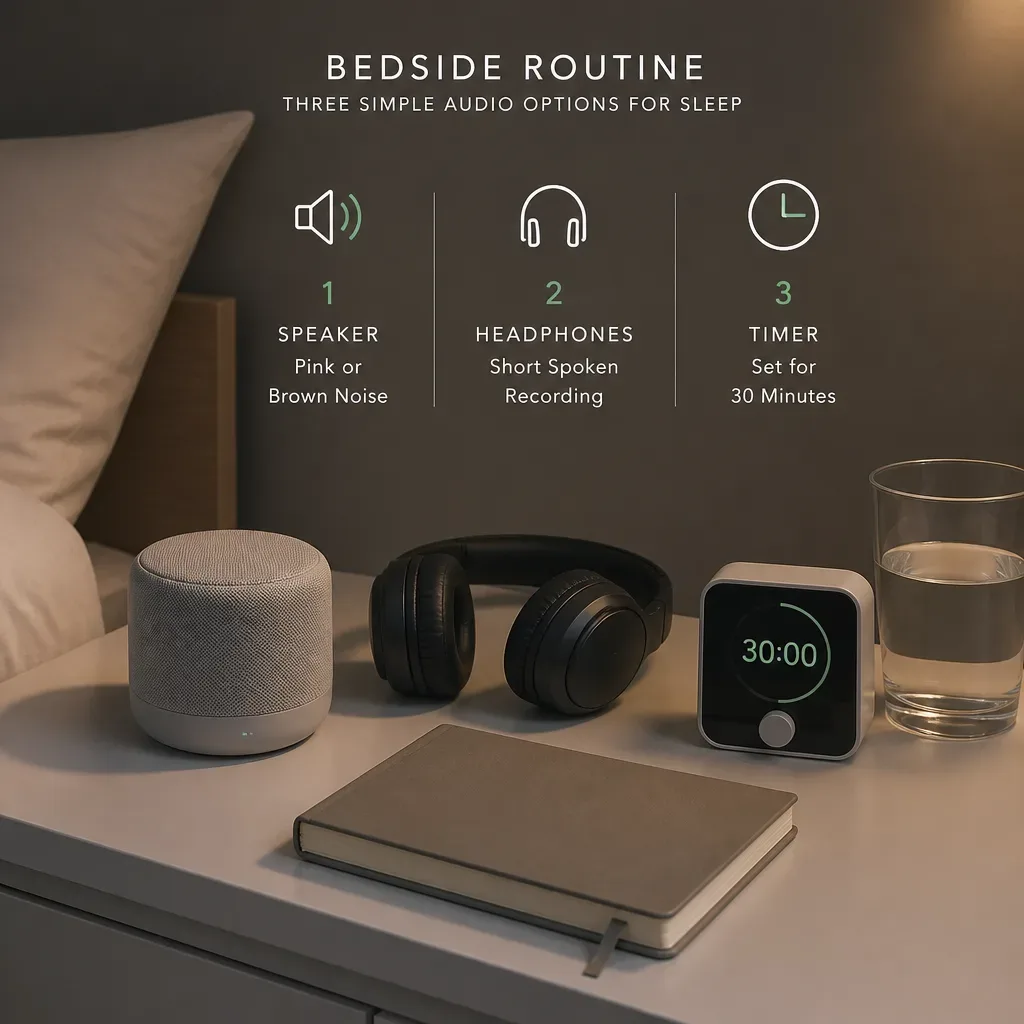
A useful bedtime stack can be very plain:
- 5 minutes of low pink or brown noise to mask the room
- 1 short Dream-Self Moment with no masking, or very low masking
- 10–20 minutes of steady sound after the voice ends if needed
- A timer, so the sound does not run louder than necessary all night
The audio that matters most should be the easiest thing to hear.
How do you decide if blue noise is wrong for your sleep routine?
Blue noise is wrong for your routine if it adds effort, sharpness, or competition with the audio you care about.
The first sign is cognitive effort. If you keep checking the sound, adjusting it, or wondering whether it is helping, it is not yet a sleep tool. Good masking becomes boring. It reduces contrast in the room without becoming the main event. In auditory neuroscience terms, you are lowering salience: the sound should make interruptions less worthy of attention.
The second sign is physical irritation. Bright noise can feel tiring, especially through small phone speakers that exaggerate upper mids or through earbuds that seal the canal. If you wake with a sense of pressure, ringing, or sensitivity, stop using it and lower your overall audio exposure. For tinnitus, chronic insomnia, suspected sleep apnea, or ongoing hearing symptoms, talk with a qualified clinician rather than trying to solve it with noise color.
The third sign is poor speech clarity. Test this before bed, not when you are already half-asleep. Play your Dream-Self audio at the volume you intend to use. Add blue noise. If any sentence becomes fuzzy, the bed is too loud, too bright, or simply the wrong match. A +10 dB voice advantage is a useful practical target: the voice should sound clearly louder than the background.
You can use this decision table tonight:
| What you notice | Likely meaning | Change to try |
|---|---|---|
| Hiss feels sharp | Too much high-frequency content | Try pink or brown noise |
| Voice loses consonants | Masking overlaps speech cues | Lower noise by 6–10 dB |
| Sudden sounds still wake you | Masker is too quiet or mismatched | Try white noise or move speaker |
| You wake tired of the sound | Too loud, too long, or too bright | Use a 30-minute timer |
| You forget the sound is there | Good fit | Keep settings steady for 3 nights |
A quieter setting used every night beats a clever setting you keep changing.
What is the quiet answer on blue noise for sleep?
Blue noise for sleep is a specialized masking sound, not a general best choice for rest or spoken practice.
It can help when the sound you are trying to cover is thin and high. It can also be the wrong tool when your bedtime routine includes voice, because it occupies the acoustic band where speech gets its crispness. That is the central conflict with Dream-Self audio: not belief, not taste, just frequency overlap.
The safest experiment is short, low, and measured. Try blue noise for 10 minutes at the lowest useful level, then add the spoken recording. If the words stay clean and your body settles, fine. If the voice dulls or the hiss becomes noticeable, switch to pink noise, brown noise, or silence. The method does not need a bright bed underneath it.
For most sleepers using personalized audio, I would place blue noise after the voice, not under it. Let it mask the room once the listening is done. Use a timer. Keep the speaker away from your head. Do not chase a perfect noise color when the simpler fix is lowering the room, dimming the phone, and letting the recording remain clear.
The room can hum, but the words should stay plain.