noise colors
Ocean Sounds for Sleep vs White Noise Under Audio
Ocean sounds for sleep feel natural, but white noise may sit steadier under Dream-Self audio. Compare masking, speech clarity, and safe volume.
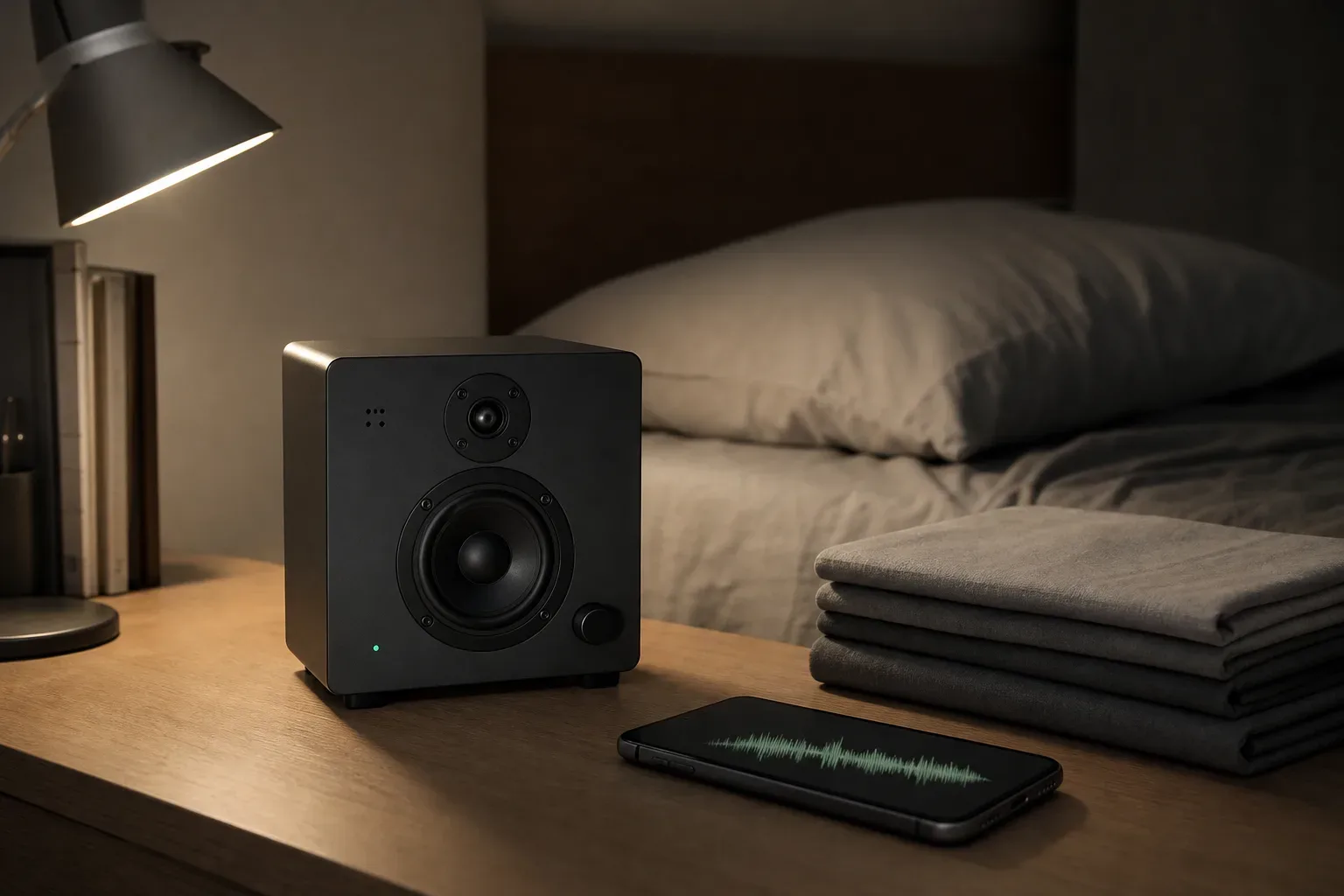
Ocean sounds for sleep feel organic and slow, but white noise is usually the cleaner layer under Dream-Self audio because it stays steady. Use ocean when you want a natural bedtime cue. Use white, pink, or brown noise when you need predictable masking and clear speech. Keep either layer low.
How are ocean sounds for sleep different from white noise under spoken audio?
Ocean sounds are recorded or synthesized scenes with changing wave envelopes, while white noise is a steady signal with equal acoustic power per hertz.
That difference matters when a voice sits on top. Ocean recordings rise, crest, foam, and recede. The envelope changes every few seconds, often in the 3 to 12 second range for edited sleep loops. White noise does not breathe in the same way. Its statistical texture changes from instant to instant, but the average level stays plain and stable. In audio engineering terms, ocean sounds are dynamic; white noise is stationary enough for practical sleep use.
For Dream-Self audio, the voice carries the meaning. If the bed layer moves too much, the ear may track the waves instead of the sentence. This isn’t a moral problem with nature sound. It’s attention physics. A 2014 review in The Lancet by Basner and colleagues notes that environmental noise affects sleep partly through arousals and changes in sleep structure. A sound bed should reduce surprise, not become another event.
White noise has one strength: it masks evenly. That same strength can become a weakness because true white noise contains substantial high-frequency content, the hiss region where consonants live. Many listeners prefer pink noise or brown noise for sleep because they carry less upper-band hiss. If you want to hear the difference, press play in the White noise generator + guide and compare white, pink, and brown at the same phone volume.
A sleep sound is doing its job when you stop listening to it.
Ocean sounds for sleep are often more pleasant at first contact. White noise is often more useful after the first 10 minutes, once the nervous system has stopped asking what the sound is. The question isn’t which one is prettier. The question is which one lets the voice remain plain.
Which sound masks nighttime noise more reliably?
White noise masks sudden room noise more reliably because its spectrum and level are more constant over time.
Masking works when one sound raises the hearing threshold for another sound nearby in frequency. A steady broadband layer can make a refrigerator click, a hallway footstep, or a distant car feel less separate from the room. In small sleep-lab and hospital studies, continuous sound has sometimes reduced awakenings, though the evidence is mixed and context-dependent. One often cited ICU study by Stanchina and colleagues in 2005 found that white noise improved sleep in a noisy setting for a small group of healthy adults exposed to recorded hospital sounds.
Ocean sounds mask differently. During the wave crest, they can cover a lot. During the trough, the room becomes more exposed. That rise and fall can feel soothing if your home is already quiet. It can fail if you live near an elevator, shared wall, or street with irregular traffic. The National Sleep Foundation has reported that many adults use sound to sleep, but preference varies sharply. Preference is useful data, not proof.
Here is the practical comparison:
| Bed layer | Masking consistency | Speech clarity risk | Best use | Watch point |
|---|---|---|---|---|
| Ocean sounds | Medium | Medium | Quiet rooms, bedtime cue | Wave peaks can steal attention |
| White noise | High | Medium to high | Irregular noise, thin walls | Hiss can cover consonants |
| Pink noise | High | Medium | General sleep masking | Still needs low volume |
| Brown noise | Medium to high | Low to medium | Low hum, less hiss | May not mask sharp sounds |
No bed layer should be used to ignore a medical sleep problem. If snoring, choking awakenings, chronic insomnia, or tinnitus is persistent, speak with a qualified clinician.
The most reliable masking sound is not the loudest one. It is the one with enough overlap to blur the disturbance while staying boring to the ear.
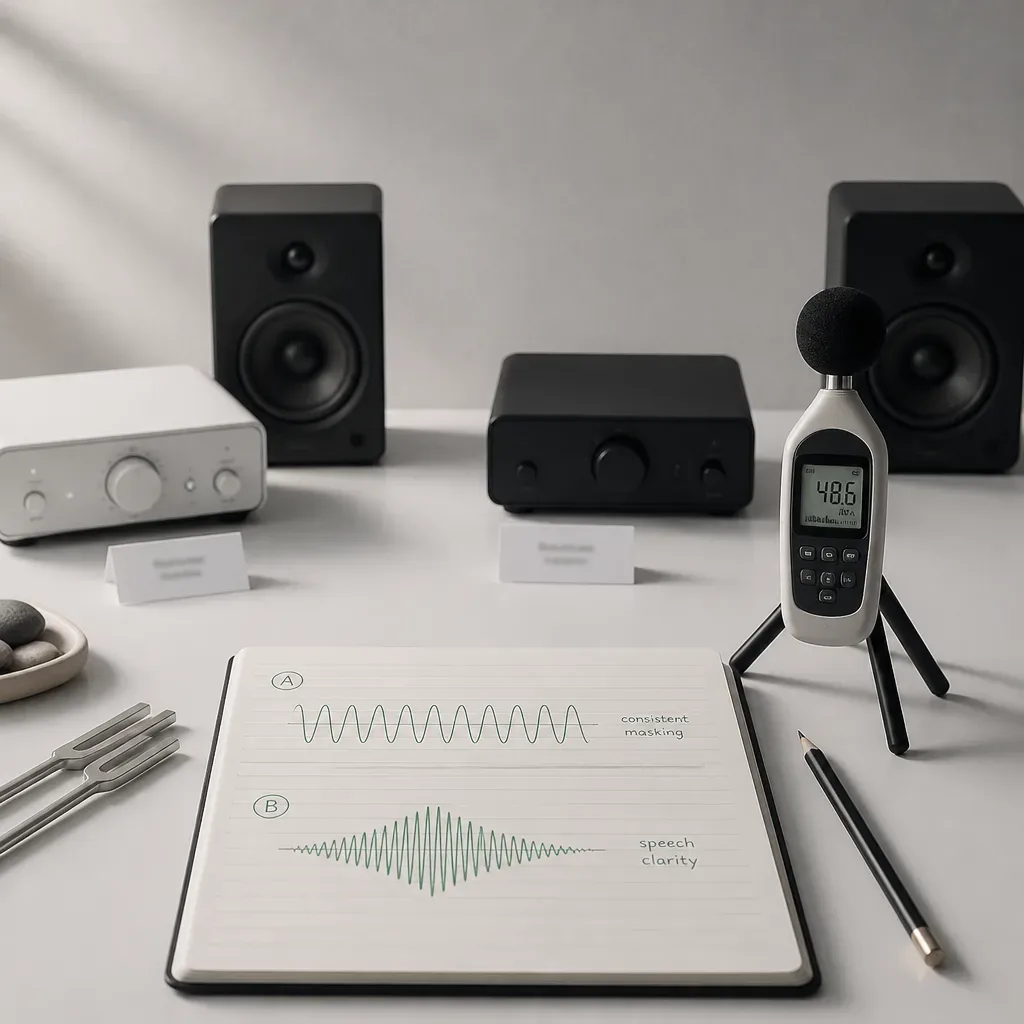
Which one keeps Dream-Self words easier to hear?
A steadier low or mid-weight noise bed usually preserves Dream-Self words better than wave-heavy ocean recordings.
Speech intelligibility depends heavily on consonants, especially in the 2 to 6 kHz range. Vowels carry warmth and identity, but consonants carry many of the edges that separate one word from another. White noise reaches into those upper bands. So can ocean foam, especially recordings with bright surf, close microphone spray, or pebbles moving in the wash. If your Dream-Self audio includes soft narration, any bright layer can blur the message.
This is where pink or brown noise often beats both pure white noise and detailed ocean sound. Pink noise falls by about 3 dB per octave, so each octave carries roughly equal acoustic power. Brown noise falls more steeply, about 6 dB per octave, which gives it a lower hum and less hiss. These curves aren’t magic. They’re filters. But filters matter.
The AYA Method is a daily audio manifestation practice. Each day you listen to a short personalized recording - your Dream-Self Moment - narrated from the version of you who has already manifested the life you intend. Listening is the practice. Repetition is the work. The audio is the method. Because the method is audio, the background layer should behave like room tone, not like a second narrator.
A simple rule: set the voice first, then add the bed. Most people do the opposite. They start with a pleasing ocean loop, then push the voice up until it competes. That can make the whole session louder than it needs to be. The World Health Organization’s 2018 environmental noise guidelines focus on reducing night noise exposure because sleep is sensitive to repeated disturbance. Lower is not only safer. Lower is often clearer.
If you want a second tool after your Dream-Self recording, use it before or after, not on top. A Binaural beats generator + guide can be tested as a separate wind-down layer, but binaural beats need headphones to produce the intended percept. Headphones in bed raise comfort and volume questions. Keep the main practice simple when speech matters.
The voice is the signal. The bed layer is only the floor beneath it.
How loud should the background sound be at night?
Set the background sound just below easy attention, then reduce it until the voice is clearly in front.
A good target for many adults is roughly 40 to 50 dBA at the pillow, measured with a decent sound-level meter or a phone app used cautiously. Phone microphones aren’t lab instruments, but they can stop you from making a 20 dB mistake. NIOSH uses 85 dBA for 8 hours as an occupational exposure limit, with a 3 dB exchange rate. That is not a recommended sleep level. It is a ceiling for workplace risk management.
For children, be more conservative. A 2014 study in Pediatrics measured infant sleep machines and found that some devices could exceed recommended nursery noise limits at close distances. The authors advised lower volume, longer distance, and shorter duration. Adults should borrow the same discipline: speaker away from the pillow, no maximum setting, no need to fill the entire room.
Use this 4-step calibration tonight:
- Play your Dream-Self audio at the lowest level where every word is easy to understand.
- Add ocean sounds or noise at a lower level than the voice.
- Turn the background down until you notice it only between phrases.
- After 5 minutes, reduce the background one more small step.
The 5-minute wait matters because the ear adapts. A level that seems too quiet at first may become enough once your attention stops checking it. In sleep acoustics, first impressions often overestimate the required volume.
If you’re using a generator, prefer steady output over a playlist that changes tracks. Loop seams, ads, and sudden mastering differences can wake a light sleeper. The White noise generator + guide is useful here because you can keep the signal continuous and compare colors without track changes.
Volume is not comfort. Comfort is the point where the room stops interrupting you.
When should you choose ocean sounds for sleep instead?
Choose ocean sounds when the emotional cue of water helps you settle and your room doesn’t need heavy masking.
Some sound choices work because of acoustics. Some work because of learned association. If you grew up near water, use a fan in summer, or have used a certain rain or surf loop for years, that cue can tell the body it’s time to downshift. Conditioning is ordinary nervous system learning. In behavioral sleep medicine, consistent pre-sleep routines are often used to reduce arousal; the American Academy of Sleep Medicine has clinical guidelines for insomnia care that emphasize behavioral approaches such as stimulus control and sleep restriction when insomnia is persistent.
Ocean sounds for sleep may be the better pick when your room is already below about 35 to 40 dBA, your main problem is mental busyness, and the recording is soft rather than cinematic. Avoid tracks with gulls, bells, voices, thunder, dramatic stereo movement, or a wave crash that repeats every 18 seconds. The brain is good at finding patterns, especially when the room is dark.
Nature sounds can also feel less clinical than noise colors. That’s a fair preference. The evidence doesn’t require you to dislike what helps. It only asks you to label the mechanism correctly. Ocean sound is not deeper sleep by itself. It is a moving mask and a bedtime cue. For some listeners, that is enough.
Frequency traditions sit in a different category. The Solfeggio frequencies guide explains the historical claims around tones such as 528 Hz while separating tradition from measured sleep evidence. If you enjoy a tone, keep it gentle. Don’t treat a named frequency as a medical intervention.
Choose ocean when it makes the room feel familiar. Choose noise when the room needs control.
How can you test ocean sounds against white noise tonight?
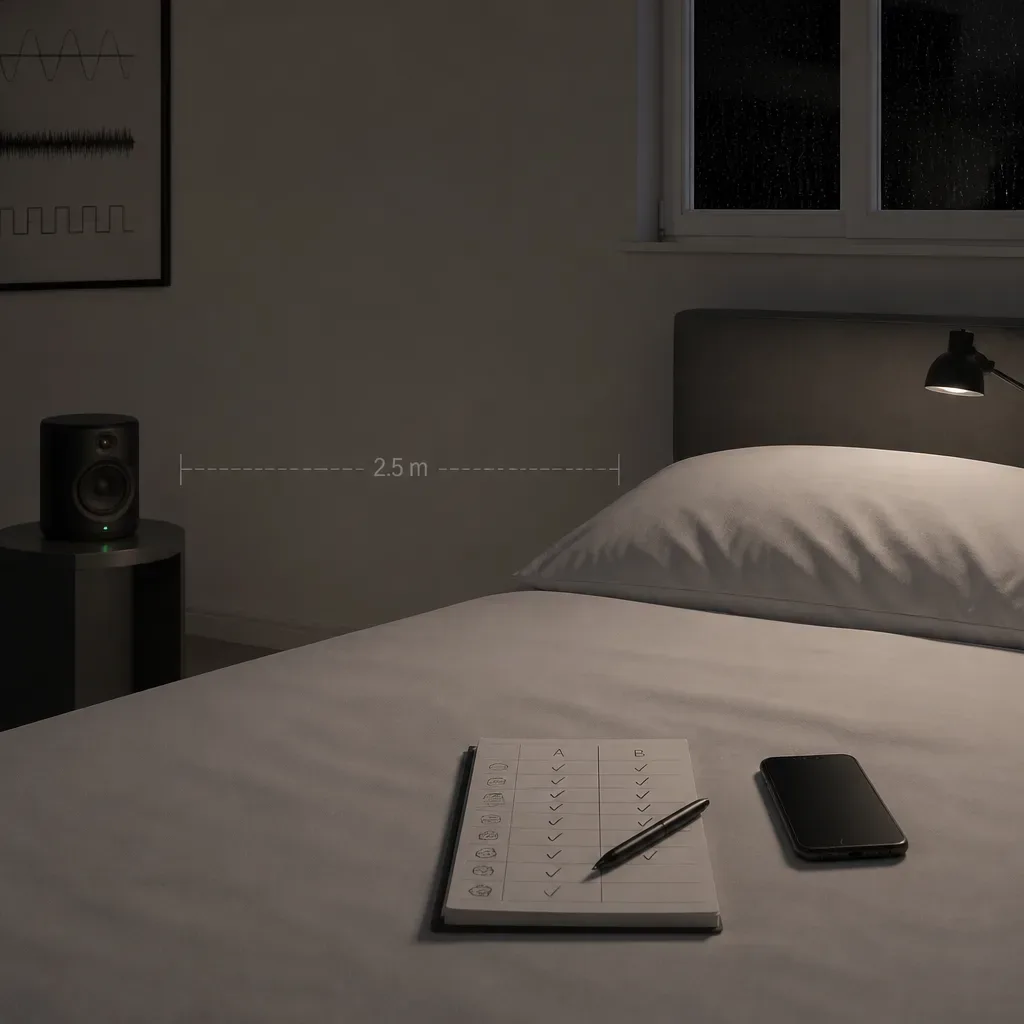
Run a short A/B test at matched loudness and judge only sleep support, speech clarity, and next-morning recall.
Most people compare sounds unfairly. Louder usually seems fuller, calmer, or more complete during the first minute. Audio engineers call this a level bias. Even a 1 to 2 dB difference can change preference in listening tests. You don’t need laboratory precision, but you do need a fair method.
Use this plan on two similar nights, or on one night before sleep if you’re only judging clarity:
- Keep the same speaker position, ideally 1 to 2 meters from your head.
- Keep the same Dream-Self audio level.
- Match the background layers as closely as you can by ear or with a meter app.
- Use ocean sounds for 5 minutes, then silence for 30 seconds.
- Use white, pink, or brown noise for 5 minutes.
- Write down which one let the words stay clearer.
If white noise masks well but feels too sharp, test pink noise before abandoning noise colors. If ocean feels good but covers phrases, choose a farther microphone perspective: distant shore, slow tide, no close foam. If both distract you, use no background under the voice. Quiet is a valid control condition.
There is no universal winner because bedrooms differ. A person near a city road has a different masking problem than a person in a rural house with one ticking radiator. Pew Research Center has reported high rates of smartphone ownership across adult age groups, which means many people can test sleep audio easily, but easy playback doesn’t make every sound appropriate all night.
Keep notes for 3 nights, not 30. You need enough repetition to avoid one bad evening, but not so much tracking that bedtime becomes a project. Rate each layer from 1 to 5 on three measures: word clarity, settling, and morning grogginess. If the numbers tie, choose the lower volume.
The right sound bed is the one you can forget while still hearing what matters.
Tonight, let the voice stay near and the background stay small.