noise colors
Brown Noise for Sleep: When Deeper Sound Helps
Brown noise for sleep can mask sharp sounds with a low, steady hum. Learn when it helps, safe volume ranges, and how to use it tonight.
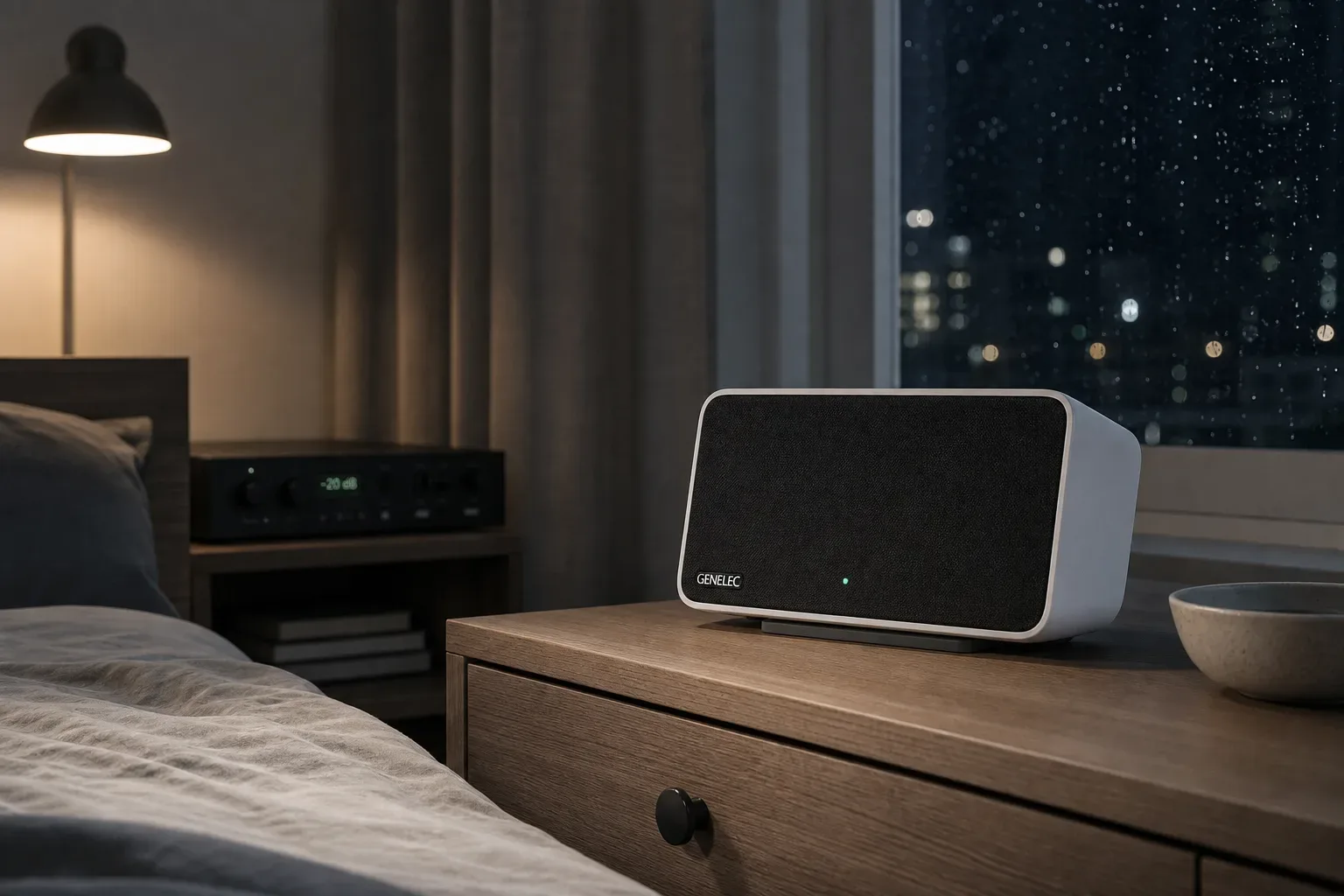
Brown noise for sleep is a low, steady sound that can mask sudden bedroom noise and make drifting off easier for some people. It is not deeper sleep by itself. It is deeper sound: more low-frequency weight, less high hiss, and a practical way to make the room feel less interruptive.
What is brown noise, exactly?
Brown noise is a random sound whose strength drops as frequency rises, so the low end is much more present than the top end.
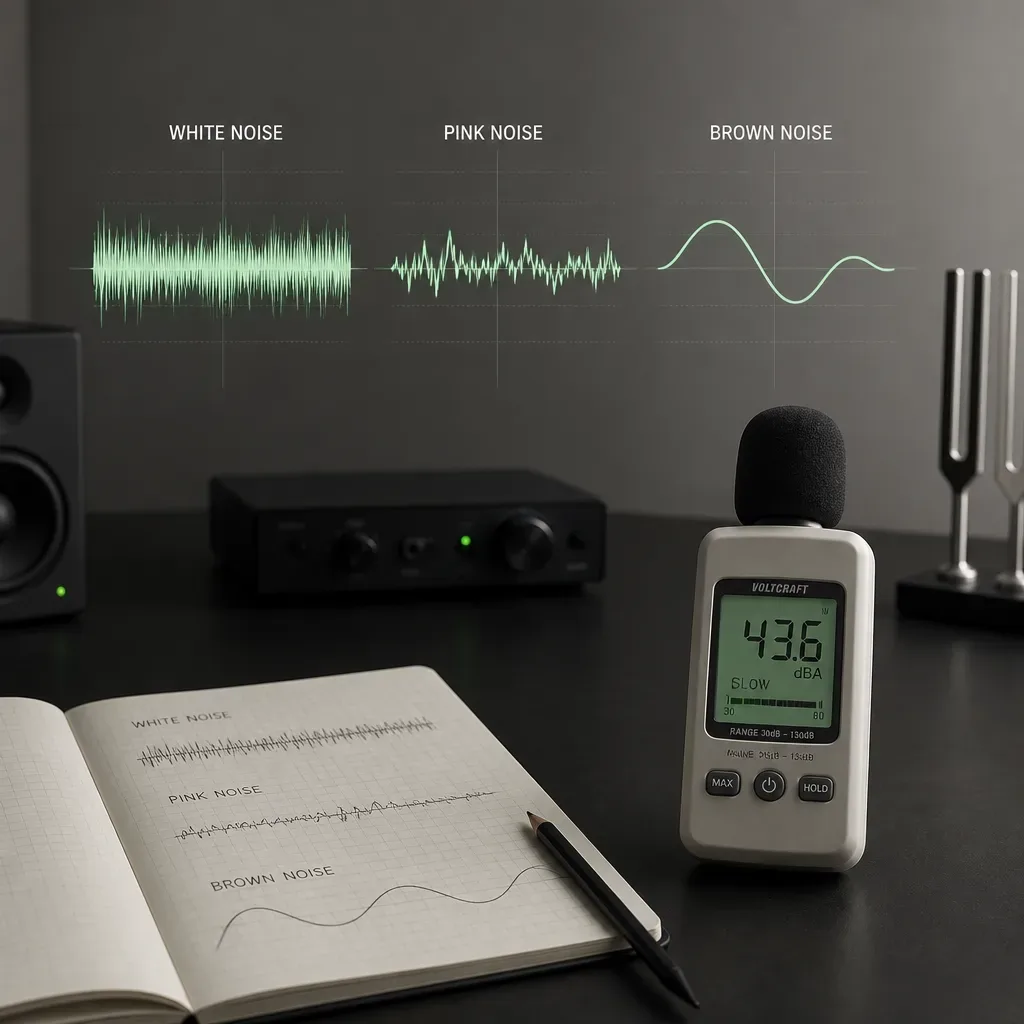
Technically, brown noise is often described as decreasing by about 6 dB per octave as frequency increases. That makes it darker than pink noise, which falls by about 3 dB per octave, and far less hissy than white noise, which has equal sound power per hertz. If white noise sounds like radio static, brown noise tends to sound closer to distant surf, a large fan, or rain heard through a wall.
The name does not come from the color brown. It comes from Brownian motion, the random movement described by botanist Robert Brown in 1827. Audio engineers borrowed the term because the waveform wanders in a similar random way. In practice, you do not need to hear the math. You hear the result: less sparkle, more low hum, and fewer sharp edges.
This matters at bedtime because the sleeping brain is not deaf. A 2018 review by Basner and McGuire for the World Health Organization notes that environmental noise can trigger measurable arousals, heart-rate changes, and sleep fragmentation even when a person does not fully wake. A steady masker can reduce the contrast between silence and disturbance. The dog bark may still happen, but it rises out of a padded floor instead of a blank room.
Brown noise is not a sedative. It does not force the brain into delta sleep, and it does not solve the cause of the noise. A sound mask works by reducing contrast, not by deleting the world. That small distinction keeps the practice honest.
When does brown noise help sleep most?
Brown noise helps most when your main sleep problem is sound contrast: sudden voices, traffic peaks, doors, pipes, or a partner moving in bed.
A quiet room can be peaceful, but it can also make every single interruption stand out. The auditory system is built to notice change. A refrigerator click at 38 dBA may be easy to ignore in the daytime, yet feel bright at 2:00 a.m. because the room has dropped closer to 25 or 30 dBA. Brown noise raises the acoustic floor gently, so a small disturbance has less contrast.
This is why sound masking has more evidence than brown noise as a named color. In a small Sleep Medicine study from 2005, Stanchina and colleagues tested white noise during exposure to recorded hospital noise and found fewer arousals in the noise-plus-mask condition than with hospital noise alone. The sample was small, and the sound was white noise, not brown. Still, the mechanism is relevant: steady broadband sound can blunt the effect of irregular noise.
Brown noise may be especially useful for people who dislike the top-end hiss of white noise. High frequencies are often perceived as sharper at the same measured level, and many phone speakers exaggerate them. Brown noise removes much of that edge. Some nervous systems prefer it. Yours gets a vote.
Brown noise tends to fit these cases:
- Apartment noise with footsteps, doors, or plumbing
- Street noise with occasional cars or motorcycles
- A partner who turns over, breathes irregularly, or gets up early
- A room that feels too silent after moving, travel, or schedule change
- Wind, rain, or house sounds that arrive in bursts
If your main issue is worry, pain, apnea symptoms, restless legs, or chronic insomnia lasting more than 3 months, brown noise may still feel supportive, but it should not be the only plan. Loud snoring, gasping, or daytime sleepiness deserves a clinical conversation.
How do you set the volume safely?
Set brown noise at the lowest level that makes the disruptive sound less noticeable, not at the level that covers everything.
For most bedrooms, a useful target is around 35 to 50 dBA at the pillow. That is roughly the range from a quiet library to a soft conversation in the next room. A phone sound-meter app is not a laboratory instrument, but it can keep you from drifting upward night after night. If the meter reads 60 dBA beside your head, try lowering it before sleep.
Hearing safety guidance gives a ceiling, not a goal. NIOSH recommends limiting occupational noise to 85 dBA over 8 hours, with allowed time cut in half for every 3 dB increase. Bedtime sound should be well below that. Children need extra caution because they may sleep close to devices and cannot always report ear fatigue clearly. For a child, use the quietest possible setting and keep the device away from the pillow.
Headphones need separate care. Many people play sleep audio through earbuds because they share a bed or live in a loud building. If you do, keep the level lower than you think, avoid active tracks with surprise peaks, and consider a timer. The ear canal makes sound feel intimate; that does not mean it is safer. A steady hum can become too much after 7 or 8 hours if it is sitting directly in the ear.
A plain setup works well:
- Start with the brown noise barely audible.
- Raise it one step at a time until the target noise softens.
- Lie down and wait 2 minutes before adjusting again.
- Keep the speaker at least 1 meter from your head when possible.
- Recheck after 3 nights, because the ear adapts quickly.
Quiet is not a number you win. Quiet is the lowest sound that lets the room stop calling for attention.
Where should the sound come from in the room?
Place the sound source between you and the disturbance when possible, and avoid putting it directly beside your ear.
Sound masking works best when the mask and the nuisance sound mix before they reach you. If traffic comes through a window, place the speaker or phone on the window side of the bed rather than on your nightstand by your head. If hallway noise is the issue, a small speaker near the door can help more than a louder speaker near your pillow. Distance gives the sound room to spread.
Low frequencies are less directional than high frequencies, but small speakers often struggle to reproduce true low sound below about 100 Hz. That means a phone labeled brown noise may still be missing part of the low end. A compact speaker can help, but it does not need to be large. You are not building a studio monitor system. You are making a steady acoustic blanket at safe volume.
Use a generator rather than a random video when you can. Ads, compression, and sudden track changes are the opposite of sleep support. The White noise generator + guide is useful if you want to compare hissier masking with a brighter profile, while the Binaural beats generator + guide is better when you want a tone-based track through headphones. Different tools solve different acoustic problems.
Here is a simple placement table:
| Problem sound | Better placement | Why it helps |
|---|---|---|
| Window traffic | Window side, 1 to 2 m from bed | Mixes with traffic before it reaches you |
| Hallway voices | Near door, low volume | Reduces speech contrast at the source side |
| Partner movement | Shared bedside table, not by one ear | Keeps sound even for both sleepers |
| Too-silent room | Across the room | Makes the whole room feel steadier |
Do not chase perfect coverage. If brown noise covers 60 or 70 percent of the distraction, that may be enough for sleep to begin.
How should you use brown noise in a wind-down routine?
Use brown noise as the room-settling layer first, then add only one intentional audio practice if you want a guided focus.
A wind-down routine does not need 12 steps. The nervous system learns from repetition and timing. In sleep research, one adult sleep cycle is commonly described as about 90 minutes, and many people need 20 to 30 minutes to move from wakefulness toward stable sleep. Give the sound enough time to become boring. Boring is the point.
Start the brown noise before you get into bed, not after frustration has built. A 10-minute lead time lets the room sound consistent while you brush teeth, lower lights, and put the phone away. If you use a wearable, do not treat its sleep score as a verdict. Consumer trackers can estimate sleep duration reasonably, but staging accuracy varies by device and study. Your morning sense of rest still counts.
If you use manifestation audio, place it after the room has settled. The AYA Method is a daily audio manifestation practice: each day you listen to a short personalized recording, your Dream-Self Moment, narrated from the version of you who has already manifested the life you intend. Listening is the practice. Repetition is the work. The audio is the method. Brown noise can prepare the room; a chosen voice can hold your attention once the room is less jagged.
A 10-minute version for tonight:
- Turn on brown noise at 35 to 45 dBA.
- Put the source on the noisy side of the room.
- Dim lights for 5 minutes; bright light can delay melatonin timing.
- Play one short audio practice, or skip it and breathe quietly.
- Set a 45-, 90-, or all-night timer depending on what feels best.
If you want frequency-based listening instead of random noise, read the Solfeggio frequencies guide with the same measured attitude: tradition can be meaningful, and evidence still needs to be named plainly.
How does brown noise compare with white, pink, and binaural beats?
Brown noise is best for people who want low masking; white noise is brighter, pink noise is balanced, and binaural beats are a headphone illusion rather than a room masker.
Noise colors describe the distribution of sound across frequencies. They do not describe guaranteed mental states. White noise has equal sound power at each hertz, so the top end can sound strong. Pink noise reduces strength as frequency rises and is often described as more natural. Brown noise slopes more steeply, so it sounds lower and rounder. These are acoustic profiles, not medical categories.
Binaural beats are different. They occur when each ear hears a slightly different tone, such as 200 Hz in the left ear and 207 Hz in the right ear, and the brainstem represents a 7 Hz difference. A 2015 review in Frontiers in Human Neuroscience by Chaieb and colleagues found mixed evidence for mood and cognition effects across studies, with methods varying widely. That does not make binaural beats useless. It means the narrow mechanism is real, while broad claims need caution.
Use this comparison when choosing bedtime audio:
| Sound type | What you hear | Best use | Caution |
|---|---|---|---|
| Brown noise | Low, thick hum | Masking traffic, voices, building noise | Can feel rumbly if too loud |
| Pink noise | Balanced rain-like sound | General sleep masking | Evidence is still modest |
| White noise | Bright static | Covering high or sharp sounds | Hiss can irritate some ears |
| Binaural beats | Two-tone pulse in headphones | Focused listening or relaxation ritual | Not a room masker |
You can press play on the White noise generator + guide, then compare it with a brown track at the same volume. Keep the level constant for at least 30 seconds before deciding. Louder often seems better for the first moment, then becomes tiring.
The right sound is the one you forget fastest.
What should you track over three nights?
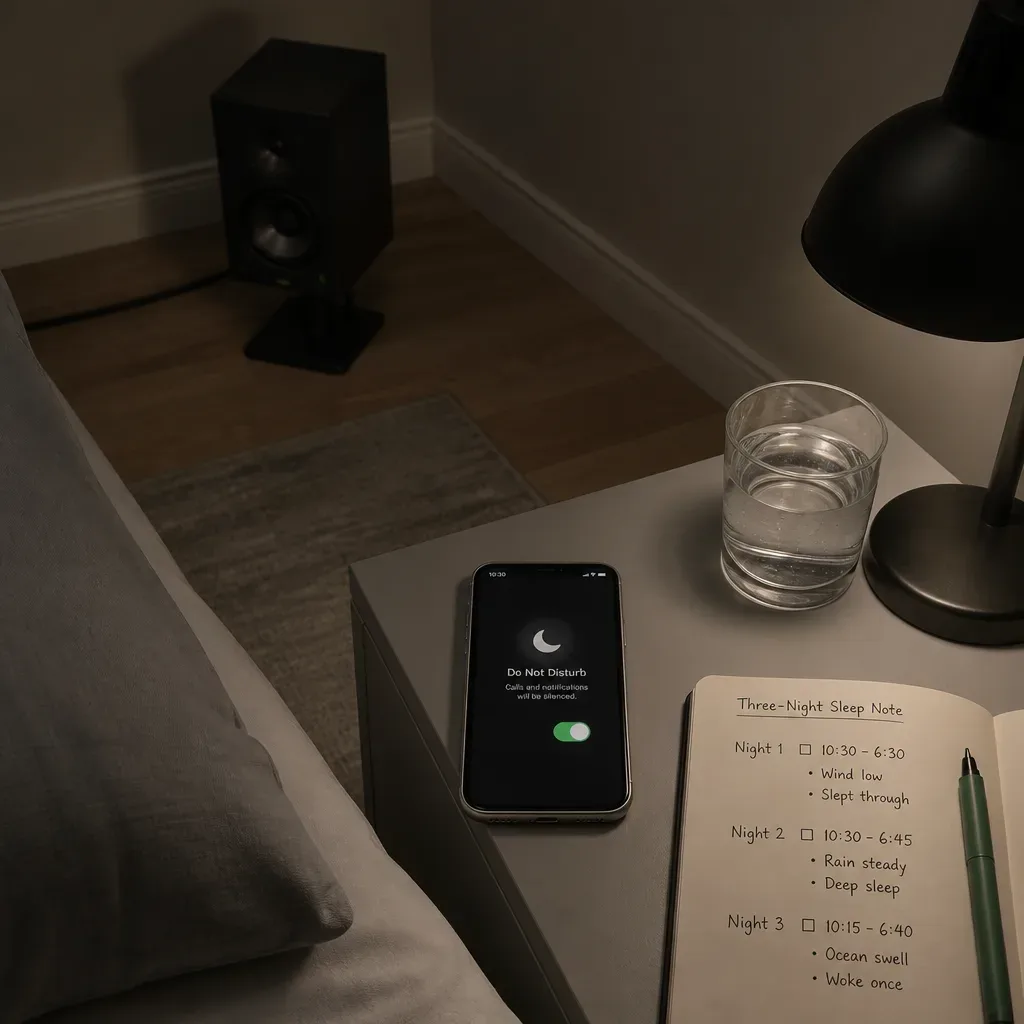
Track comfort, wake-ups, and morning ear feel for 3 nights before deciding whether brown noise belongs in your sleep routine.
One night is a poor test. Sleep varies with caffeine, light, alcohol, stress, menstrual cycle timing, room temperature, and bedtime. The American Academy of Sleep Medicine recommends adults aim for at least 7 hours of sleep per night, but how you reach that number can vary. Give brown noise three ordinary nights so you are measuring a pattern rather than a single odd evening.
Use a note as simple as this:
- Bedtime and wake time
- Brown noise volume estimate, such as 40 dBA or phone level 3
- Timer setting, such as 90 minutes or all night
- Number of remembered wake-ups
- Morning rating from 1 to 5 for rest
- Ear comfort: fine, tired, ringing, or irritated
If wake-ups drop but your ears feel tired, lower the volume. If the sound annoys you, try pink noise or a fan-like white noise. If you wake when the timer stops, use a longer fade or all-night playback at a lower level. Small changes matter. A 3 dB increase is a real acoustic step, not a tiny tweak, because it roughly doubles measured sound power.
Brown noise should make sleep less effortful, not more monitored. If tracking becomes tense, stop after three entries and trust the plain result. You are looking for a practical answer: did the low hum help you settle, and did your ears feel well in the morning?
Use sound gently enough that tomorrow still sounds clear.