sleep science
Exercise Before Bed: Play Dream-Self Audio After Workouts
Exercise before bed can fit sleep if timing is calm. Learn when to play Dream-Self audio after workouts without keeping your system alert.
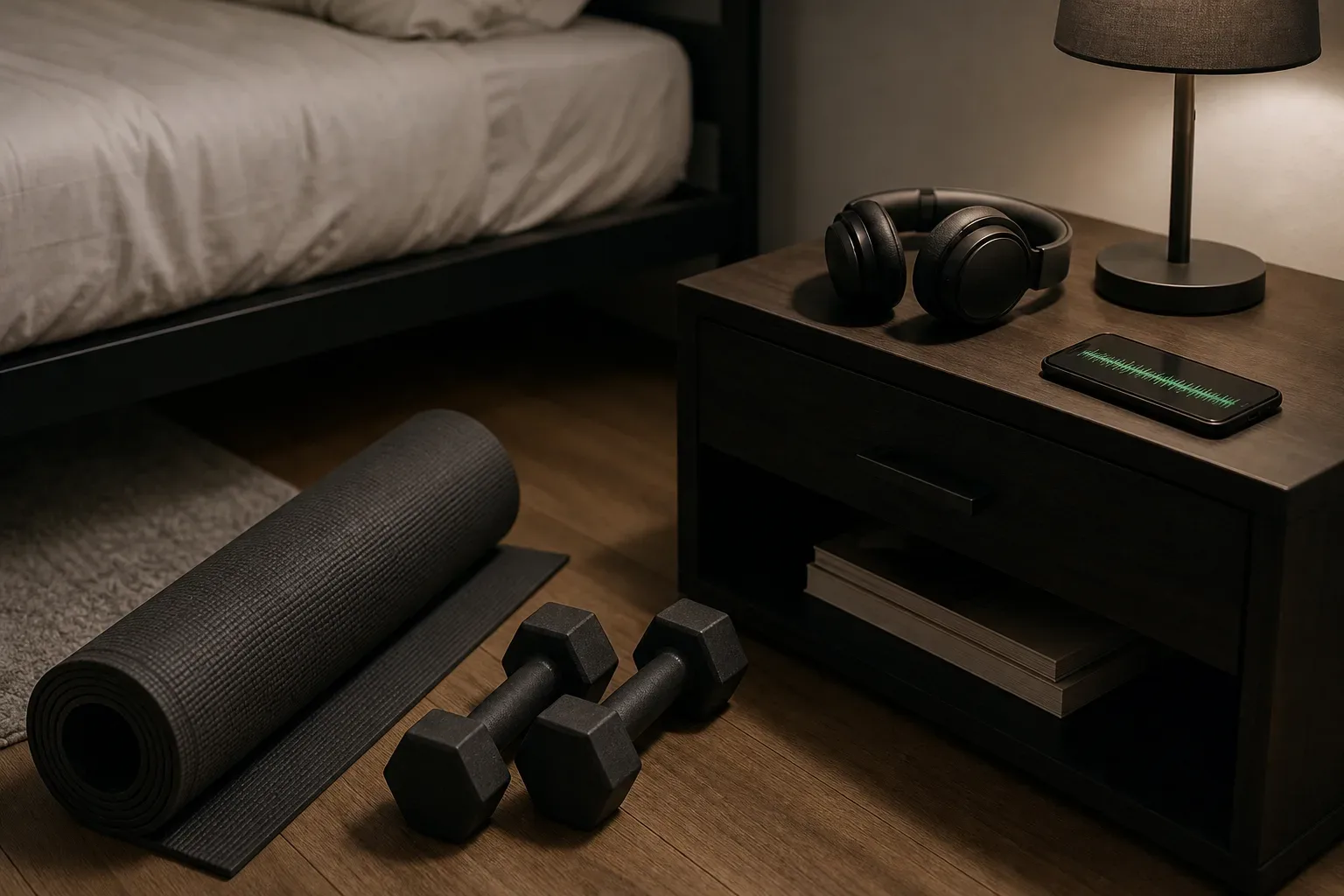
Exercise before bed can work if the workout ends before your nervous system is asked to sleep. Finish hard training early enough to cool down, use plain sound while your body settles, then play Dream-Self audio when breathing, temperature, and attention are steady. For many people, that is 20 to 90 minutes after training.
How long should you wait after exercise before bed?
Most people should wait until breathing, skin temperature, and heart rate feel close to baseline, usually 20 to 60 minutes, before playing Dream-Self audio.
The best timing depends on intensity. A gentle walk, easy yoga sequence, or light resistance session may need only 10 to 20 minutes of quiet transition. A hard run, heavy lifting session, heated class, or interval workout may need 60 to 90 minutes. In a 2018 meta-analysis in Sports Medicine, Stutz and colleagues reviewed 23 studies and found that evening exercise did not generally harm sleep, but vigorous exercise ending within 1 hour of bedtime could reduce sleep efficiency and total sleep time in some participants.
That finding matches what sound designers see in app data and what many listeners report: the body may be tired, but the system is still lit. Sweat, heat, appetite, and mental replay can all keep attention near the workout. Dream-Self audio asks for a different state. It works best when you are receptive, not when you are still timing your last set in your head.
Use this plain timing map:
| Workout type | Minimum wait before Dream-Self audio | Better wait if sleep is fragile |
|---|---|---|
| Easy walk or gentle stretching | 10 to 20 minutes | 20 to 30 minutes |
| Moderate strength training | 30 to 45 minutes | 45 to 60 minutes |
| Tempo run or cycling class | 45 to 60 minutes | 60 to 90 minutes |
| HIIT or heavy late lifting | 60 minutes | 90 minutes or earlier next day |
A clock is useful, but your body is the better meter. If you can breathe through the nose, speak softly without effort, and feel no urge to check performance numbers, you are closer to listening time. Sleep is not won by force. It is protected by removing inputs at the right speed.
What happens in the body after a late workout?
Late workouts raise alerting signals that can outlast the last repetition, especially after vigorous training.
Exercise changes several systems at once. Core body temperature rises, sympathetic nervous system activity increases, and circulating catecholamines such as adrenaline and noradrenaline can stay higher for a while. Sleep onset usually benefits from a drop in core temperature. Research on thermoregulation and sleep has repeatedly found that cooling at the skin and extremities helps the body move toward sleep; one well-known Nature study by Kräuchi and colleagues in 1999 connected distal skin warming and heat loss with faster sleep onset.
This does not make late exercise wrong. It means the transition matters. The American Academy of Sleep Medicine recommends that adults get 7 or more hours of sleep per night on a regular basis. If your training pushes bedtime later by 45 minutes, that cost is easy to measure. If your training improves mood and consistency, that benefit also counts. The useful question is not whether exercise before bed is allowed. The useful question is whether the workout leaves enough quiet runway.
Post-workout alertness is also cognitive. Music may still be looping in your head. You may be thinking about form, numbers, body image, or tomorrow. Spoken manifestation audio should not compete with that noise. The recording needs room.
A simple check helps:
- Your breathing has slowed without being managed.
- Your skin no longer feels flushed or overheated.
- You are not hungry enough to plan food while listening.
- You can leave your phone face down for 10 minutes.
- You feel ready to receive words, not evaluate them.
When those are true, the workout is no longer the loudest event in the room.
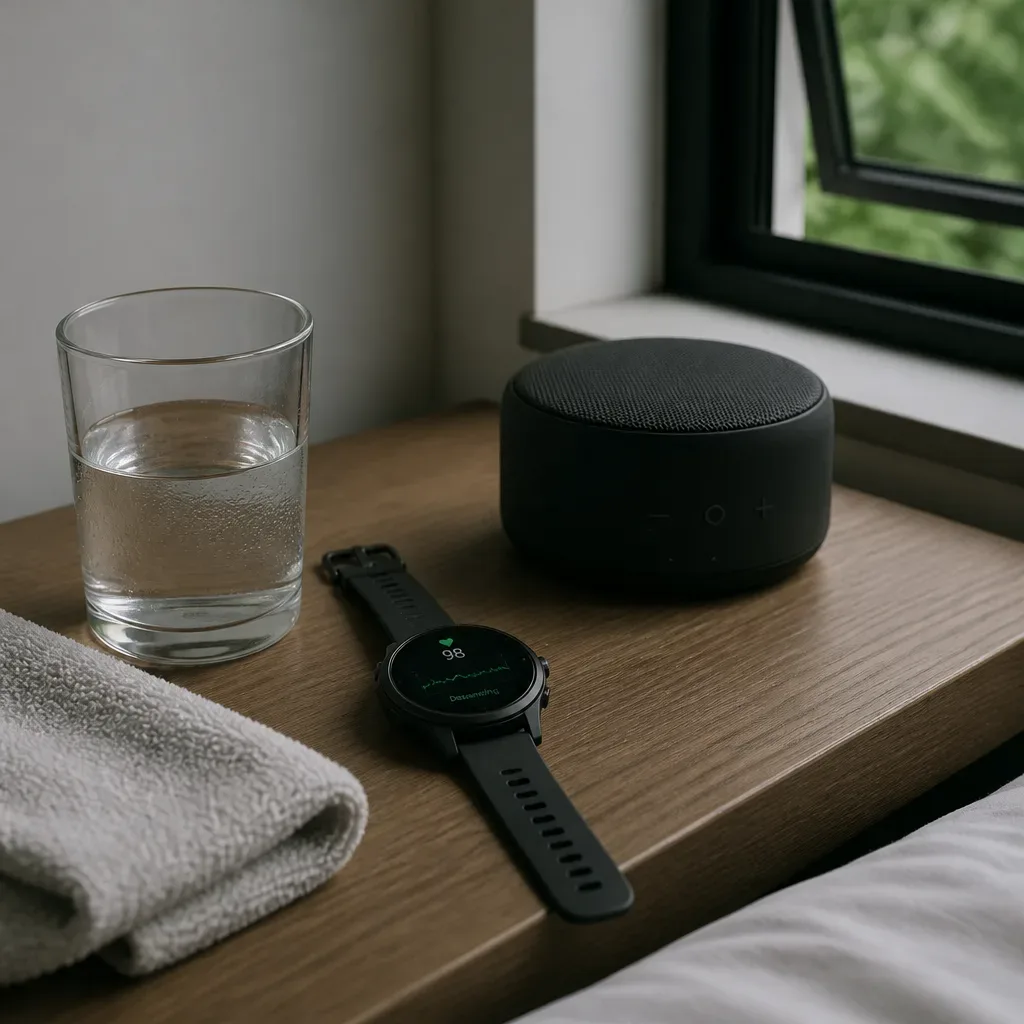
Where should Dream-Self audio fit in a wind-down?
Dream-Self audio belongs after physical recovery steps and before sleep sound becomes automatic background.
The AYA Method is a daily audio manifestation practice. Each day you listen to a short personalized recording, your Dream-Self Moment, narrated from the version of you who has already manifested the life you intend. Listening is the practice. Repetition is the work. The audio is the method. If you use the AYA Method after exercise, treat it as the central listening act, not as something you bury under chores.
The order matters because spoken audio carries meaning. Your brain tracks language differently from noise. A 2021 review in Neuroscience & Biobehavioral Reviews noted that auditory processing continues during sleep, but meaningful stimuli can produce different brain responses than neutral tones. That is one reason a name, alarm, or conversation can cut through a room even at low volume. Use that fact with care. Play the Dream-Self Moment when attention is soft but still present.
A clean post-workout order looks like this:
- End the workout with a clear last set, not one more test.
- Walk for 3 to 8 minutes until breathing eases.
- Shower or wash your face if heat is still present.
- Dim lights and put the phone into audio-only use.
- Play plain masking sound for 5 to 10 minutes if needed.
- Listen to the Dream-Self Moment once.
- Let silence, brown noise, or a sleep timer carry the rest.
If you want a neutral bed before or after the recording, use the White noise generator + guide and compare white, pink, and brown settings at a low level. Press play and listen for the difference: white noise has more hiss, pink noise is more balanced, and brown noise leans lower. Some nervous systems prefer the low hum after training.
The recording should feel like the first still point after movement. If it feels like another item to complete, wait 10 minutes.
Which sounds help the body settle after training?
The best post-workout sounds are steady, low, and uninteresting enough to reduce monitoring.
After exercise, the ear often wants less detail. Music can be helpful earlier in the evening, but melody, lyric, and rhythmic change can hold attention. For sleep preparation, plain masking sound usually asks less of the brain. Brown noise is not deeper sleep. It is deeper sound: more acoustic energy in low frequencies, less high-frequency hiss. Pink noise sits between white and brown, dropping about 3 dB per octave and often sounding smoother than white noise.
Volume matters more than the sound label. The World Health Organization has recommended keeping average nighttime environmental noise below 40 dB outside the bedroom when possible, with 55 dB as a level where adverse effects become more likely. A phone speaker or small bedside speaker is not a calibrated lab device, but the principle holds: keep it quiet. If headphones are used, the level should be low enough that you could miss a few details and still feel safe. Children need even more conservative volume.
Here is a practical sound choice table:
| State after workout | Better sound | Avoid for now |
|---|---|---|
| Hot and alert | Brown noise or fan-like hum | Fast music, podcasts |
| Mentally busy | Pink noise | Lyrics, news, debates |
| Room is too quiet | Soft white noise | Silence that makes you monitor the body |
| Already calm | Dream-Self audio, then silence | More tools than needed |
Binaural beats can be used, but do not treat them as guaranteed sedation. A binaural beat is an illusion your brain constructs from two tones with slightly different frequencies, one in each ear. The illusion is real. The claims around it are mixed. If you want to test them, use the Binaural beats generator + guide on a non-critical night and keep the volume low.
Solfeggio tones sit in a different category. The Solfeggio frequencies guide explains the tradition respectfully, including commonly cited tones such as 396 Hz, 528 Hz, and 852 Hz. The tradition may be meaningful to you, but the evidence for specific sleep effects is limited. Liking 528 Hz is allowed. Calling it a guaranteed sleep treatment is not.
How do you build a 25-minute post-workout routine?
A 25-minute routine works when it separates recovery, masking, intentional listening, and sleep entry into distinct phases.
This is the routine I would design for a listener who trains after work and cannot move the session earlier. It assumes the hardest exercise is already finished at least 30 minutes before bed. If your workout ends right at bedtime, use the routine anyway, but consider making the training easier. The National Sleep Foundation has reported that regular exercisers often describe better sleep than non-exercisers, but timing and intensity still change the night.
A measured 25-minute sequence
- Minutes 0 to 5: downshift movement. Walk around the room, tidy only what is necessary, and let breathing normalize. Do not stretch aggressively. Intense stretching can become another workout.
- Minutes 5 to 10: reduce heat. Shower warm, not hot, or wash sweat from the skin. A warm shower can help later cooling, but a very hot shower too close to bed may keep you flushed.
- Minutes 10 to 15: mask the room. Use low brown or pink noise. The White noise generator + guide is useful here because you can change color without opening a new app or choosing a playlist.
- Minutes 15 to 20: play Dream-Self audio. Sit or lie down. Keep the room dim. Do not multitask. Spoken audio deserves a still listener.
- Minutes 20 to 25: leave fewer signals. Stop the voice track. Continue plain noise, lower it, or let silence take over.
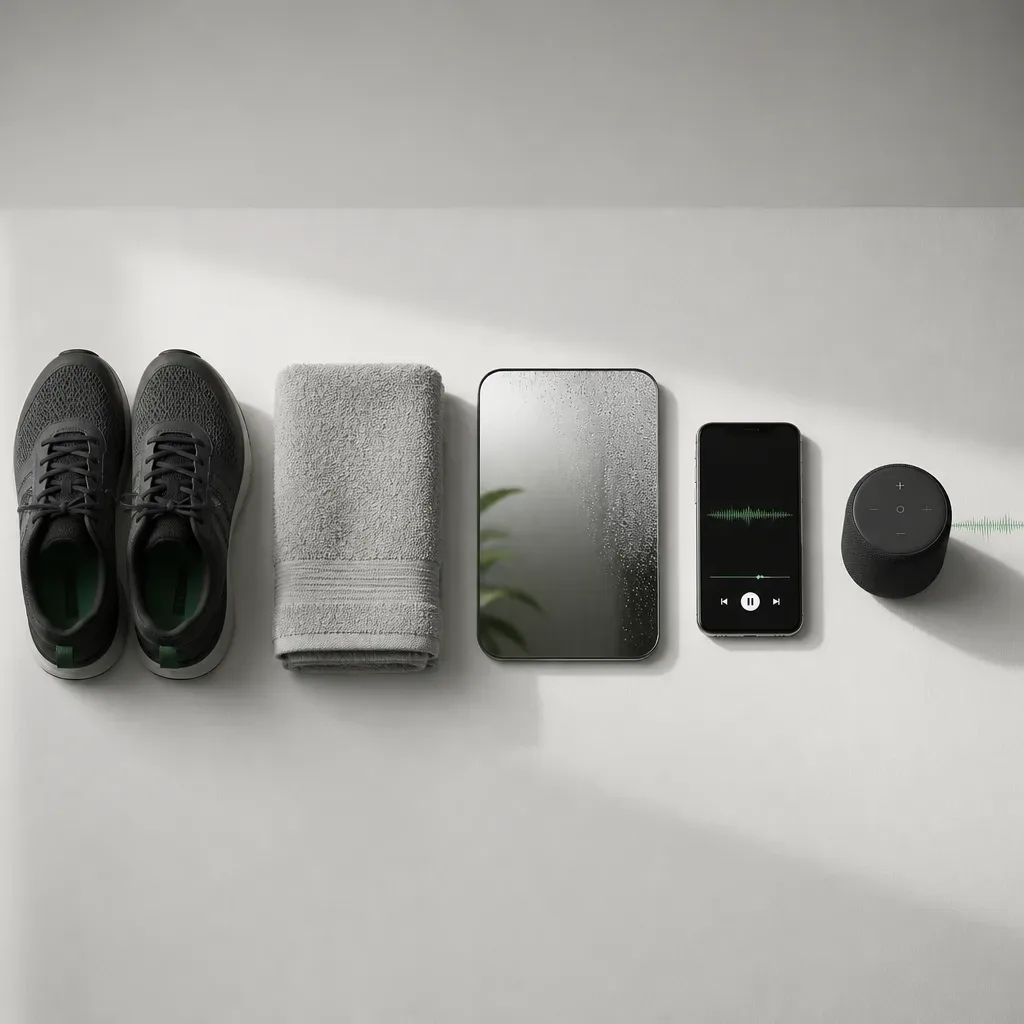
The sequence is short on purpose. A wind-down that takes 70 minutes is often abandoned by the third night. A 25-minute structure is easier to repeat, and repetition is where the method becomes clean. One quiet recording heard daily will usually beat a perfect routine done twice a month.
If you use wearables, treat the numbers as weather, not law. Resting heart rate, heart rate variability, and skin temperature can help you notice patterns over 14 to 30 nights. They cannot tell you whether tonight deserves self-criticism. Your sleep routine should reduce scoring, not add another scoreboard.
When should you skip late workouts or change the plan?
Change the plan when late exercise repeatedly delays sleep, raises anxiety, worsens symptoms, or turns listening into effort.
A single rough night is not proof. Look for a pattern across 2 weeks. If vigorous exercise before bed leads to more than 30 minutes of sleep onset delay on most training nights, reduce intensity, move the session earlier, or separate hard days from Dream-Self listening by more time. The 2018 Sports Medicine review is useful here because it does not ban evening exercise. It points to the edge case: vigorous sessions ending too close to bed.
There are also medical boundaries. If you have chronic insomnia, sleep apnea symptoms, chest pain, dizziness, panic symptoms, or tinnitus that changes with headphones or sound, speak with a qualified clinician. Audio can support a routine. It is not a diagnosis, and it is not treatment for a medical sleep disorder.
For most people, adjustment is small. Try one variable at a time for 7 nights:
- Move intense intervals earlier by 30 minutes.
- Replace late HIIT with zone 2 cardio or mobility.
- Lower sound volume by 10 to 20 percent.
- Put Dream-Self audio after the shower, not before.
- Use brown noise for the first 10 minutes after training.
- Stop checking workout metrics once lights are dim.
If you are curious about frequency-based audio, test it like an engineer. Use the Binaural beats generator + guide or the Solfeggio frequencies guide on separate nights, not all at once. Keep notes simple: workout intensity, audio used, bedtime, estimated sleep onset, and how you felt on waking. Four data points are not science, but 14 nights can show your own pattern.
The quietest routine is often the most durable one. Train, cool, listen, stop adding inputs.
Let the last sound be easy to leave.