sleep science
Sleep Mask Benefits for Dream-Self Audio in Full Dark
Sleep mask benefits include less light, fewer visual cues, and a steadier setting for Dream-Self audio when you want full dark at bedtime.
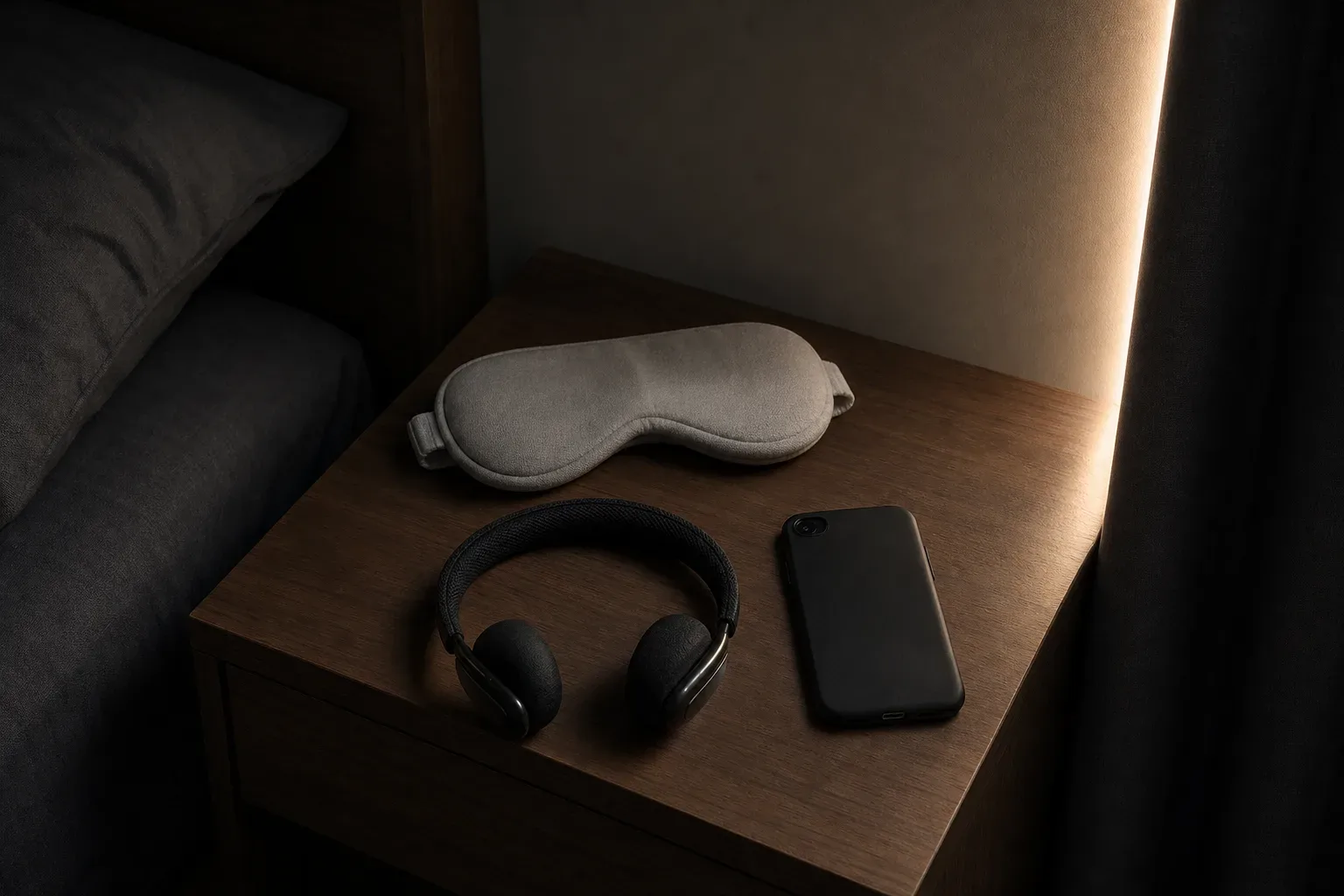
Sleep mask benefits are mostly about light control: a mask blocks stray illumination, lowers visual stimulation, and makes bedtime darker without rebuilding your room. In full dark, spoken Dream-Self audio can become easier to follow because your eyes have less to negotiate and your attention has fewer exits.
What sleep mask benefits are actually supported by sleep science?
The best-supported sleep mask benefits are environmental, not magical: less light reaches the retina, and the brain receives a cleaner night signal.
Light is one of the main inputs to the circadian system. Specialized retinal cells containing melanopsin send light information to the suprachiasmatic nucleus, the brain clock that helps time sleep and wakefulness. A sleep mask works at the simplest point in that chain. It doesn’t persuade the brain to sleep. It reduces one signal that can keep the brain measuring the room.
The evidence is modest but useful. A 2010 study in Critical Care tested eye masks and earplugs in a simulated intensive care setting and found improved reported sleep quality and more REM sleep under the protected condition. A 2015 meta-analysis in Journal of Clinical Nursing reviewed multiple ICU studies and found that masks and earplugs tended to improve subjective sleep, though the trials were small and varied in quality.
Outside the hospital, the mechanism still makes sense. Even dim light can matter. A 2022 Proceedings of the National Academy of Sciences study with 20 adults found that sleeping with moderate room light, about 100 lux, increased nighttime heart rate and next-morning insulin resistance compared with dim light. That doesn’t mean every bedside LED is dangerous. It does mean darkness is a measurable input.
A mask is a small device that changes the room your nervous system thinks it is in. That sentence is the plain center of the topic.
If you already use sound at bedtime, darkness also changes how sound is received. With fewer visual cues, the voice, hum, or tone becomes easier to notice without raising volume. That is especially relevant when the audio is spoken and personal rather than only background sound.
Why does full dark make bedtime audio easier to hear?
Full dark makes bedtime audio easier to hear because attention has fewer visual objects to track before sleep.
Hearing doesn’t require darkness, of course. The auditory system remains active during sleep, and the brain continues to process some speech, tones, and threat-relevant sounds. A 2014 study in Current Biology showed that sleeping brains can still sort spoken words by category, though conscious recall is another matter. The point for bedtime practice is narrower: before you fall asleep, reducing visual input can make the first minutes of listening steadier.
This matters for spoken manifestation audio because speech carries meaning. With white noise or rain sound, you can drift without following each detail. With a Dream-Self recording, the first pass is often intentional listening. The mask tells the eyes their shift is over. The ears don’t have to compete with the doorway crack, the charger light, or the moving shadow from the street.
There is also a behavioral layer. A mask is a physical cue. In behavioral sleep medicine, repeated cues matter because the bed can become associated with wakefulness or rest. Stimulus control therapy, a core CBT-I tool, is built on that principle and has decades of clinical use. When the same mask appears only at wind-down, it becomes part of the sequence.
A useful sequence has 4 parts:
- Dim the room 30 to 60 minutes before bed.
- Start a low, steady sound if your room is unpredictable.
- Put the mask on only when you are ready to stop looking around.
- Play the spoken audio at a level you could speak over easily.
The goal is not sensory deprivation. The goal is fewer competing signals. Quiet practice is often a matter of subtraction.
How should you combine a sleep mask with Dream-Self audio?
Use the mask to create darkness first, then play the audio quietly enough that it doesn’t make sleep feel like a task.
For readers using the AYA Method, the order is simple: settle the room, cover the eyes, then listen to the Dream-Self Moment. The AYA Method is a daily audio manifestation practice. Each day you listen to a short personalized recording, narrated from the version of you who has already manifested the life you intend. Listening is the practice. Repetition is the work. The audio is the method.
That definition matters here because the sleep mask is not the method. It is preparation. It makes the room plainer so the spoken recording can be heard with less friction. The daily affirmation and Manifestation Board can complement the habit, but for this routine, the audio carries the practice.
Volume should be conservative. NIOSH uses 85 dBA as an occupational exposure limit for 8 hours, but sleep listening should be far below that because the goal is rest, not sound coverage in a factory. In practice, set headphones or a speaker to the lowest level where the words are clear. If your device shows a volume bar, many people land around 20% to 40%, though hardware varies too much for that to be a safety measure.
Here is a practical comparison:
| Setup | Best for | Watch point |
|---|---|---|
| Sleep mask plus speaker | Side sleepers and shared-ear comfort | Roommates may hear speech |
| Sleep mask plus over-ear headphones | Clear voice and less room noise | Heat and pressure can wake you |
| Sleep mask plus sleep headband | Soft contact and stable position | Drivers may sit unevenly |
| Sleep mask plus earbuds | Maximum speech clarity | Ear soreness and wax buildup |
If you use audio nightly, give your ears the same respect you give your eyes. Clear is enough. Louder is usually just more arousal wearing a useful costume.
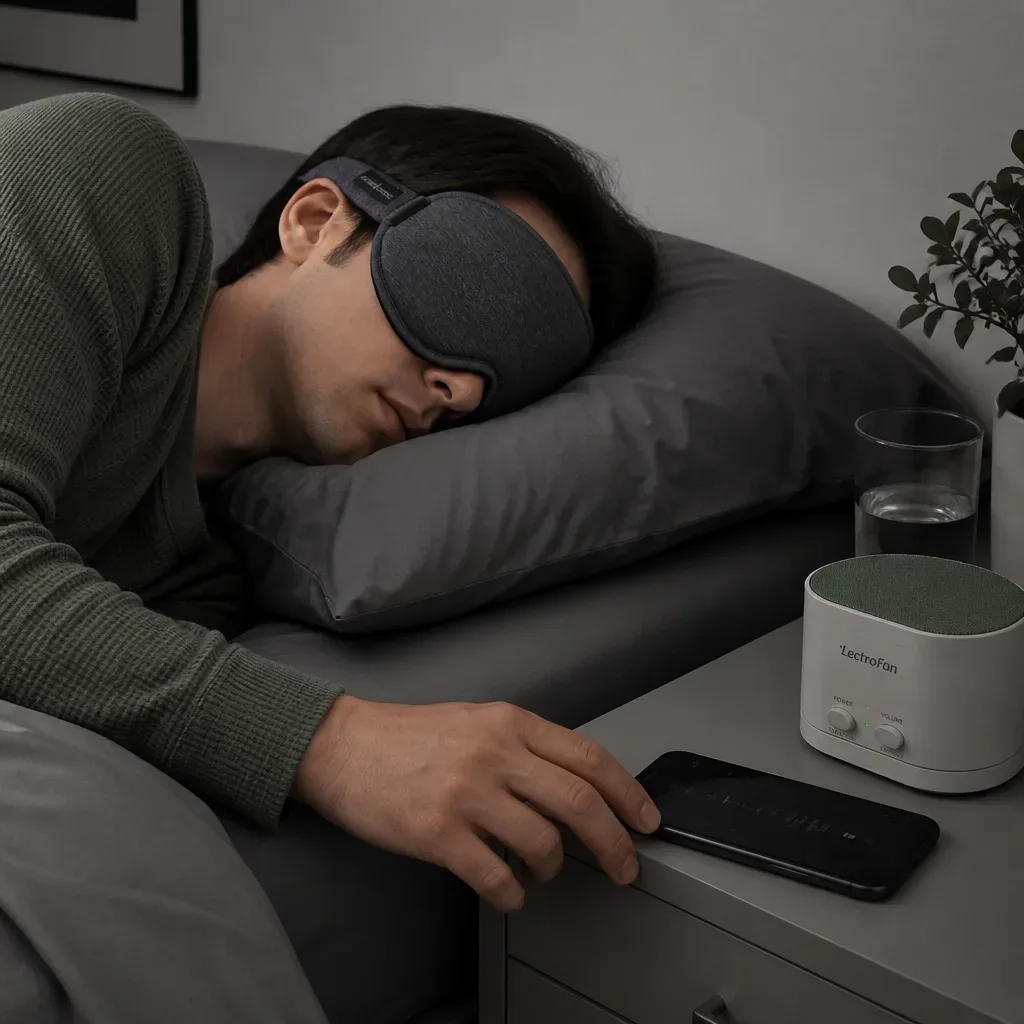
Which mask features matter most for sound-based wind-downs?
The best mask for audio wind-down is the one that blocks light without pressing on your eyelids, slipping, or heating your face.
Fit matters more than branding. A contoured mask leaves space over the eyelids and lashes, which helps if pressure wakes you. A flat silk or cotton mask can work well if your face shape seals the nose bridge. The common failure point is the small gap beside the nose, where hallway light enters at exactly the wrong angle.
Material changes the feel. Silk tends to glide and may suit people with sensitive skin. Cotton breathes well and washes easily. Memory foam can block more light but may hold heat. If you run warm, a mask that feels luxurious at 10 p.m. can feel too heavy at 3 a.m. A 2021 survey from the National Sleep Foundation reported that bedroom temperature was one of the common environmental complaints among poor sleepers; heat around the face is part of that same problem.
For sound-based routines, strap design also matters. Bulky buckles can interfere with over-ear headphones. Thick elastic can create pressure where headphone bands already sit. If you use a sleep headband with flat speakers, test the mask and headband together while lying on your side for at least 10 minutes before making it your nightly setup.
Look for these features:
- A nose bridge that seals without pinching.
- Low-pressure eye cups or soft fabric over the lids.
- Washable material, ideally with clear care instructions.
- A strap that doesn’t collide with headphones.
- No strong scent from foam, dye, or packaging.
Children need extra care. Masks should not be tight, and audio should be kept very low or avoided during sleep unless a pediatric clinician has advised otherwise. Adult comfort rules don’t automatically scale down to smaller ears, smaller faces, and different sleep movements.
When is a sleep mask better than blackout curtains, white noise, or tones?
A sleep mask is better when the light problem is close, intermittent, or outside your control; curtains and sound tools solve different problems.
Blackout curtains are excellent when the whole room is too bright. They can reduce morning light, streetlight, and seasonal early sunrise. But they don’t block a partner’s phone, a bathroom strip light, a hotel thermostat, or a charging LED near your face. A mask moves the blackout layer onto the body. That makes it portable and immediate.
Sound tools answer a different question. If the room is too quiet and every small noise stands out, use a steady masker. The White noise generator + guide can help you compare white, pink, and brown noise without guessing. White noise has equal acoustic power per hertz, while brown noise places more power in the low frequencies. Some nervous systems prefer the lower hum.
If you are curious about rhythmic listening, the Binaural beats generator + guide explains the mechanism clearly: two slightly different tones, one in each ear, create a perceived beat. A 2019 meta-analysis in Psychological Research found small effects of binaural beats on anxiety, memory, and attention, but results varied widely by frequency, duration, and study design. Bedtime use can still be reasonable when the claim stays modest.
Solfeggio tracks sit in another category. The Solfeggio frequencies guide treats them as a tradition of listening, not a medical intervention. If 528 Hz helps you settle because it is familiar and gentle, that is a real bedtime fact about you. It doesn’t need an inflated claim to be useful.
Use this plain rule: masks handle light, noise handles unpredictability, tones handle attention, and spoken audio handles meaning.
What are the limits and risks of sleeping in full dark with audio?
The main limits are comfort, ear safety, and the risk of using tools to avoid a sleep problem that needs care.
A sleep mask can irritate skin, worsen dry eye for some people, or press on the eyelids if it is too tight. Wash it regularly. The American Academy of Ophthalmology commonly advises caution with anything that applies pressure to the eyes, especially after eye procedures. If you wake with blurry vision, eye pain, or new irritation, stop using the mask and ask a professional.
Audio has its own limits. The inner ear doesn’t become invulnerable because the track is calming. Long-duration headphone use can irritate the ear canal, trap moisture, or encourage higher volume over time. The World Health Organization has warned that unsafe listening puts over 1 billion young people at risk of hearing loss globally, mostly from loud recreational sound. Bedtime audio should be quiet enough that it would not bother someone awake beside you.
There is also a sleep medicine boundary. If you have loud snoring, witnessed pauses in breathing, severe daytime sleepiness, restless legs, panic at night, tinnitus that is getting worse, or insomnia lasting more than 3 months, talk with a qualified clinician. A mask can improve the room. It cannot diagnose apnea, depression, medication effects, or circadian rhythm disorders.
Full dark is not always ideal either. Some people feel safer with a dim amber night light, especially after falls, caregiving interruptions, or trauma. Safety beats purity. If you need a light path to the bathroom, keep it low, warm, and away from the eyes rather than insisting on perfect darkness.
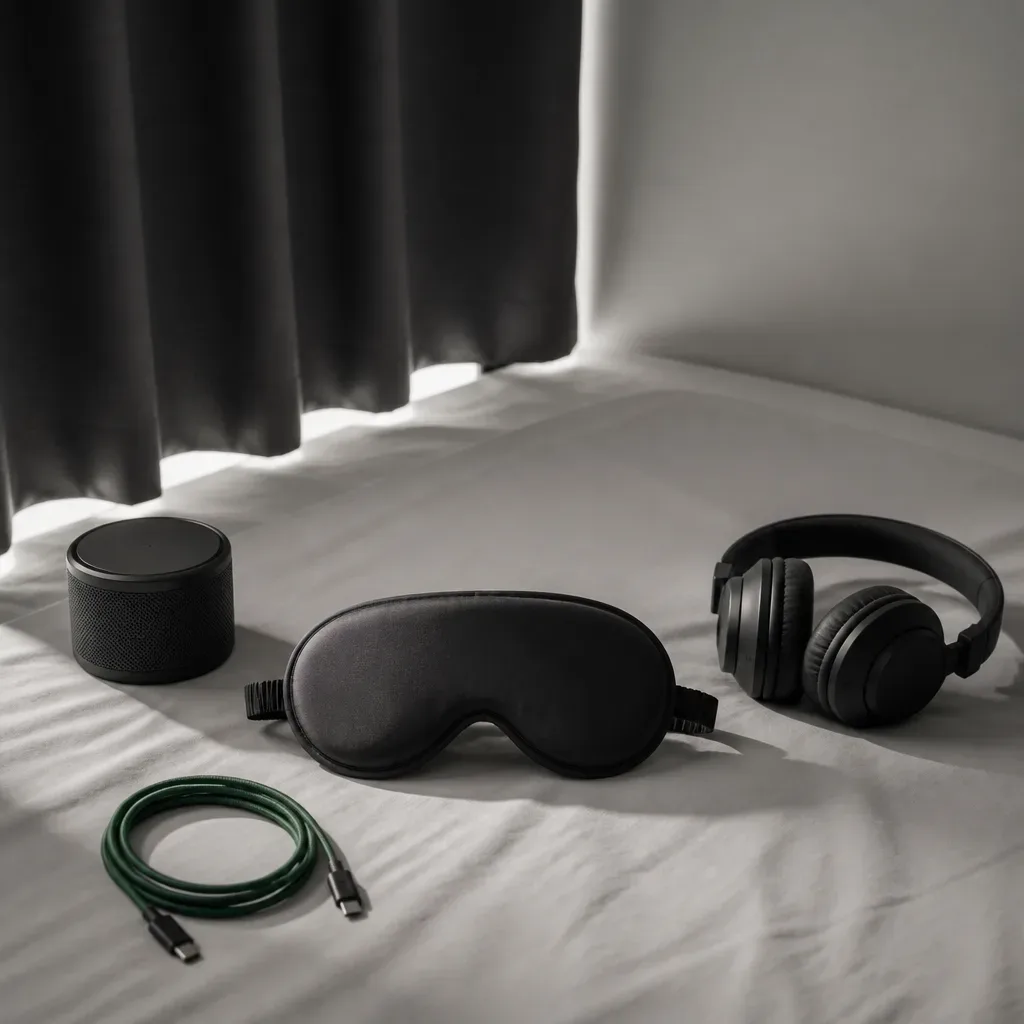
How can you test sleep mask benefits tonight without overcomplicating it?
Test the mask for 7 nights with one audio routine, one volume setting, and one simple note each morning.
A week is long enough to notice comfort problems and short enough to avoid turning the test into a project. Sleep research often uses longer baselines, but personal routine testing can start small. The key is to change only a few variables. If you add a new mask, a new pillow, a new supplement, and a new frequency track on the same night, you won’t know what helped.
Use a simple 7-night protocol:
- Choose one mask and adjust it before getting into bed.
- Choose one audio source: spoken Dream-Self audio, white noise, a binaural beat, or quiet music.
- Keep the volume at the same low setting each night.
- Put the phone screen face down or out of reach.
- Each morning, rate light leakage, comfort, and sleep quality from 1 to 5.
- After 7 nights, keep the mask only if it made sleep easier at least 4 nights.
You can add one optional measure if you like numbers. Note sleep onset as less than 15 minutes, 15 to 30 minutes, or more than 30 minutes. That is rough, but it avoids false precision from guessing exact minutes in the dark. Consumer wearables can be useful for trends, yet validation studies repeatedly show they estimate sleep stages less accurately than laboratory polysomnography.
If the mask helps, keep it boring. The strongest bedtime tools usually become uninteresting with repetition. That is not a flaw. A repeated cue works because the body stops debating it.
Darkness does not force sleep; it gives sleep fewer reasons to stay away.