frequencies binaural
Gamma Waves Sleep: Should They Play Under Dream-Self Audio?
Gamma waves sleep tracks may not be the best bed for Dream-Self audio. Learn what gamma does, what evidence says, and how to set safe volume.
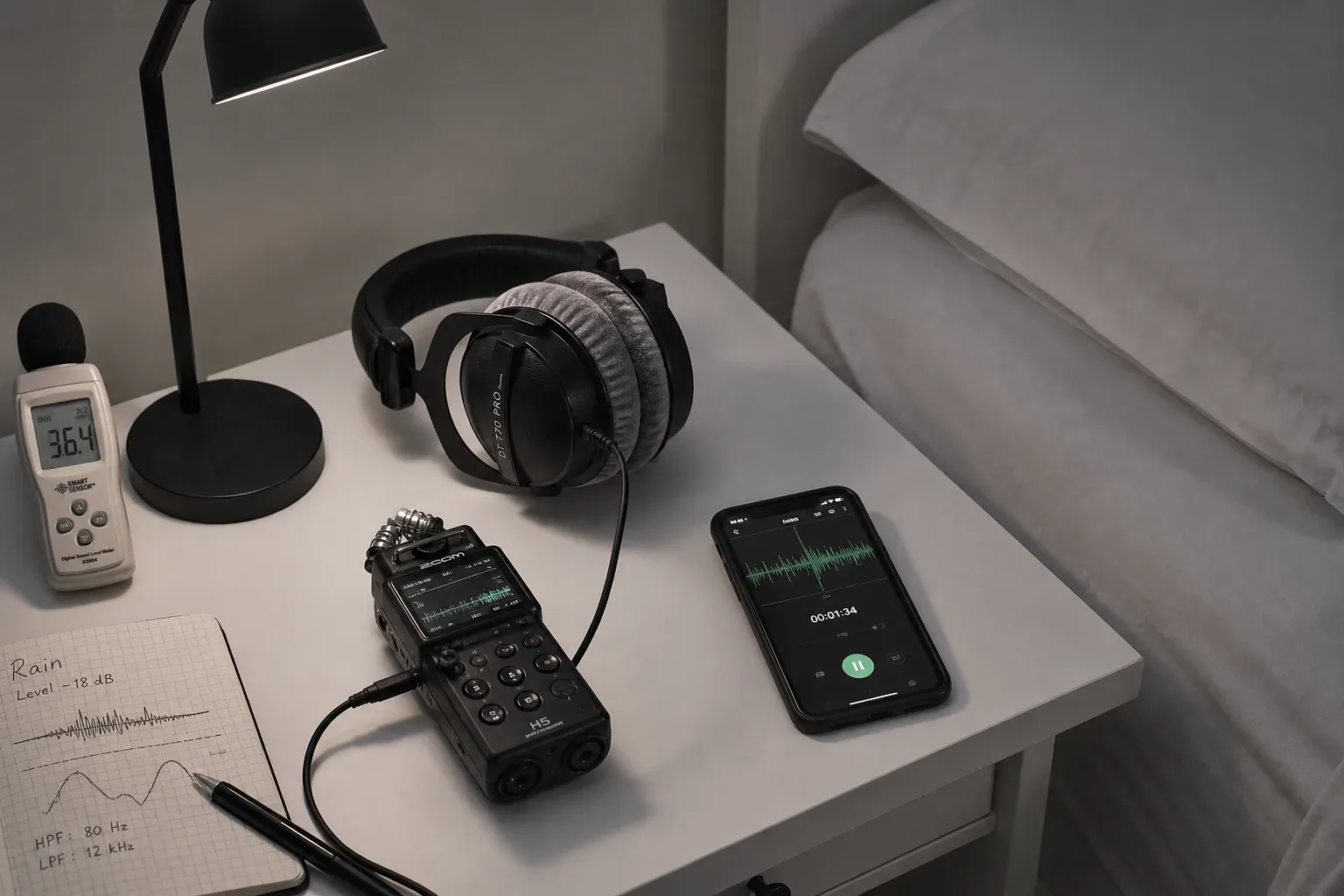
Gamma waves sleep audio is usually not the best layer under Dream-Self audio. Gamma activity is linked more with attention, memory, and REM features than with sleep onset. If the spoken recording matters, keep it clear, low, and unmasked; use softer noise or silence first.
What are gamma waves, and why do they appear in sleep audio?
Gamma waves are fast brain rhythms, usually measured around 30 to 100 Hz, not a magic audio ingredient.
In EEG research, gamma activity describes patterns in brain signals, not a tone you can simply pour into a room. A speaker can play a 40 Hz tone, or headphones can create a 40 Hz binaural beat by giving each ear a different frequency, but the brain rhythm and the sound file are different things. The distinction matters because many tracks labeled “gamma waves sleep” are really tone designs inspired by EEG language.
A gamma binaural beat might use 400 Hz in the left ear and 440 Hz in the right ear. The 40 Hz difference is perceived by the auditory system as a pulse. That mechanism is the same basic idea covered in our Binaural beats generator + guide, where the beat is an illusion built by the brain, not a physical thump in the room.
Gamma is often discussed with attention and sensory binding. A 2019 review in Psychological Research described binaural-beat findings as mixed, with effects depending on beat frequency, listening time, and task design. Sleep is even more delicate. The signal that helps you focus at 2 p.m. may not help you soften at 10:30 p.m.
The quiet rule is plain: a sound can be measurable without being useful tonight. A 40 Hz label tells you the design target, not the outcome in your nervous system.
When gamma audio is used at bedtime, the practical question is not “Is gamma real?” It is “Does this track make speech clearer, the room steadier, and the body less watchful?” If the answer is no after 3 nights of testing, the label can be set aside.
Does gamma waves sleep audio actually improve sleep?
The evidence for gamma waves sleep tracks is limited and more suggestive than settled.
Sleep research usually separates stages by frequency bands. Delta activity, around 0.5 to 4 Hz, is strongly associated with deep non-REM sleep. Sigma activity, roughly 12 to 15 Hz, appears in sleep spindles. Gamma can appear during REM sleep and moments of heightened cortical processing, but that doesn’t mean adding gamma audio improves sleep onset or sleep depth.
The lucid-dream literature is the most cited corner here. In a 2014 Nature Neuroscience study, Ursula Voss and colleagues applied transcranial alternating current stimulation during REM sleep and reported increased lucid-dream awareness around 40 Hz. The sample was small, the stimulation wasn’t ordinary bedroom audio, and the timing targeted REM. That is a long way from playing a YouTube-style gamma bed under a voice recording for 8 hours.
There are also broader entrainment studies. Some small trials have tested auditory stimulation, flicker, or binaural beats, often with 10 to 60 participants. Outcomes vary. A 2023 review of auditory beat stimulation noted possible effects on anxiety, attention, and mood, while also emphasizing inconsistent methods. In practice, “mixed evidence” means you should test gently rather than believe the file name.
If you have chronic insomnia, sleep apnea symptoms, worsening tinnitus, or panic around bedtime, use audio as support and speak with a qualified clinician. Sound can mask the room; it shouldn’t be asked to treat a medical condition.
For ordinary wind-down, gamma is not my first choice. Brown noise is deeper sound, not deeper sleep, but some people settle with it because it has more low-frequency weight and less hiss. Press play on the White noise generator + guide if you want a simple comparison between masking noise and frequency-labeled tracks.
Should gamma play under Dream-Self audio?
Gamma should usually stay out from under Dream-Self audio because speech clarity is the method’s main channel.
The AYA Method is a daily audio manifestation practice. Each day you listen to a short personalized recording, your Dream-Self Moment, narrated from the version of you who has already manifested the life you intend. Listening is the practice. Repetition is the work. The audio is the method.
That definition puts the voice first. If a gamma track sits under the words and makes you strain, the background has become the foreground. In audio design, intelligibility depends on signal-to-noise ratio. For spoken-word content, even a 6 dB change can make words feel either easy or effortful, especially at low bedtime volume.
A Dream-Self recording is not a lab stimulus. It is a short, repeatable, personal voice track. The aim is daily contact with specific language, not maximum acoustic complexity. If you want a bed beneath it, use one that doesn’t pull attention sideways.
Try this order for 7 nights:
- Night 1 to 2: Play the Dream-Self audio alone, at the lowest clear volume.
- Night 3 to 4: Add soft pink or brown noise only if the room needs masking.
- Night 5: Test a gentle binaural track for 10 minutes before the voice, not under it.
- Night 6 to 7: Keep the version that leaves the words clearest and your body quietest.
A background track has one job: make the main sound easier to receive. If it asks to be noticed, it has missed the brief.
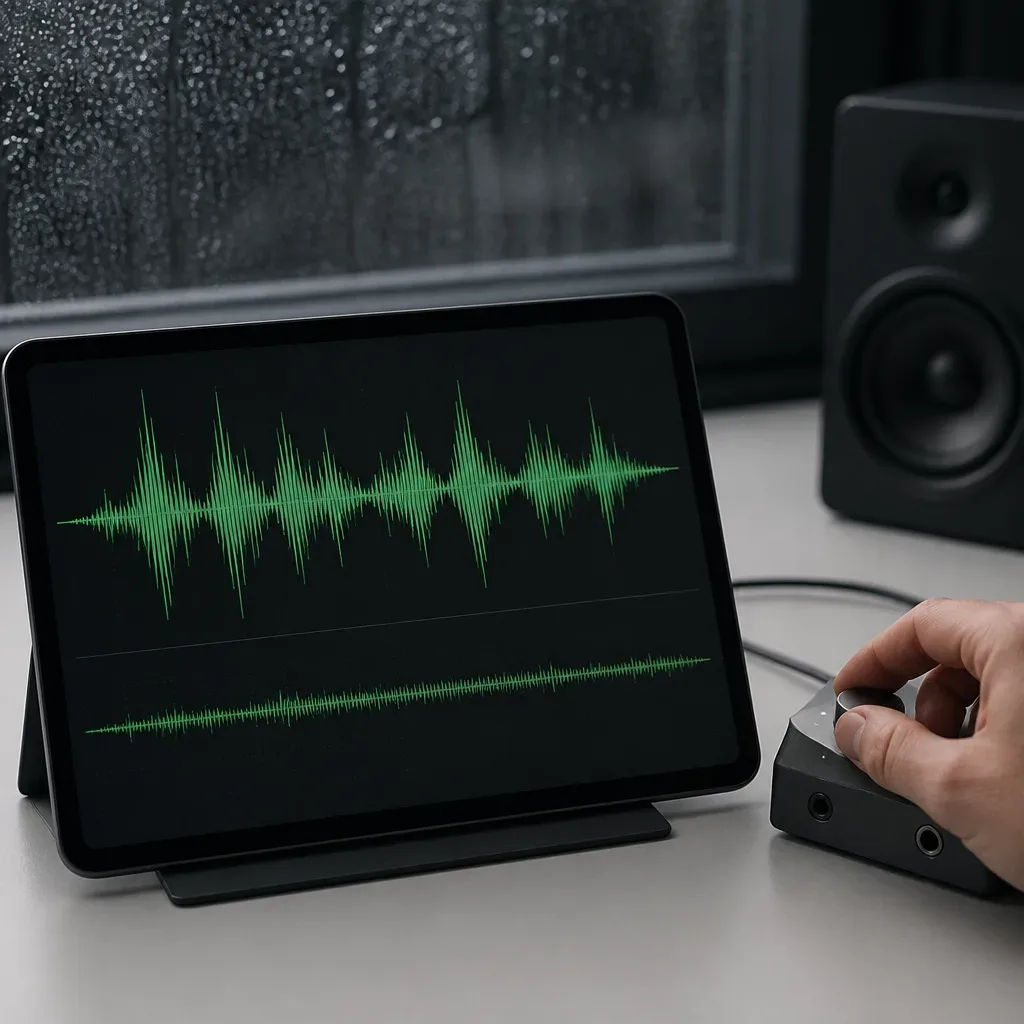
If you’re using headphones, remember that binaural beats need separate left and right channels. Speakers won’t create the same effect. But Dream-Self audio doesn’t require headphones unless you prefer privacy. Many people do better with a small speaker at low level because it avoids ear pressure and late-night cable problems.
What should I use instead if I want a sleep layer?
Use the simplest layer that solves the room’s problem: masking, settling, or timing.
The room usually has one fault. It is too quiet, so every pipe click lands sharply. It is too noisy, so traffic keeps changing. Or it is mentally loud, so a steady sound gives attention something plain to rest on. Each fault calls for a different sound design.
| Need tonight | Better first choice | Why it tends to work | Keep in mind |
|---|---|---|---|
| Masking traffic | Pink or brown noise | Smooth spectrum, fewer sharp edges | Keep speech above the bed |
| Masking voices | White or pink noise | More high-frequency cover | Can feel hissy if too loud |
| Settling before voice | Slow ambient pad | Low contrast and predictable | Avoid bright melodies |
| Frequency curiosity | Short binaural session | Easy to test before the voice | Use headphones, low volume |
| Symbolic listening | Solfeggio tone | Meaningful tradition for some listeners | Evidence is mostly tradition-based |
For tradition-based frequency listening, be respectful and precise. The Solfeggio frequencies guide explains the lore around tones like 528 Hz without pretending the claims are settled medicine. If 528 Hz helps you keep a gentle ritual, that is useful information. It still shouldn’t cover the words.
Noise color is easier to measure. White noise distributes power evenly per Hz, pink noise roughly drops 3 dB per octave, and brown noise drops about 6 dB per octave. Those slopes are one reason brown noise sounds lower and less hissy. Many sleepers prefer that low hum, especially in rooms with fans, heating systems, or distant traffic.
A good test is 10 minutes long. Set the Dream-Self recording to the level you’d actually use, then bring the background up from silence until it barely masks the room. If you can’t repeat the last sentence of the recording without effort, the bed is too loud.
How loud is safe for gamma, binaural beats, and sleep audio?
Keep night audio low, steady, and easy to talk over, especially around children.
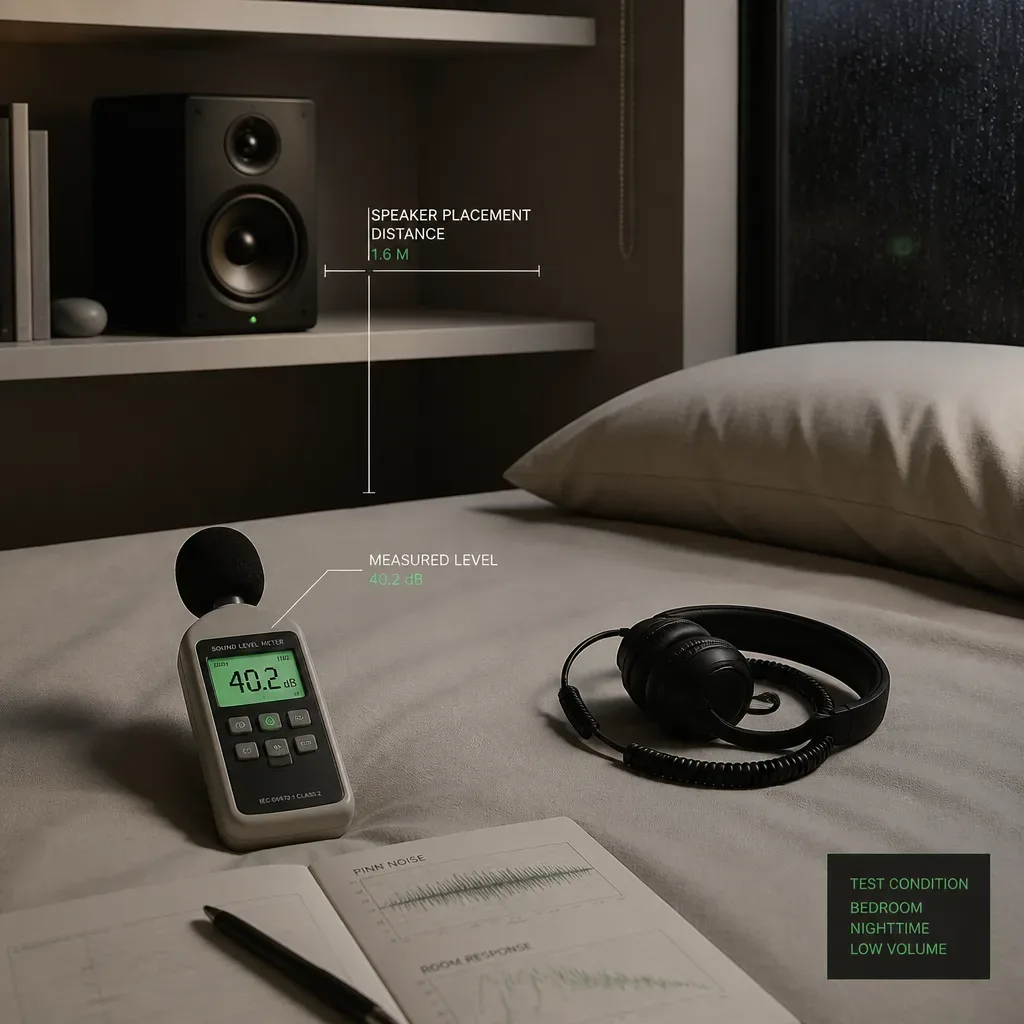
For adult sleep audio in a quiet bedroom, I aim for roughly 35 to 45 dBA at the pillow. If the room is noisier, 50 dBA can be reasonable for masking, but it shouldn’t feel loud. The World Health Organization’s night noise guidance has used 40 dB outside as a protective target for sleep disturbance, and indoor listening should be treated with the same conservative attitude.
For babies and children, be stricter. A 2014 study in Pediatrics tested infant sleep machines and found that several could exceed recommended levels at close distances. The American Academy of Pediatrics has advised keeping machines at least 7 feet, about 2 meters, from a baby’s sleep space and at or below 50 dBA. That guidance is not about taste. Small ears deserve margin.
Headphones change the math. Binaural beats require headphones for the classic effect, but sleeping in earbuds can create pressure, wax irritation, and volume drift. Occupational noise rules from NIOSH set 85 dBA over 8 hours as a recommended exposure limit for workplaces, but sleep listening should be far below that. Bedtime audio is meant to be a quiet reference, not a private concert.
Use this quick setup:
- Place the speaker 1 to 2 meters from your pillow, farther for children.
- Start at zero and raise slowly until the voice is clear.
- Check the loudest moment, not only the average.
- Disable “normalize volume” or boosts if they make tracks jump.
- Prefer tracks that fail quiet after a power cut or app restart.
The safest sleep sound is the one you can forget because it never surprises you. If a gamma track pulses, clicks at the loop point, or changes tone every few minutes, it may be interesting audio and poor sleep design.
When could gamma make sense at night?
Gamma can make sense as a short, intentional listening test, not as a default all-night layer.
There are three reasonable cases. First, you are testing a 40 Hz binaural beat for focus before journaling or planning, then switching it off before sleep. Second, you are curious about lucid dreaming and are tracking results carefully, knowing the evidence is early. Third, you simply like the sound at very low volume and it doesn’t disturb your sleep.
The test should be bounded. Use 5 to 15 minutes, not an all-night loop. Keep notes for 7 sessions. Track sleep onset, awakenings, dream recall, and next-morning steadiness on a 1 to 5 scale. A small personal log can’t prove neuroscience, but it can reveal whether this sound is helping you.
Here is a plain comparison:
| Audio choice | Best use | Evidence strength | Use under Dream-Self audio? |
|---|---|---|---|
| 40 Hz gamma beat | Short focus or REM-curiosity test | Limited, mixed | Usually no |
| Delta beat | Sleep-onset experiment | Mixed | Maybe, if speech stays clear |
| Pink noise | Masking and steadiness | Moderate for masking, variable for sleep | Often yes, quietly |
| Brown noise | Low hum and comfort | Practical support, limited trials | Often yes, quietly |
| Silence | Speech clarity | Strong by design | Yes |
If you want to compare beat designs, use the Binaural beats generator + guide in the daytime first. Daytime testing removes one variable: you can hear whether the sound irritates you before it costs you a night.
A frequency practice should earn its place by what happens after the track stops. If morning feels flatter, sleep feels broken, or the voice is harder to remember, choose the simpler layer.
How do I build a quiet bedtime stack that keeps the voice clear?
Build the stack from the voice outward: spoken audio first, masking second, frequency experiments last.
Start with the recording that matters. Put the Dream-Self audio at a level where consonants are clear but the voice doesn’t pull you awake. In many bedrooms that will be lower than daytime podcast volume. A 2022 Pew survey found that 35% of U.S. adults reported using a sleep aid or sleep-related technology at least sometimes, but the best setup is still basic: consistent timing, predictable sound, low volume.
Then add only what the room requires. If the apartment has sudden noise, pink noise may be enough. If the room has a high hiss from vents, brown noise may feel calmer. If you are exploring tones for symbolic or traditional reasons, keep them separate from the spoken practice until you’ve heard the voice cleanly for several nights.
A clean stack looks like this:
- Primary signal: Dream-Self audio, clear and short.
- Room mask: Pink, brown, or white noise only as needed.
- Optional prelude: Binaural or frequency track for 5 to 10 minutes before the voice.
- Exit: Fade to silence or low steady noise, not a changing playlist.
This is also where the White noise generator + guide can help. Press play below that guide and listen for the difference between masking and stimulation. Masking should make the room less noticeable. Stimulation makes the track more noticeable. At bedtime, less noticeable usually wins.
For frequency lore, keep the claims clean. The Solfeggio frequencies guide is useful when you want a tone with ritual meaning. The Binaural beats generator + guide is useful when you want a measurable left-right beat. Neither should crowd the spoken recording.
The voice is the signal. Everything else is room treatment.
Set the sound low enough that the night keeps its edges soft.