sleep science
How Much Sleep Do I Need Before Dream-Self Audio?
Wondering how much sleep do i need before Dream-Self audio? Use adult sleep targets, sleep debt signs, and timing cues for clearer listening.
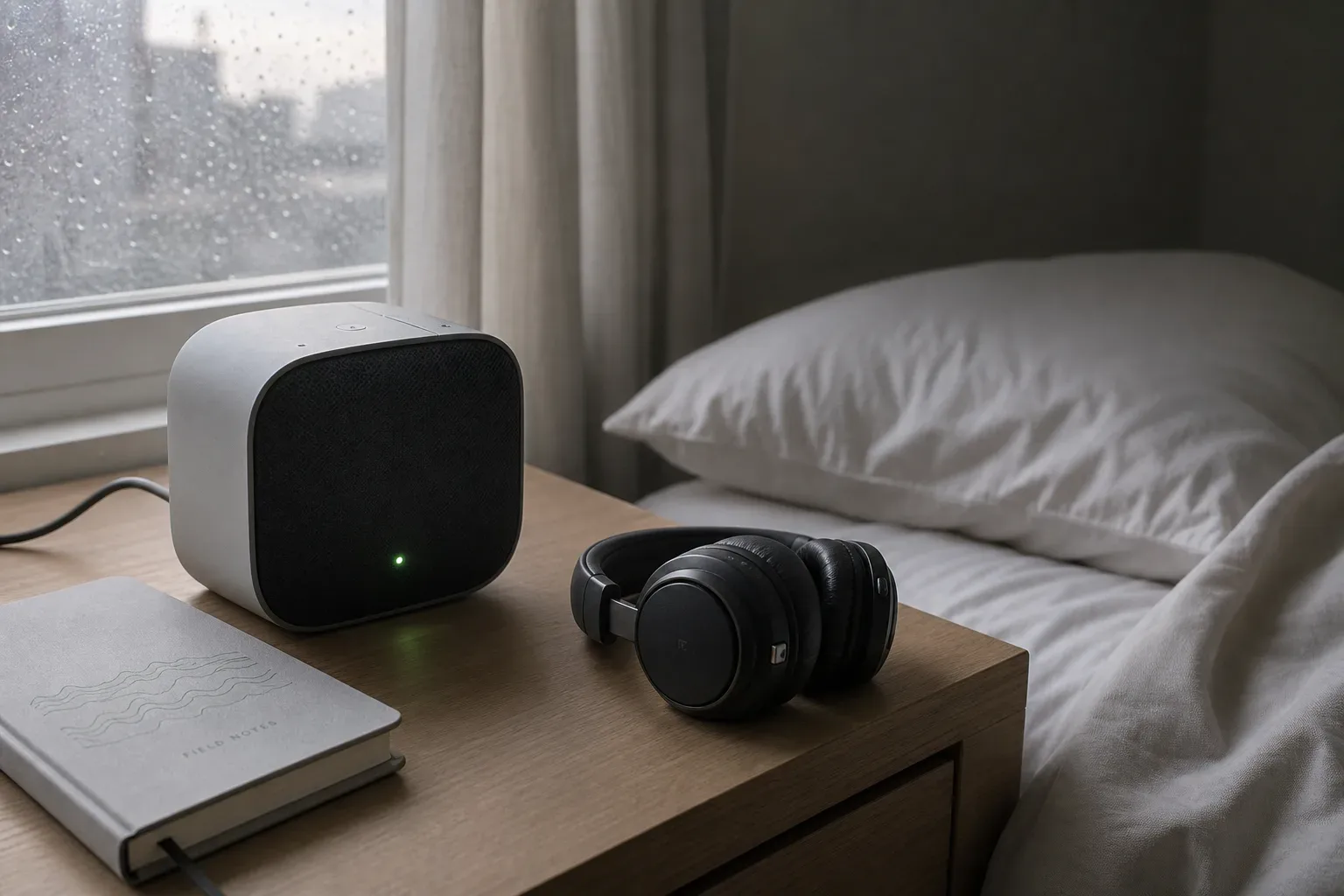
You need enough sleep to listen without fighting your body, not a perfect 8-hour score. For most adults, that means aiming for 7 or more hours per 24 hours, then playing Dream-Self audio when you’re calm, lightly alert, and able to hear the words clearly for a few minutes.
How much sleep do I need before Dream-Self audio?
Most adults need at least 7 hours of sleep per 24 hours before attention feels steady enough for reflective audio.
The American Academy of Sleep Medicine and the Sleep Research Society published a consensus statement in 2015 recommending 7 or more hours of sleep per night for healthy adults. The National Sleep Foundation gives a similar adult range, 7 to 9 hours for ages 18 to 64, with 7 to 8 hours often listed for older adults. These are population targets, not a moral grade. A quiet recording doesn’t require laboratory-grade sleep.
For Dream-Self audio, the useful question is more practical: can you hear the recording without clenching your attention? If the answer is yes, you’re rested enough for the session. If the answer is no, sleep has first claim on the room. The body is not a bad listener when tired; it’s an honest instrument.
Sleep debt matters because audio practice uses attention, memory, and emotion. Even one restricted night can reduce vigilance, and chronic short sleep tends to narrow the band of what feels possible. The CDC has estimated that about 1 in 3 U.S. adults report not getting enough sleep, using 7 hours as the usual threshold. That means many people arrive at personal audio work already underslept.
A plain target works best:
- Aim for 7 to 9 hours in bed if you’re an adult.
- If you slept 6 hours or less, shorten the audio session.
- If you slept under 5 hours, protect recovery sleep first.
- If poor sleep continues for 3 or more nights a week, treat the sleep issue as real data.
The AYA frame is specific here: the AYA Method is a daily audio manifestation practice. Each day you listen to a short personalized recording, your Dream-Self Moment, narrated from the version of you who has already manifested the life you intend. Listening is the practice. Repetition is the work. The audio is the method.
What happens if I listen after a short night?
After a short night, you can still listen, but the session should be softer, shorter, and less demanding.
Sleep restriction changes the listening body. In a well-known 2007 Current Biology study by Yoo and colleagues, one night of sleep deprivation increased amygdala reactivity to negative images and weakened regulatory connection with the prefrontal cortex. That doesn’t mean a tired person is fragile. It means the control room is understaffed. A Dream-Self recording may still be kind and useful, but it may land differently.
Attention also thins when sleep is short. The Psychomotor Vigilance Task, used in sleep research for decades, often shows more lapses after restricted sleep. A lapse can be only a few seconds. In audio practice, that may feel like drifting through a sentence and missing its shape. You didn’t fail. Your brain blinked.
If you slept badly, listen like this:
- Use the familiar version of your recording, not a newly edited one.
- Keep volume low enough that you could ignore it if needed.
- Sit slightly upright if you want to remain awake.
- Play 3 to 5 minutes instead of a longer session.
- Stop if the recording starts to irritate you.
There is a difference between resistance and depletion. Resistance has charge; depletion has weight. When the body is depleted, the kindest practice is often a smaller one.
If short nights are frequent, use sound to reduce friction around sleep rather than to push through fatigue. Our White noise generator + guide can help mask intermittent sounds, which are often more disruptive than steady ones. Keep it conservative: many sleep clinicians advise quiet background levels, commonly under about 50 decibels at the pillow, especially around children.
Is there a best time of day to listen?
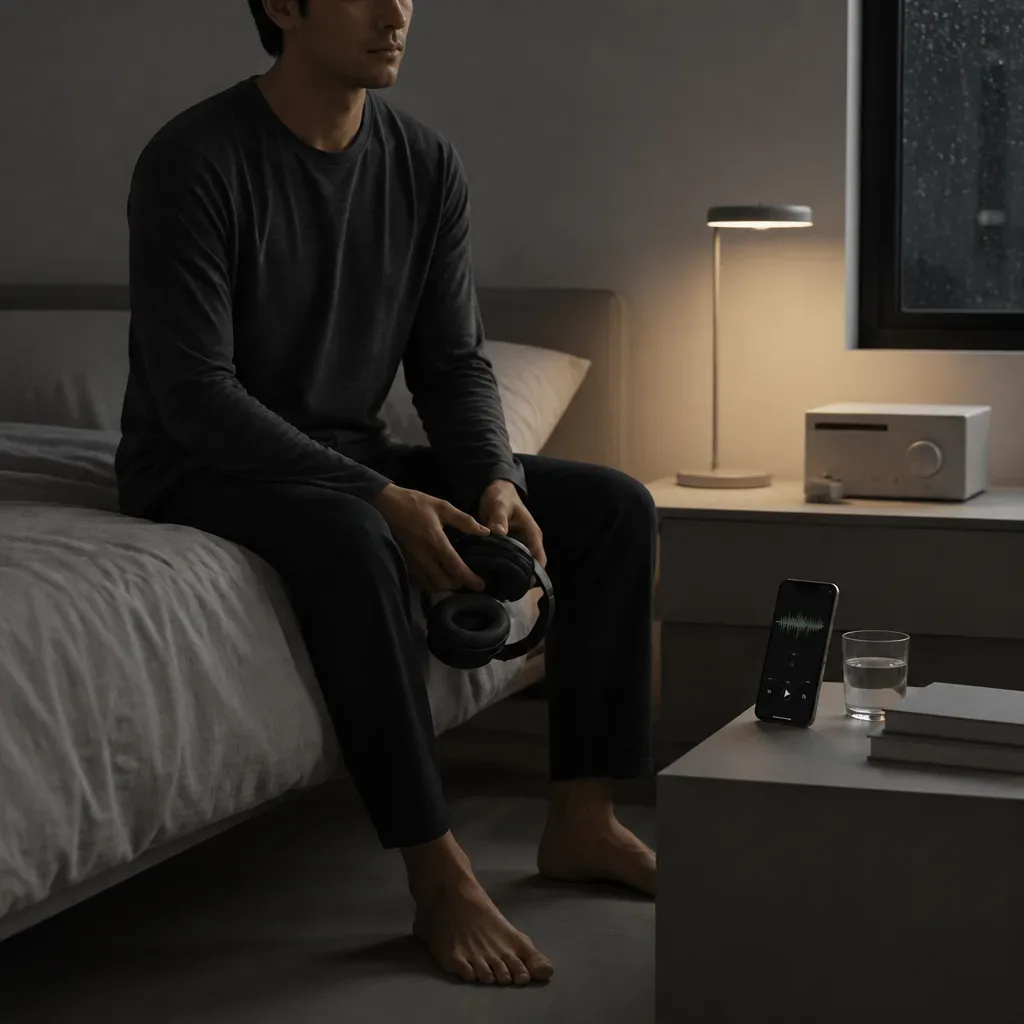
The best time is the point in your day when your nervous system is quiet and your attention is still available.
For many people, that point is the last 10 minutes before sleep. The room is darker. Speech slows. External decisions have mostly ended. Melatonin secretion typically rises in dim light during the evening, and the circadian system becomes more receptive to sleep when bright light is reduced. Dr. Andrew Huberman often emphasizes morning light and evening dimness as simple timing cues; the underlying circadian research is broad, even if individual routines vary.
For others, morning works better. After a very late night, bedtime listening can become instant sleep. Morning listening, especially within the first 30 to 90 minutes after waking, may give the words more clean attention. Cortisol normally rises after waking, a pattern called the cortisol awakening response; reviews often describe a rise of roughly 50% in the first 30 minutes, though there is wide person-to-person variation.
Here is the plain comparison:
| Listening time | Best for | Watch for | Practical cue |
|---|---|---|---|
| Before sleep | Quiet room, habit pairing, low stimulation | Falling asleep too soon | Start 10 minutes earlier |
| After waking | Clearer attention, fewer interruptions | Phone drift, rushing | Listen before messages |
| After nap | Reset after short sleep | Grogginess | Wait 5 to 10 minutes |
| Midday pause | Stable mood, private space | Noise and tasks | Use headphones quietly |
The correct hour is the hour you can repeat. Daily audio practice is built less from intensity than from low-friction return. A 4-minute recording heard clearly 6 days a week has more structural strength than a 25-minute session you keep postponing.
If you’re using other Quiet Frequencies tools first, keep the chain simple. Press play on the Binaural beats generator + guide only if headphones feel comfortable and the beat doesn’t become the main event. A binaural beat is an auditory illusion built from two slightly different tones. The illusion is real; the claims around it are mixed.
Should I nap before listening if I slept badly?
A short nap can help if it leaves you clearer, but a long or late nap can make bedtime harder.
The sleep literature often separates short naps from long naps because the after-effect is different. A 10 to 20 minute nap can improve alertness for some people with less sleep inertia. Longer naps, around 60 to 90 minutes, may include deeper sleep or a full sleep cycle, but waking from slow-wave sleep can feel thick and disorienting. NASA’s often-cited fatigue research on pilots found that a planned cockpit nap of about 26 minutes improved performance by 34% and alertness by 54%, though that setting is very specific.
If your goal is Dream-Self audio, use a nap as a tuning step, not a second night. The nap should make listening clearer. If it leaves you dull, wait 10 minutes, drink water, open the curtains, and then decide. The ear can be awake before the mind is fully online.
A nap is most useful when:
- You slept under 6 hours and feel mentally ragged.
- You have a safe 15 to 25 minute window.
- It’s before mid-afternoon.
- You can wake without panic.
- You don’t have insomnia that worsens with naps.
A nap is less useful when it becomes avoidance. If you keep postponing the audio until conditions are perfect, you’re making sleep into a gatekeeper. The practice only needs a workable threshold. In behavioral sleep medicine, consistency is often treated as one of the active ingredients. Fixed wake times, repeated cues, and reduced clock-watching are common parts of cognitive behavioral therapy for insomnia, which the American College of Physicians recommended as first-line treatment for chronic insomnia in 2016.
If insomnia, sleep apnea, restless legs, tinnitus, or severe daytime sleepiness is part of the pattern, use the audio gently and talk with a qualified clinician. Sound can support a room; it shouldn’t be asked to diagnose the sleeper.
Do white noise, frequencies, or music change the amount of sleep I need?
Sound can make sleep easier to enter or protect, but it doesn’t reduce your biological sleep need.
White noise, brown noise, music, and tones are environmental tools. They can mask sudden changes, provide a stable cue, or make a room feel less exposed. They don’t replace the functions of sleep: memory processing, metabolic regulation, immune signaling, and emotional recalibration. In 2021, a systematic review in Sleep Medicine Reviews found that evidence for continuous noise improving sleep was mixed and often limited by small samples and different methods.
Still, in practice, masking can matter. A steady sound may reduce the contrast between a quiet room and a passing truck. Brown noise isn’t deeper sleep. It’s deeper sound: more acoustic energy in the low frequencies, less hiss. Some nervous systems prefer it. Yours gets a vote.
Use the tool for the correct job:
| Sound tool | Mechanism | Evidence tone | Use before Dream-Self audio |
|---|---|---|---|
| White noise | Masks sudden sound across frequencies | Mixed, practical | Good for noisy rooms |
| Brown noise | Stronger low-frequency emphasis | Limited formal research | Good if hiss bothers you |
| Binaural beats | Perceived beat from two tones | Mixed, small studies | Optional, headphones only |
| Solfeggio tones | Tradition-linked fixed frequencies | Sparse scientific support | Use if personally settling |
| Sleep music | Slow tempo, low surprise | Moderate and growing | Good for wind-down |
The Solfeggio frequencies guide explains the tradition respectfully and plainly. Many people like 528 Hz or 432 Hz because the tone gives them a ritual object for attention. That preference is real as a preference. It is not the same as a proven medical effect.
For volume, stay conservative. The World Health Organization has warned about unsafe listening practices, especially with headphones. For sleep and pre-sleep sound, quieter is usually better: low enough that speech would still be understandable nearby, and never so loud that silence feels uncomfortable afterward.
What signs tell me to sleep first and listen later?
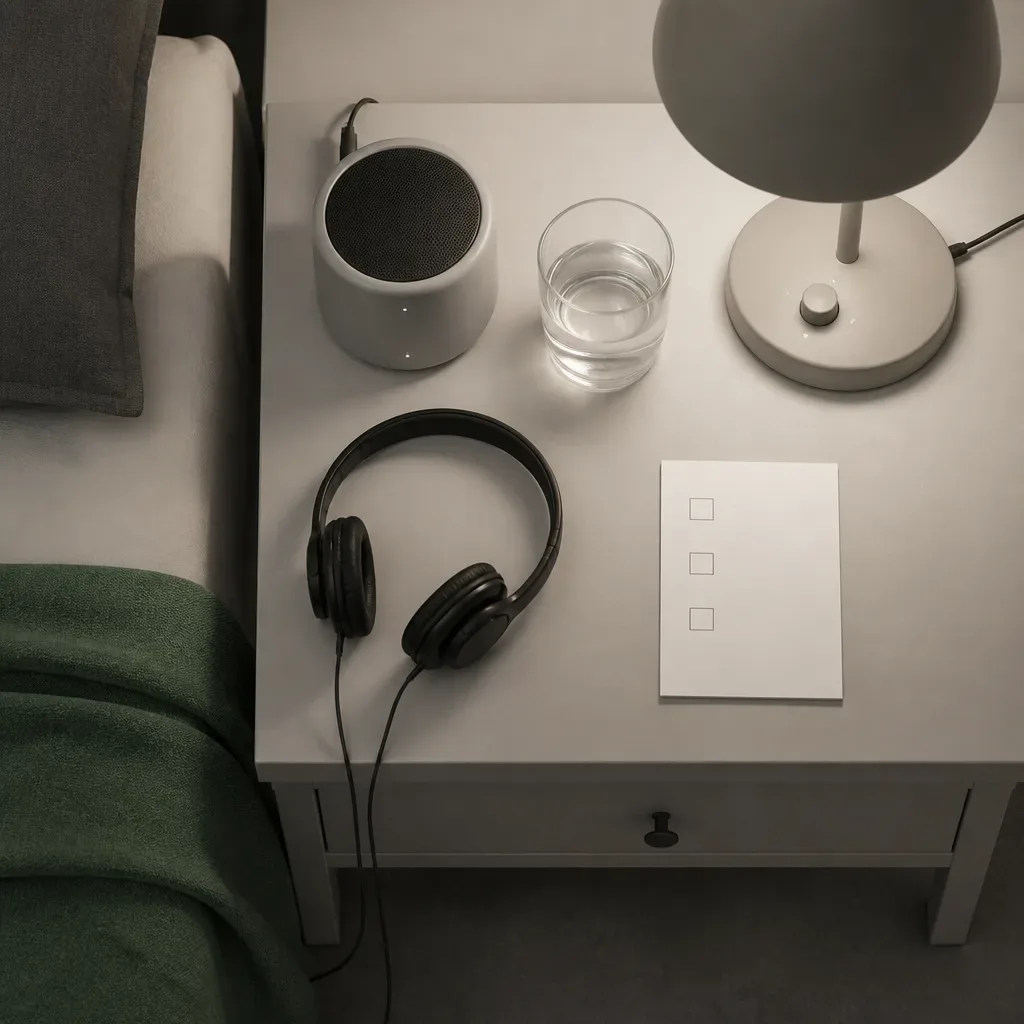
You should sleep first when the recording becomes effort, irritation, or blur rather than a clear daily cue.
The signs are usually plain. You play the audio and miss the first sentence three times. You feel annoyed by a voice you normally like. You keep raising the volume because attention is failing. You bargain with the session as if it were a test. Those are not spiritual clues; they’re fatigue signals.
Sleepiness is measurable, but you don’t need a lab to respect it. The Epworth Sleepiness Scale, used clinically since the 1990s, asks how likely a person is to doze in 8 common situations. A score above 10 often suggests excessive daytime sleepiness. If you regularly doze while reading, sitting in traffic, or talking with someone, don’t solve that with more audio. Get the sleep pattern looked at.
Before you press play, ask 3 questions:
- Did I sleep at least 7 hours, or am I carrying sleep debt today?
- Can I hear a quiet sentence without straining?
- Will listening now make bedtime easier, or will it steal sleep time?
If the answers are poor, move the session. Morning is allowed. After a short nap is allowed. A 2-minute listen is allowed. Repetition is not made stronger by force.
This is also where sleep music earns its keep. A slow piece with no bright arrivals can help the system stand down before spoken audio. As a composer, I keep sleep music under a resting heartbeat when I can, often around 50 to 65 beats per minute, and I avoid sharp dynamic changes. The sleeping ear doesn’t need a plot. It needs permission to stop tracking.
You can also use the White noise generator + guide earlier in the evening, then switch it off or lower it before the voice begins. Mask the world first. Then listen to the words.
How do I build a sleep-first Dream-Self listening routine?
Build the routine around sleep protection first, then place the audio where it can be heard without strain.
Start with the sleep window. If you need to wake at 6:30 a.m. and you’re aiming for 7.5 hours, lights-out needs to be around 11:00 p.m., not midnight plus optimism. Many adults underestimate the time lost to settling, bathroom trips, and phone drift. Sleep efficiency, the percentage of time in bed spent asleep, is commonly considered healthy around 85% or higher in sleep medicine contexts, though individual cases vary.
Then make the audio slot small. A Dream-Self Moment doesn’t need a concert hall. It needs a repeatable cue, a safe volume, and a listener who isn’t being robbed of sleep to perform devotion. The discipline is staying boring enough to return tomorrow.
A sleep-first sequence can look like this:
- Set the room 20 to 30 minutes before bed. Dim light, reduce alerts, and choose one steady sound if the room is noisy.
- Use masking only as needed. Try the Binaural beats generator + guide or noise tools earlier, not as a complicated stack.
- Play the Dream-Self audio once. Keep it short enough that you can finish before your planned sleep time.
- Let sleep win. If you’re fading, stop adjusting and let the body go.
- Repeat tomorrow. The practice is daily contact, not nightly intensity.
If you enjoy frequency-based rituals, keep them in their proper place. A tone from the Solfeggio frequencies guide can be a settling cue before the spoken recording. It is not a substitute for sleep, and it doesn’t need to carry a medical claim to be useful.
The best routine protects the listener from over-effort. Sleep is not the obstacle to Dream-Self audio; sleep is the floor that lets the words stand upright.
Leave the room quiet enough for tomorrow to find you.