sleep science
Progressive Muscle Relaxation Before Dream-Self Audio
Progressive muscle relaxation is a 6-minute body setup for calmer listening before Dream-Self audio, with timing, volume, and practice notes.
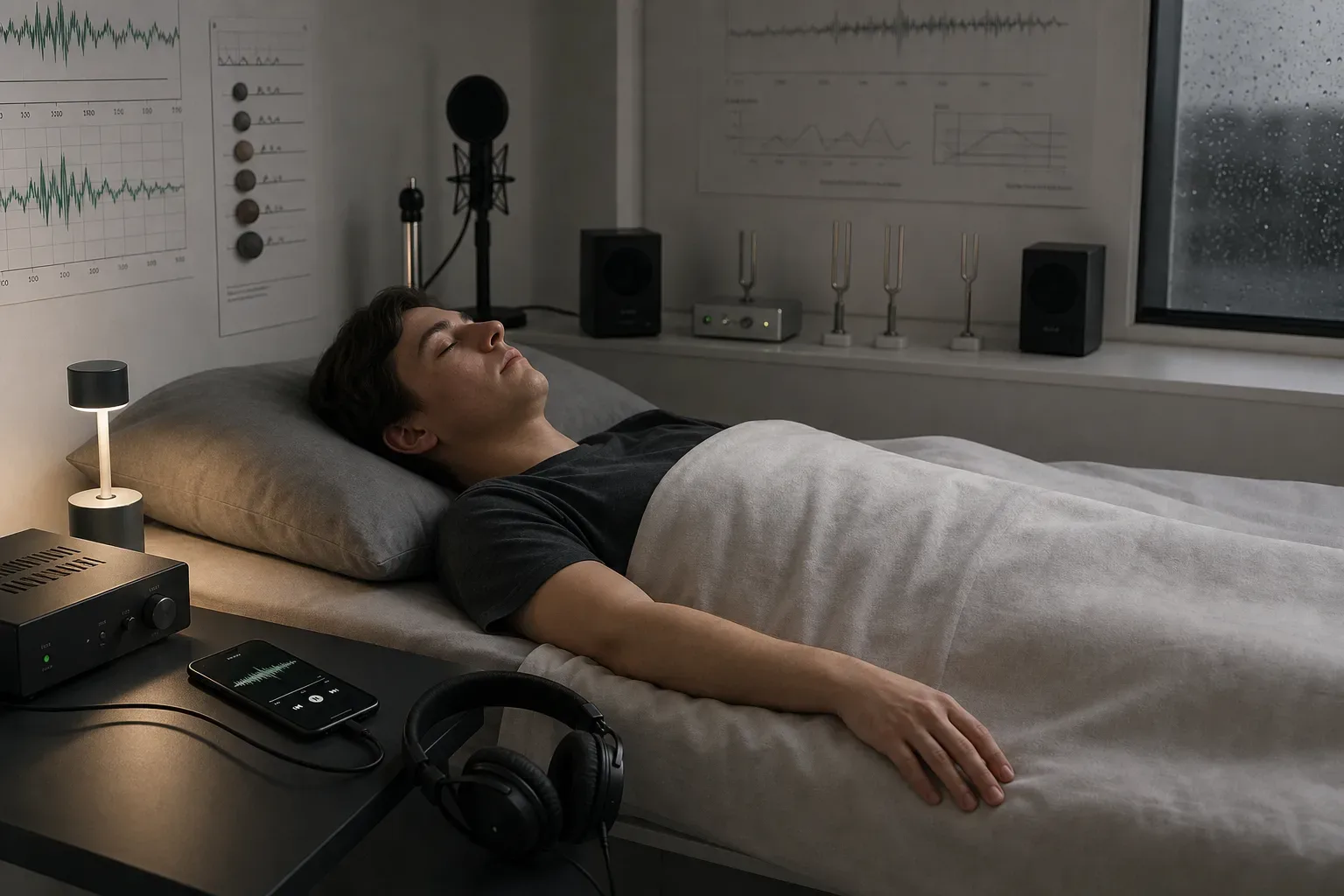
Progressive muscle relaxation is a brief tension-and-release sequence that prepares the body for Dream-Self audio. In 6 minutes, you move through six muscle zones, hold light tension for about 5 seconds, release for about 10 seconds, then begin the recording at a low, clear volume.
What is progressive muscle relaxation doing before audio?
Progressive muscle relaxation gives the nervous system a physical contrast signal before the voice begins.
The method comes from physician Edmund Jacobson, whose 1930s relaxation training used muscle tension as a measurable entry point into calm. The short version here is not the full clinical protocol, which can take 15 to 30 minutes. It is a pre-listening setup: enough contraction to notice, enough release to settle, and no strain. Relaxation is not a mood you wait for; it is a set of signals you can send.
The mechanism is plain. When you tense a muscle for around 5 seconds, then stop, the release is easier to hear inside the body. Hands unclench. The jaw drops a millimeter. Shoulders stop guarding the ears. In sleep labs and behavioral clinics, relaxation skills are often grouped with breathing and stimulus control because they reduce pre-sleep arousal, one of the main drivers of delayed sleep onset.
A 2021 review in the Journal of Clinical Medicine described relaxation methods as commonly useful for sleep complaints, while also noting that study quality varies by population and protocol. That mixed evidence matters. Progressive muscle relaxation is not a sedative. It is a repeatable cue. A cue is valuable because the body learns timing; after 10 to 14 nights, the first release may start to mean that the day is no longer being handled.
Before Dream-Self audio, the benefit is practical. If your body is still bracing, the recording has to compete with muscle noise: tight calves, raised shoulders, a tongue pressed to the roof of the mouth. The point is not to make the body silent. The point is to lower the number of signals asking for attention.
How do you run the 6-minute setup tonight?
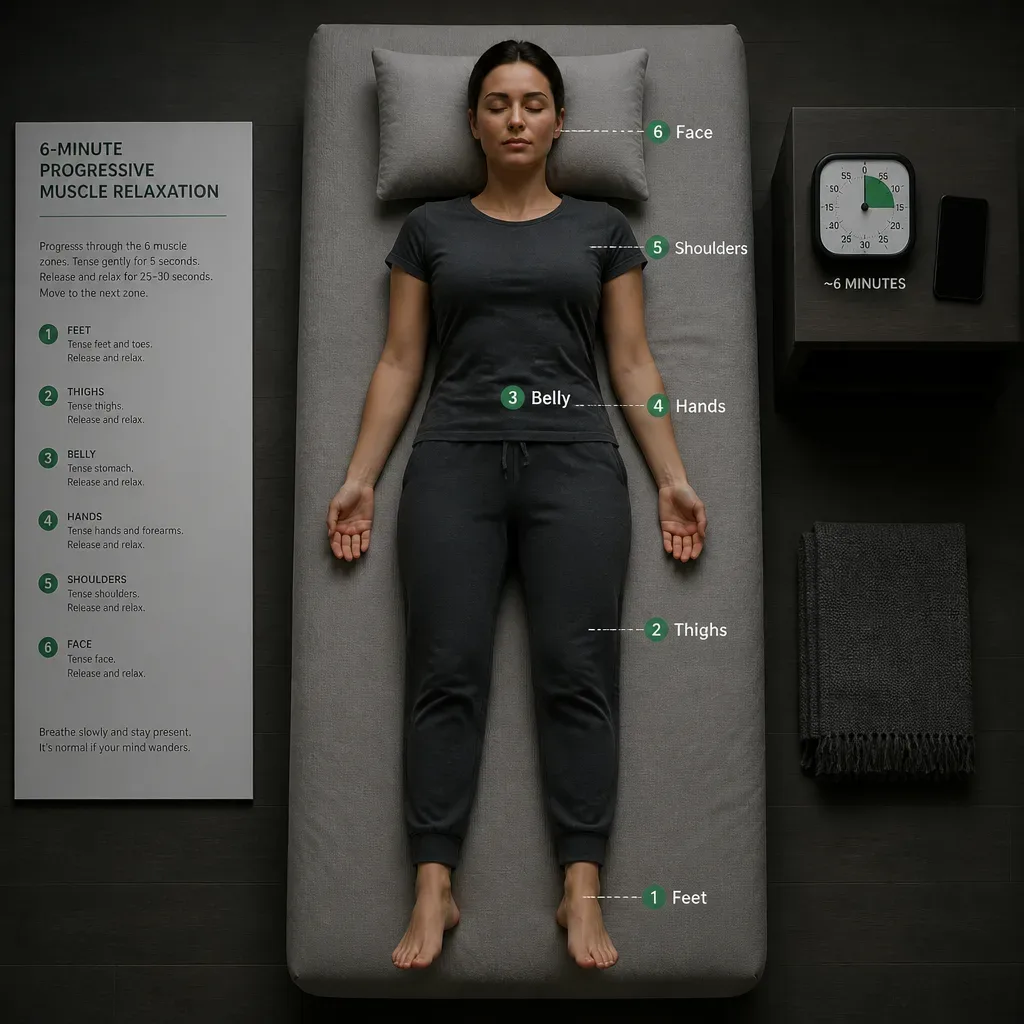
Use six muscle zones, giving each zone about 50 to 60 seconds from first tension to final release.
Set your room first. Put the phone where you will not keep checking it, dim the display, and preview the recording volume before the sequence begins. If you use a speaker, aim for a soft conversational level. If you use headphones, keep the level lower than you would for music. The World Health Organization has warned that unsafe listening habits place over 1 billion young people at risk of hearing damage; a bedtime routine should not add to that load.
Follow this sequence at about 50 to 70 percent effort. Do not clench hard. Hold each tension for 5 seconds, then release for 10 seconds. If you have pain, an injury, pregnancy-related discomfort, recent surgery, or any condition where tensing is unwise, skip that area and simply notice it.
- Feet and calves, 60 seconds. Curl the toes slightly and tighten the calves. Release and feel the feet widen.
- Thighs and hips, 60 seconds. Press the thighs into the bed or chair. Release the hips without pushing them flat.
- Belly and low back, 60 seconds. Draw the belly in gently, then let it soften. Keep breathing normal.
- Hands and forearms, 60 seconds. Make soft fists. Release the fingers one at a time.
- Shoulders and neck, 60 seconds. Lift the shoulders 2 or 3 centimeters. Release them down and back.
- Face, tongue, and jaw, 60 seconds. Squeeze the eyes lightly, then release the brow, tongue, and jaw.
A timer helps for the first 3 nights, but remove it once the rhythm is familiar. Counting can become another task. The best sleep setup feels a little boring by design.
How tight should the muscles be, and how quiet should the sound be?
Keep muscle tension moderate and sound level conservative, because the goal is contrast without threat.
Maximum effort is the common mistake. Hard clenching can raise heart rate, irritate joints, or make the sequence feel like performance. In practice, 50 percent effort is enough for most people. You should be able to breathe through the contraction and stop instantly. If your jaw clicks, your calf cramps, or your lower back tightens sharply, that is data. Skip the region. A good relaxation cue never argues with pain.
Volume is the second mistake. Louder audio does not produce deeper listening. It often produces vigilance, especially near sleep. The U.S. National Institute for Occupational Safety and Health uses 85 dBA over 8 hours as an occupational exposure limit, not a bedtime target. Sleep audio should sit far below that. If you have a basic sound level app, check the pillow area, not the device grille. Many quiet rooms sit around 30 to 40 dBA; a soft recording may land around 45 to 55 dBA.
| Setting | Practical target | Why it matters |
|---|---|---|
| Muscle effort | 50 to 70 percent | Creates contrast without strain |
| Tension hold | 5 seconds | Long enough to notice, short enough to stay easy |
| Release pause | 10 seconds | Gives the body time to register the drop |
| Speaker level | Often 45 to 55 dBA at pillow | Clear voice without pressure |
| Headphone level | Lower than music listening | Protects ears during repeated use |
If masking noise helps, keep it underneath the voice. The White noise generator + guide can show how broad-band sound masks small room sounds, but white noise can feel hissy for some ears. Brown or pink noise often feels lower and steadier. Press play below any generator and listen for the difference at the same volume; equal loudness is the only fair comparison.
What should you play after the body settles?
Play the Dream-Self audio immediately after the final release, before the mind starts adding new tasks.
This is where the setup hands off to the practice. The AYA Method is a daily audio manifestation practice: each day you listen to a short personalized recording, your Dream-Self Moment, narrated from the version of you who has already manifested the life you intend. Listening is the practice. Repetition is the work. The audio is the method.
That sequence matters. Progressive muscle relaxation is not the main event here. It is the room tone before the voice enters. The daily affirmation and Manifestation Board can support the practice, but they are complements. For this routine, keep the order clean: body setup, Dream-Self audio, then sleep or quiet rest. Adding too many steps makes the nervous system manage a checklist when you are trying to reduce load.
If you like tone-based listening before the voice, be precise about what it can and cannot do. A binaural beat is an auditory illusion created when each ear receives a slightly different frequency, such as 200 Hz in one ear and 206 Hz in the other. The brainstem tracks the 6 Hz difference, but research on outcomes is mixed. The Binaural beats generator + guide is useful for hearing the mechanism directly, especially with headphones.
Solfeggio tones belong to a different tradition. Many people like 528 Hz or 432 Hz because the sound feels centered or familiar. The evidence for specific life outcomes is limited, but preference is still a valid design variable. If a tone helps you settle and stays at a safe level, it can be part of the room. The Solfeggio frequencies guide labels the tradition clearly and lets your ears vote.
What does the evidence say about progressive muscle relaxation and sleep?
The evidence suggests progressive muscle relaxation can reduce arousal and improve perceived sleep for some groups, but it is not a stand-alone treatment for chronic insomnia.
In small clinical studies, progressive muscle relaxation has been tested with students, older adults, hospital patients, cancer patients, and people under stress. Many trials report improvements in sleep quality scores, often using the Pittsburgh Sleep Quality Index, a 19-item questionnaire. The pattern is encouraging, but protocols differ: some use 20-minute recordings, some use therapist training, and some use daily home practice for 4 to 8 weeks. That makes exact claims difficult.
The stronger point is behavioral. The American Academy of Sleep Medicine recommends cognitive behavioral therapy for insomnia, CBT-I, as first-line care for chronic insomnia in adults. CBT-I often includes several components: sleep restriction, stimulus control, cognitive work, and relaxation training when appropriate. Progressive muscle relaxation fits best as one tool, not the whole toolbox. If you have insomnia 3 nights a week for 3 months, or you suspect sleep apnea, restless legs, panic, or tinnitus, get professional help rather than trying to solve it with audio alone.
Still, a short routine can be useful because it is measurable. Six zones. Five seconds of tension. Ten seconds of release. One recording after. You can test it for 7 nights and compare sleep onset, awakenings, and morning grogginess. A practice that cannot be repeated cannot be evaluated.
For audio designers, the handoff is the interesting part. A nervous system that has just released the jaw may be less tolerant of a harsh edit, loud intro, or loop seam. That is why sleep sound must be made for a listener who cannot skip. If you add background masking under your Dream-Self audio, choose a file with long loops, slow fades, and no sudden stereo motion. The brown noise guide is a useful reference if high-frequency hiss keeps pulling your attention upward.
How do you keep the routine consistent without making it fussy?
Keep the routine small enough that you can do it on an ordinary night, not only on a perfect one.
Consistency is not the same as intensity. A 6-minute setup done 5 nights a week will teach more than a 30-minute protocol you avoid. Behavioral sleep work often uses 1 to 2 weeks of tracking because patterns need repeated nights to show themselves. Use the same order, the same approximate volume, and the same starting position. Change only one variable at a time if you are testing something.
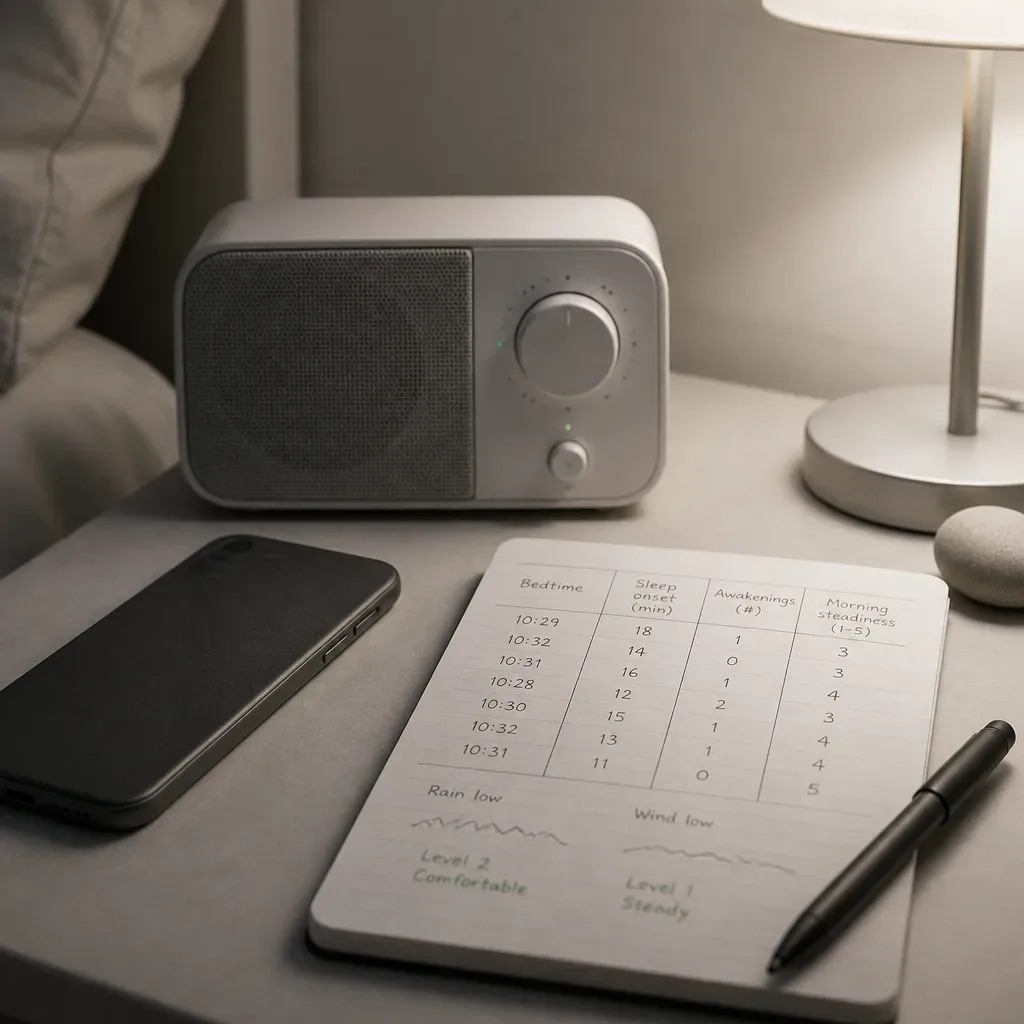
Use a simple log for 7 nights. Do not turn it into a research project. Write down four numbers: bedtime, approximate time to sleep, number of awakenings, and morning steadiness from 1 to 5. If the routine helps, you will usually see it in reduced friction, not a dramatic event. Quiet methods tend to announce themselves by what stops interrupting you.
A few rules keep the setup clean:
- Keep the phone face down after starting the recording.
- Avoid checking sleep scores during the night; one glance can restart alertness.
- Use the same bed position for the first week if your body allows it.
- Keep background sound lower than the voice, not equal to it.
- Stop tensing any area that produces pain, tingling, or cramp.
- If children use audio nearby, keep speakers especially low and away from the pillow.
If the room itself is the problem, solve the room before adding more technique. A doorway conversation may need masking. A radiator click may need a steadier bed of sound. The White noise generator + guide can help you hear how different spectra cover different interruptions, but use the lowest level that works. Masking is not meant to dominate the room; it is meant to make the room less sharp.
The final test is whether you can do the routine when tired. Six minutes. Six zones. Low volume. Press play. Anything more elaborate should earn its place.
Let the last release be small enough to keep.