sleep science
Racing Thoughts at Night: Dream-Self Audio Cue
Racing thoughts at night often need a repeatable cue, not more effort. Use Dream-Self audio with low sound masking to settle attention gently.
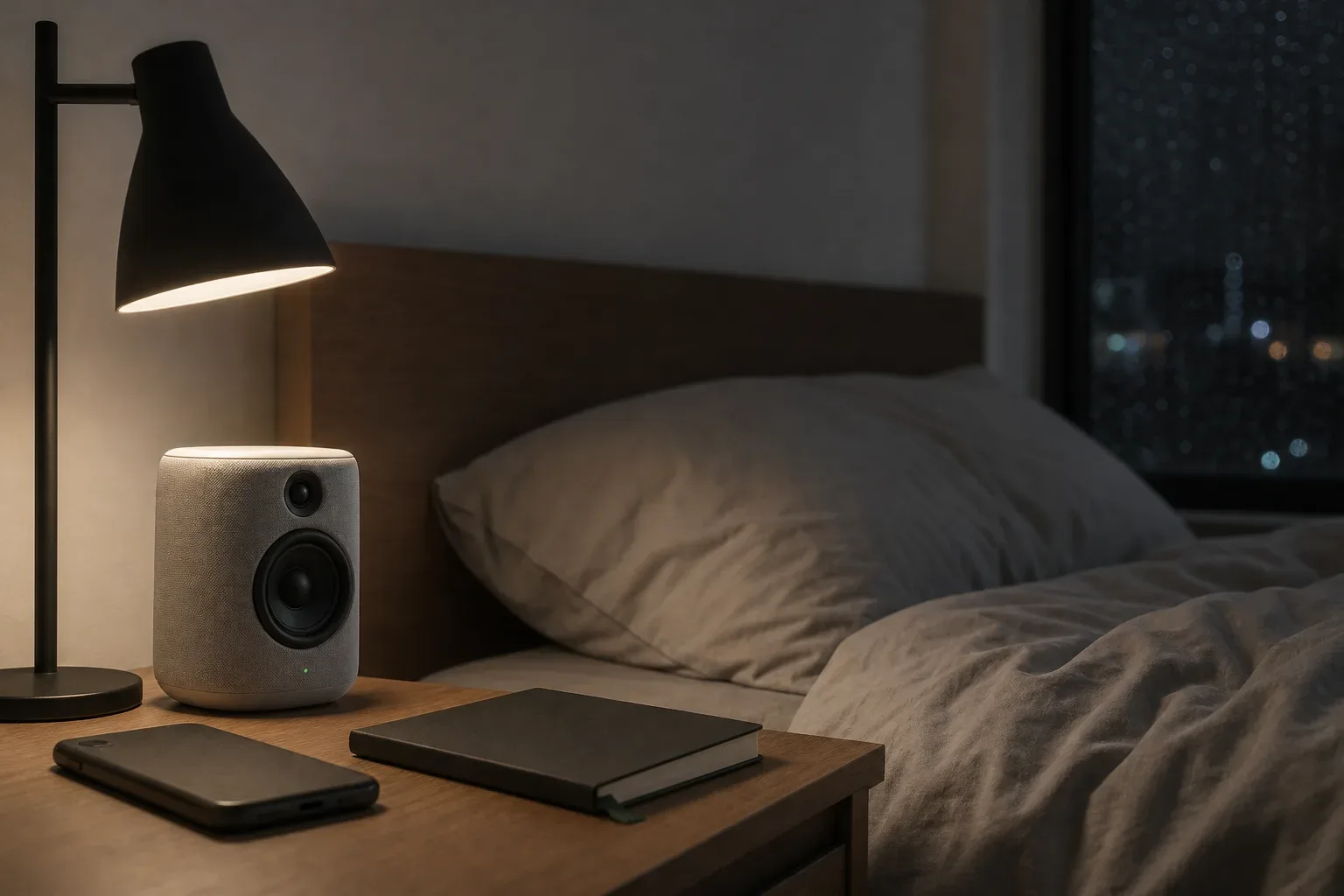
Racing thoughts at night are usually cognitive arousal, not a personal failure. A short Dream-Self audio cue can give attention one repeatable place to land while low sound masks small room noises. Use it quietly, at the same point each night, for seven nights before judging it.
Why do racing thoughts at night feel louder in bed?
Racing thoughts feel louder in bed because the room removes competing signals and leaves the brain with unfinished concerns to process.
During the day, sound, movement, light, and tasks all compete for attention. At night, the sensory field narrows. A refrigerator click can seem sharp. A single sentence from an email can become a full argument. Sleep researchers often call this pre-sleep cognitive arousal. In insomnia models, cognitive arousal is one of the common maintaining factors, along with conditioned wakefulness and sleep effort. The American Academy of Sleep Medicine estimates that chronic insomnia disorder affects about 10% of adults, while short-term insomnia symptoms are far more common.
The mechanism is plain. Your brain is trying to predict, solve, and protect while the body is asking for downshift. If the bed has become the place where problems are reviewed, the cue of lying down can start the review before you choose it. A 2002 paper by Allison Harvey in Behaviour Research and Therapy described intrusive thinking and worry as central features of insomnia. The thought stream is not always useful, but it is skilled at sounding urgent.
Sound helps because it gives the auditory system a stable object. The object can be rain, brown noise, a spoken recording, or a low fan. The best cue is not dramatic. It is repeatable. A cue is a small instruction the body can recognize before the mind debates it.
If racing thoughts come with panic symptoms, trauma flashbacks, loud snoring, gasping, chronic insomnia, or tinnitus distress, use sound as support and speak with a qualified clinician. Audio can prepare the room, but it is not medical care.
What makes Dream-Self audio a useful sleep cue?
Dream-Self audio is useful because it combines familiar voice, future-oriented language, and repetition into one nightly signal.
The AYA Method is a daily audio manifestation practice. Each day you listen to a short personalized recording, your Dream-Self Moment, narrated from the version of you who has already manifested the life you intend. Listening is the practice. Repetition is the work. The audio is the method. At night, that same structure can act as a cue: not a demand to sleep, but a signal that the day is closed.
This matters because the sleeping brain learns by association. In stimulus control therapy, a well-studied behavioral treatment for insomnia, the bed is reserved for sleep and intimacy so the bed stops cueing wakefulness. Clinical guidelines from the American College of Physicians in 2016 recommended cognitive behavioral therapy for insomnia as the first-line treatment for chronic insomnia. A Dream-Self recording is not CBT-I, but it borrows one simple principle: repeat the same calm signal in the same context.
A spoken cue can also reduce choice. Many people with racing thoughts at night try five tools in 10 minutes: breathing, a podcast, a notes app, a meditation, then a clock check. That much switching can keep the frontal brain bright. One short recording lowers the number of decisions.
Use these constraints:
- Keep the recording under 5 minutes if your mind tends to grip words.
- Use the same track for at least 7 nights.
- Set volume before you get into bed.
- Avoid autoplay queues longer than 30 minutes.
- Keep the voice soft, not theatrical.
A bedtime cue should be boring enough to trust. If the recording keeps you interested like a story, it may be too active for sleep.
How do you build the 15-minute routine tonight?
Build the routine by pairing a short Dream-Self recording with low masking sound, then repeating the same sequence without negotiating with your thoughts.
The 15-minute frame is long enough to signal change and short enough to avoid performance pressure. The National Sleep Foundation commonly notes that healthy sleep onset often falls around 10 to 20 minutes, though individuals vary. If you turn the routine into a 60-minute project, the mind may treat sleep as a task to pass.
Here is the simple version:
- Set the room for low input, 2 minutes. Dim the light, put the phone face down, and choose tomorrow’s alarm before you press play.
- Start a steady sound bed, 1 minute. Use low brown noise, soft rain, or another plain masker.
- Play the Dream-Self audio, 3 to 5 minutes. Let the voice be the main cue.
- Stay with the sound bed, 5 to 8 minutes. When thoughts return, place attention on the low hum or the next breath.
- Stop checking, 1 minute. Do not measure whether it worked while it is working.
Volume is the craft detail. For bedside speakers, aim for soft conversation or quieter, roughly 30 to 45 dB at the pillow if you have a meter app. The World Health Organization has recommended average night noise levels below 40 dB outside bedrooms to protect sleep, though room measurements differ. With earbuds, use the lowest audible setting and avoid high isolation tips if you may fall asleep.
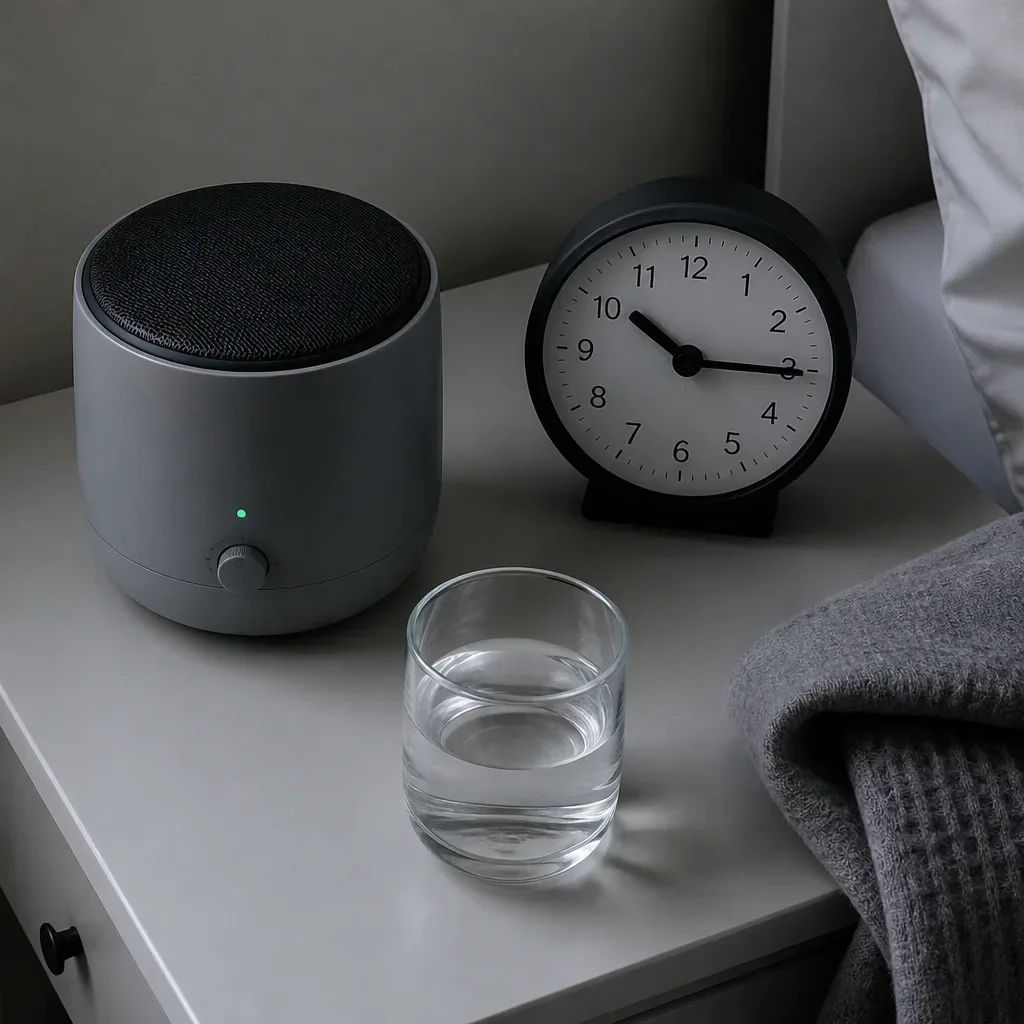
If you need a neutral masker, press play on the White noise generator + guide and listen for whether the hiss feels smoothing or too bright. Some ears prefer the darker slope of brown noise because it puts more level in the low bands. White noise masks sharply. Brown noise settles more softly for many people, though preference is personal.
Which sound bed works best under the voice?
The best sound bed is the quietest steady sound that masks interruptions without pulling attention away from the voice.
Think of the sound bed as the floor, not the room. It should catch small noises: pipe ticks, hallway steps, distant traffic, a partner turning over. It should not become a second program. In field recording, a convincing night sound usually has slight movement but no sudden foreground event. Too perfect a loop can make the ear suspicious. Too detailed a recording can make the mind catalogue every bird, car, or branch.
A 2021 systematic review in Proceedings of the National Academy of Sciences by Buxton and colleagues reported that natural sounds can support stress recovery and improve health-related outcomes in park contexts, though home sleep audio is a narrower question. In practice, many sleepers use nature recordings because the ear understands them quickly. Rain tells the room: stay inside, stay low, nothing needs action.
| Sound bed | What you hear | Best use | Watch for |
|---|---|---|---|
| White noise | Even hiss across bands | Masking sharp household sounds | Can feel bright at higher volume |
| Brown noise | Lower, rounder hum | Softening traffic and room tone | Can feel heavy on small speakers |
| Rain | Moving texture with soft transients | Familiar comfort and gentle masking | Avoid thunder if you startle easily |
| Binaural beats | Two tones creating a perceived beat | Focused listening before sleep | Needs headphones and may distract |
| Solfeggio tones | Named tonal tradition such as 528 Hz | Ritual and preference-based listening | Claims exceed evidence |
If you want to compare tone-based options, use the Binaural beats generator + guide on a low setting before bed rather than after you are already frustrated. Binaural beats require different tones in each ear, so speakers will not create the same effect. Evidence is mixed; small studies have reported changes in anxiety or attention, but results vary by frequency, duration, and study design.
For frequency lore, the Solfeggio frequencies guide explains the tradition respectfully. If 528 Hz helps you settle, that preference counts. The honest line is simple: tradition can hold meaning, while sleep claims still need stronger evidence.
What should you do when the thoughts interrupt the audio?
When thoughts interrupt the audio, label the interruption once and return to the next sound you can hear.
Do not try to finish the thought cleanly. The mind will offer one more clause. Then one more. Bedtime thinking often behaves like a browser tab that opens two new tabs when you close one. A short label breaks the merge: planning, replaying, rehearsing, judging. Then return to the cue. Not because the cue is magic, but because attention strengthens by repetition.
This is close to attentional control training used in several psychological approaches. In mindfulness research, the useful move is often noticing and returning, not maintaining perfect calm. A 2014 meta-analysis in JAMA Internal Medicine reviewed 47 trials with 3,515 participants and found moderate evidence that mindfulness meditation programs can improve anxiety, depression, and pain. Sleep outcomes were not the only focus, but the return skill is relevant.
Use this small script if you need language:
- Thought: “I forgot to answer that message.”
- Label: “Planning.”
- Cue: Hear the low sound under the voice.
- Return: Listen for the next word, not the whole recording.
The return is the practice, not proof that you failed. A quiet mind is not required. A mind that can return once has already changed the night by one degree.
If you are awake and tense after about 20 to 30 minutes, many CBT-I protocols advise leaving the bed briefly and doing something quiet in dim light until sleepiness returns. Do not turn that into punishment. Sit, read a dull page, keep the audio off for a few minutes, then restart the same cue when you come back.
How do you measure whether the cue is working after a week?
Measure the cue by tracking sleep timing, thought intensity, and next-day steadiness for seven nights rather than judging one difficult night.
Sleep varies. One bad night can follow a late meal, alcohol, a hard conversation, menstrual cycle changes, travel, illness, or a room that is 3 degrees too warm. The CDC reports that about 1 in 3 U.S. adults do not get enough sleep on a regular basis, so a noisy week is common. A cue needs repeated exposure before it becomes familiar.
Track only three numbers each morning:
- Estimated sleep onset: less than 20 minutes, 20 to 45 minutes, or more than 45 minutes.
- Thought intensity: 0 to 5, where 0 is quiet and 5 is intrusive.
- Cue use: full routine, partial routine, or skipped.
Do not track 12 variables. Too much measurement becomes another form of wakefulness. The point is to see whether the cue is becoming associated with downshift. If thought intensity drops from 5 to 3, that matters even if sleep onset is not perfect yet.
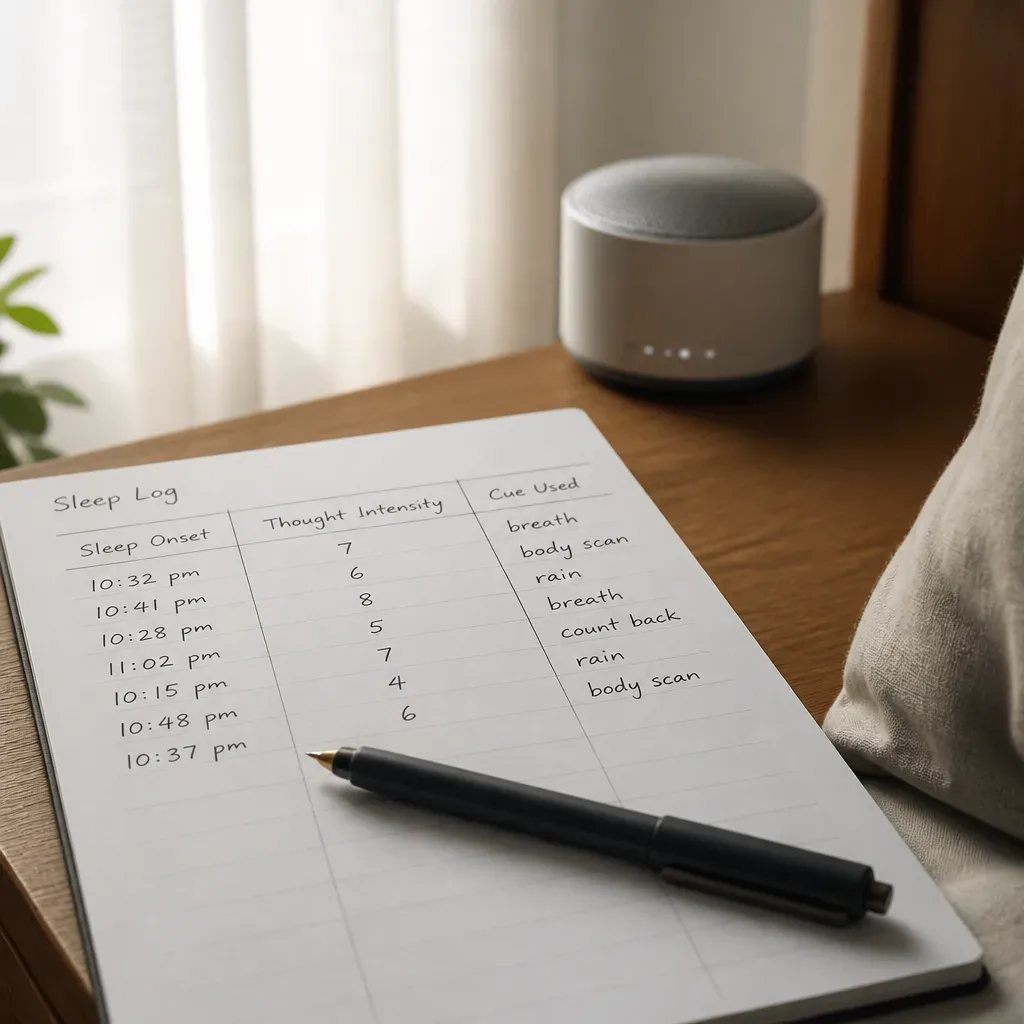
After seven nights, adjust one variable at a time. Lower the volume before changing the recording. Change the sound bed before changing the whole practice. Move the start time earlier by 10 minutes if you are repeatedly overtired. If you used headphones, try a small speaker at the bedside for two nights.
A cue is not a switch. It is a repeated instruction. The ear hears the room, the voice arrives, the body starts to recognize the order.
What mistakes keep racing thoughts active?
The common mistakes are adding too much content, using too much volume, and treating sleep like a performance review.
The first mistake is stacking. A Dream-Self recording, a podcast, a binaural beat, rain, a sleep story, and a breathing app may all be gentle on their own. Together, they can become a control panel. Dr. Andrew Huberman often notes in his public sleep education that consistent light timing, caffeine timing, and wind-down cues matter because the circadian system responds to repeated signals. You do not need more signals. You need fewer, used more consistently.
The second mistake is loudness. Louder sound can mask more, but it also asks the auditory system to keep working. The National Institute for Occupational Safety and Health sets 85 dBA as an 8-hour workplace exposure limit, but sleep listening should be far below that. For children, keep levels especially conservative and avoid earbuds for sleep unless a clinician has advised otherwise.
The third mistake is using the audio to argue with yourself. Dream-Self audio works best as a cue, not a courtroom statement. If a phrase makes you debate whether it is true, soften the wording in the next recording. Neville Goddard wrote about assuming the feeling of the wish fulfilled, and Joe Dispenza speaks about mental rehearsal; both traditions value repetition. For sleep, keep the language plain enough that the nervous system does not cross-examine it.
Use this final checklist tonight:
- One recording.
- One sound bed.
- One start time.
- Low volume.
- No clock checking.
- Seven nights before revision.
If your thoughts race, return to the next audible detail: the consonant in the voice, the low edge of the hum, the soft break in the rain.
The night doesn’t need a verdict; it needs a cue.