sleep science
Military Sleep Method Before Dream-Self Audio
Use the military sleep method as a 2-minute body reset before Dream-Self audio, with safe volume, timing, and sound choices for tonight.
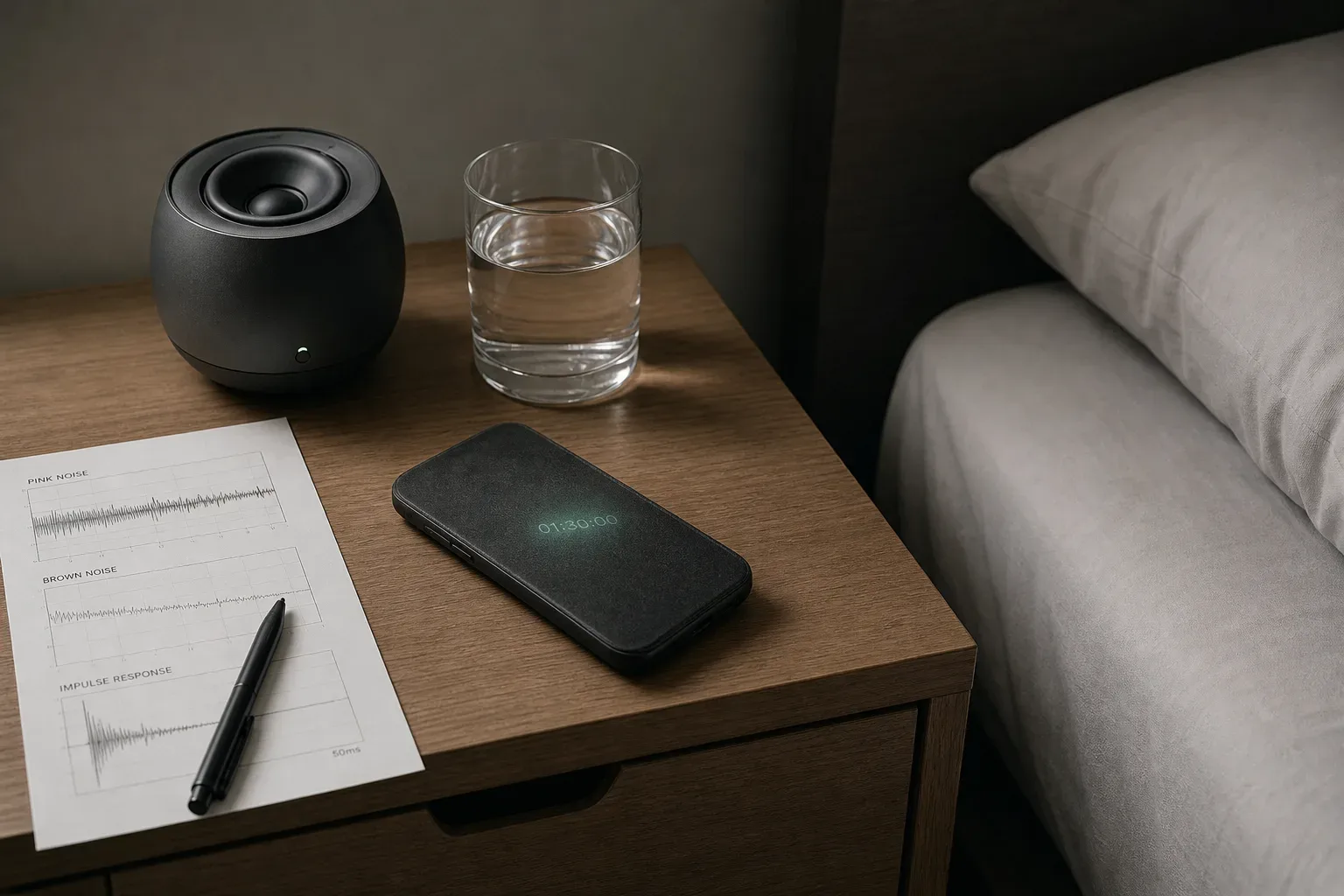
The military sleep method is a two-minute relaxation sequence: soften the face, drop the shoulders, release the arms and legs, then hold one simple thought. Used before Dream-Self audio, it gives the body a clear downshift so the recording can begin in a quieter nervous system.
What is the military sleep method, and what should we believe about it?
The military sleep method is a brief body-relaxation protocol with useful parts and overstated folklore.
The version most people quote comes from Bud Winter’s 1981 book Relax and Win, written for athletes and often linked to U.S. Navy flight training. The famous claim says pilots could fall asleep in about 2 minutes after 6 weeks of practice, with a reported 96% success rate. That number is not a modern peer-reviewed sleep trial. Treat it as training lore with a practical sequence attached.
The useful mechanism is plain: muscle tension and alert thinking tend to keep the body awake. The method moves attention from the head into the body, top to bottom, and asks large muscle groups to stop preparing for action. Progressive muscle relaxation has better clinical support than the military story itself; a 2015 review in Evidence-Based Complementary and Alternative Medicine found relaxation methods can improve sleep quality in several small and moderate studies, though study designs vary.
Here’s the clean version:
- Relax your forehead, eyes, cheeks, tongue, and jaw.
- Drop your shoulders as low as they comfortably go.
- Release one arm, then the other, down to the fingers.
- Let your chest breathe without managing it.
- Release thighs, calves, ankles, and feet.
- Hold a single mental cue for about 10 seconds.
Sleep is not obedience. A method can invite sleep, but it can’t command it.
For adults, normal sleep latency is often described as roughly 10 to 20 minutes. If you’re still awake after two minutes, that isn’t failure; it’s just physiology taking longer than a headline. If insomnia is chronic, or if you snore heavily, wake gasping, or feel unsafe when drowsy, talk with a clinician rather than stacking more audio tools.
Why use it before Dream-Self audio instead of after?
Use the military sleep method first because body release makes attention steadier before the spoken audio begins.
Dream-Self audio works best when you can hear it without wrestling the pillow, fixing the blanket, or negotiating with your jaw. The two-minute setup clears those small physical interruptions. It’s similar to checking gain before recording a voice track: you’re not improving the message; you’re lowering noise in the system.
This is where the AYA Method fits naturally. The AYA Method is a daily audio manifestation practice. Each day you listen to a short personalized recording — your Dream-Self Moment — narrated from the version of you who has already manifested the life you intend. Listening is the practice. Repetition is the work. The audio is the method.
The daily audio should stay central. The military sleep method is only a short setup before pressing play. In practice, that means you don’t add five more steps, three notebooks, or a long performance of calm. You relax the body, start the recording, and stop managing the night.
A quiet routine beats a perfect routine because the nervous system repeats what costs less.
If you’re using sound underneath the recording, keep it simple. A low White noise generator + guide can mask hallway noise or traffic. Many bedrooms sit around 30 to 45 dBA at night, while a passing truck can spike much higher for a few seconds. A steady mask reduces the contrast, which is often what wakes you.
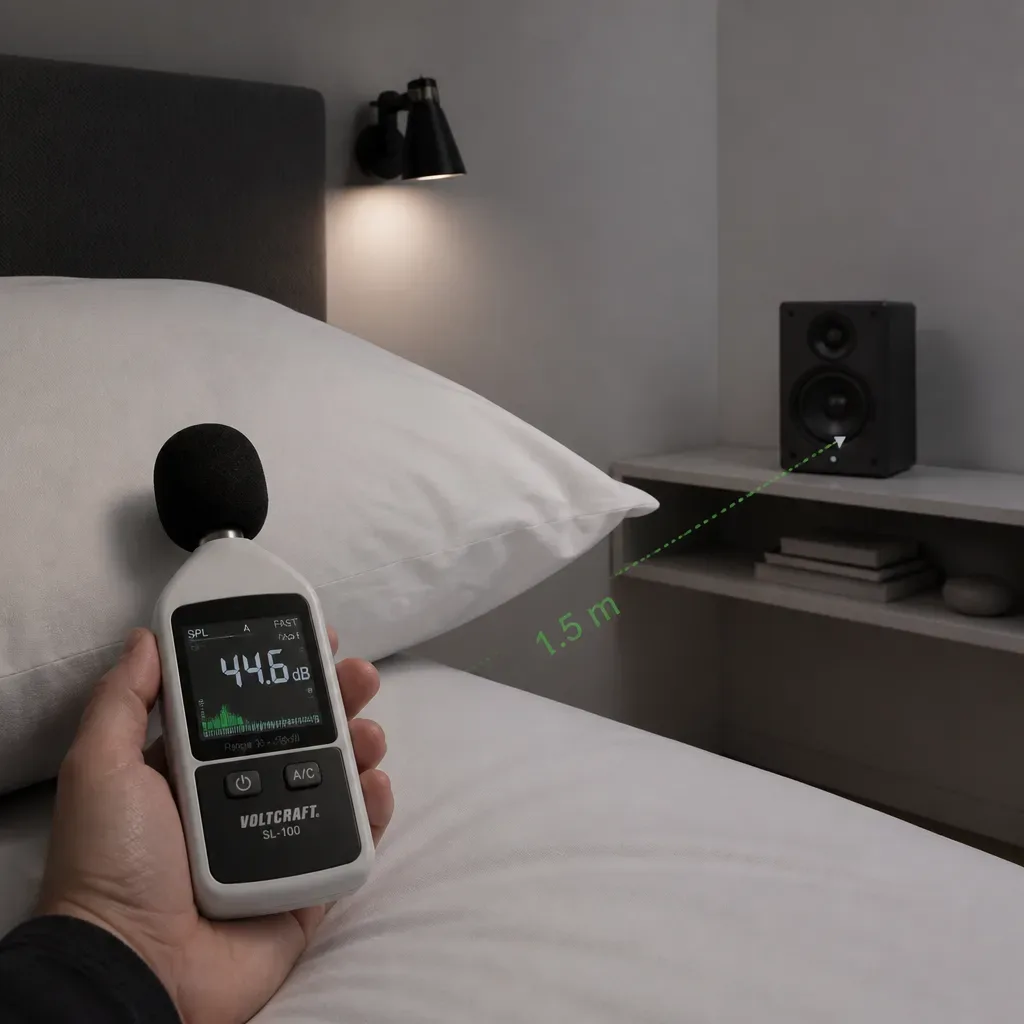
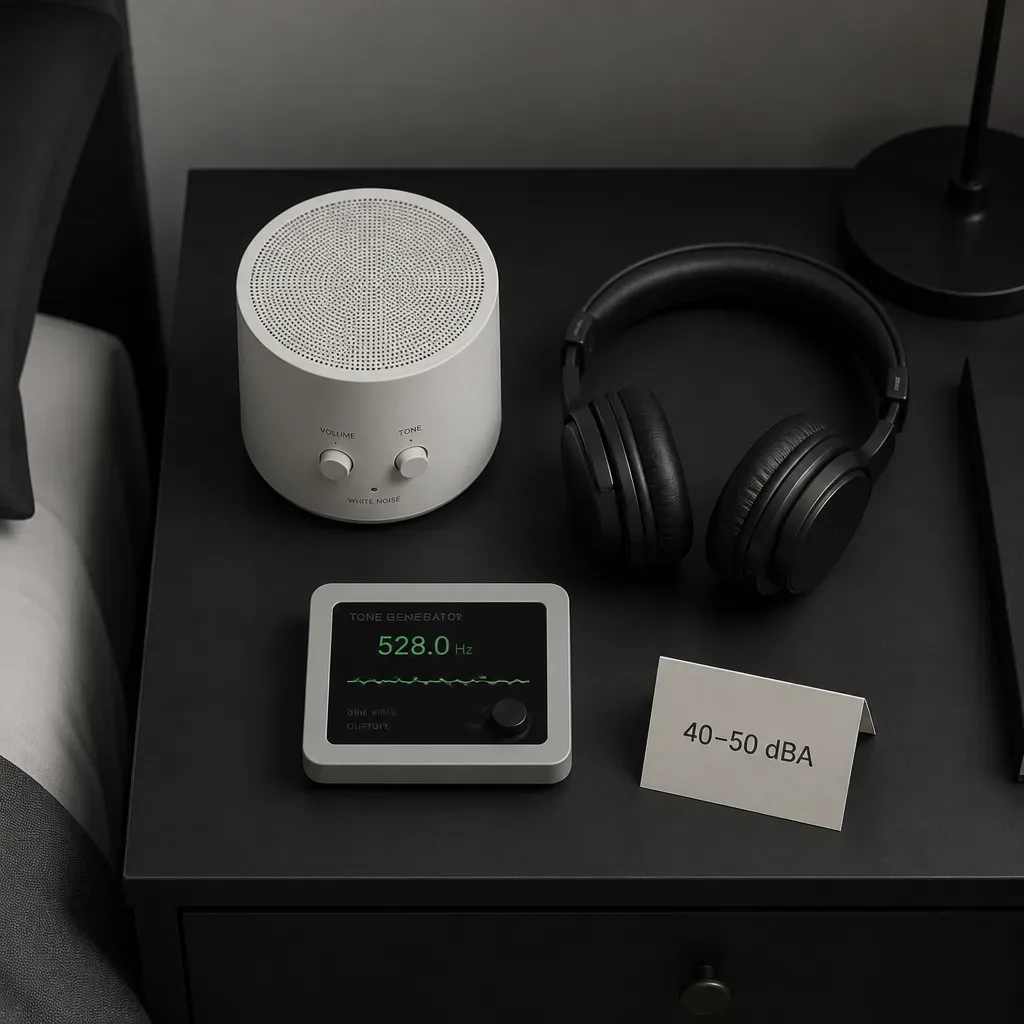
Use conservative volume. For sleep, I’d rather see 40 to 50 dBA at the pillow than anything louder. The World Health Organization’s night-noise guidance has long treated lower nighttime sound as protective for rest, and pediatric guidance is stricter still. If a sound has to be loud to work, the room problem may need curtains, door sealing, or distance from the source.
How do you set up the room in 30 seconds?
Set the room before you lie down, because bed is a poor place to solve device problems.
Start with three checks: sound, light, and reach. The audio source should be close enough to hear clearly but not so close that it feels like a voice in your ear. For a phone speaker, 1 to 2 meters from the head is often enough in a quiet room. For a small speaker, aim it across the room rather than directly at your pillow.
Volume is the part I measure, because guessing gets worse at night. A basic decibel meter or a calibrated phone app can give you a useful estimate. Put it where your head will be and play the loudest part of the audio. If the reading sits around 40 to 50 dBA, most adults will find it audible without strain. If you share the room, measure from both pillow positions.
Use this table as a quick setup reference:
| Item | Quiet target | Why it matters |
|---|---|---|
| Dream-Self audio | Audible, not foregrounded | Speech stays clear without waking you more |
| Masking sound | About 40–50 dBA at pillow | Covers spikes without becoming the event |
| Phone brightness | Lowest usable setting | Bright light can delay melatonin timing |
| Timer | Off, or 20–45 minutes | Prevents checking the device later |
| Device position | 1–2 meters away | Reduces fiddling and sudden loudness |
Light matters too. A 2014 study in Proceedings of the National Academy of Sciences found that evening light from e-readers affected melatonin timing and next-morning alertness compared with print. You don’t need laboratory darkness for this setup, but you do want fewer glowing rectangles near the pillow.
If you use Binaural beats generator + guide, remember the mechanism: two slightly different tones, one to each ear, create a perceived beat. That requires headphones. I don’t recommend sleeping all night in tight earbuds, especially if you turn over. Use binaural beats before bed, then switch to speaker audio or quiet.
What exactly happens during the 2-minute body sequence?
The sequence moves from small facial muscles to larger postural muscles so the body stops bracing in layers.
Minute one is face, neck, shoulders, and arms. Let your forehead smooth out first. Then soften the muscles around the eyes. Let the tongue rest low and wide. Unclench the jaw by allowing a small gap between the back teeth. These are tiny movements, but they matter; jaw tension can stay active for hours without you noticing.
Next, drop the shoulders. Don’t press them down hard. Let them fall as if the mattress is receiving their weight. Release the right upper arm, forearm, palm, and fingers. Then do the same on the left. If you’re left-handed, starting left is fine. The order is less important than the steady scan.
Minute two is chest, belly, legs, and cue. Let the breath become ordinary. You’re not doing breathwork here; you’re removing supervision. Release the thighs, knees, calves, ankles, and toes. Then use one mental cue for about 10 seconds: “soft and still,” “not now,” or “nothing to solve.”
The cue should be boring by design. Interesting thoughts keep the mind lit.
A 2020 paper in Sleep Medicine Reviews noted that cognitive arousal, including worry and repetitive thinking, is closely tied to insomnia symptoms. That doesn’t mean one phrase fixes insomnia. It means a neutral phrase can be a useful handrail while attention settles.
If you lose your place, restart at the face once. Don’t keep restarting all night. After one full pass, press play on the Dream-Self audio and let the recording carry the rest of the routine. The method is a doorframe, not the room.
Which sound should run underneath, if any?
Use no background sound if the room is already quiet; use steady noise only when it masks interruptions.
A masking sound should make the room feel less jumpy, not more interesting. White noise has equal acoustic power per hertz, so it can sound bright or hissy. Pink noise reduces higher frequencies and often feels smoother. Brown noise has more low-frequency weight, which some nervous systems prefer. None of these is deeper sleep by itself. They’re different shapes of sound.
For a plain comparison, press play below and listen for the difference in tone using the White noise generator + guide. If the hiss bothers you, try pink or brown noise at the same measured volume. Change one variable at a time; otherwise you won’t know what helped.
You can also test Solfeggio frequencies guide sounds if you like tonal beds. The Solfeggio tradition names frequencies such as 396 Hz, 528 Hz, and 639 Hz, with meanings attached through modern spiritual music culture. The tradition is meaningful to many listeners; the clinical evidence for specific frequency claims is limited. If 528 Hz helps you settle, use it as a preferred tone, not as a medical treatment.
Here’s the practical rule:
- Use white noise for sharp, varied outside sounds.
- Use pink noise if white noise feels too bright.
- Use brown noise if lower sound feels steadier.
- Use silence if every added sound makes you listen harder.
- Use binaural beats only when headphones are comfortable and temporary.
In small studies, pink noise has been associated with changes in slow-wave sleep, including a 2017 Frontiers in Human Neuroscience paper in older adults, but this is not a universal prescription. Your room, ears, and nervous system still get a vote.
How do you keep the routine from becoming another task?
Cap the routine at two minutes and remove every decision you can before bedtime.
The failure mode is familiar: a person adds the military sleep method, then adds a tone, then compares three volumes, then checks whether the method is working. Now the routine is an inspection. At that point, sleep has become a product test. I say this as someone who has held a decibel meter in a hallway at 2 a.m. while a baby monitor blinked like a tiny accusation.
Use a fixed order for seven nights:
- Set room and volume before lying down.
- Start the two-minute military sleep method.
- Press play on Dream-Self audio.
- Leave the device alone unless the sound is unsafe or clearly wrong.
- In the morning, note only one thing: easier, same, or harder.
Seven nights gives you enough repetition to see a pattern without turning the bed into a spreadsheet. Sleep research often uses sleep diaries across 1 to 2 weeks because single nights are noisy data. A late meal, alcohol, stress, a child waking, or a warm room can all change sleep latency more than a sound choice.
Keep your notes small. “Brown noise, 45 dBA, easier” is enough. You don’t need a long scorecard. If you want to test tones, change only one setting every two or three nights. The Binaural beats generator + guide can be useful for a pre-bed comparison, but don’t run experiments when you’re already tired.
The best sleep tool is the one you can operate half-awake without negotiating with it.
What if it doesn’t work tonight?
If it doesn’t work tonight, shorten the routine rather than adding more techniques.
Some nights are simply too activated for a two-minute method. If you’re still awake after about 20 minutes and frustration is rising, many behavioral sleep programs recommend getting out of bed briefly and doing something quiet in dim light until sleepiness returns. This idea appears in cognitive behavioral therapy for insomnia, which the American College of Physicians recommended as first-line treatment for chronic insomnia in 2016.
Do not make the audio louder to force sleep. Louder sound can become a new stimulus, especially speech. If you can’t hear the Dream-Self audio clearly at a safe level, move the speaker closer by 30 to 60 centimeters rather than raising volume sharply. Distance is often cleaner than loudness.
If thoughts keep arriving, return to one cue only. “Not now” is enough. Don’t debate the thought, label every emotion, or build a full plan. Neville Goddard wrote often about entering sleep with an assumed inner state, while modern clinicians focus more on arousal reduction and sleep conditioning. Those frames differ, but both point toward simplicity at the edge of sleep.
Use this fallback when the full method feels like too much:
- Relax the jaw.
- Drop the shoulders.
- Exhale once without forcing it.
- Press play.
Four moves can be better than six if four actually happen.
If sleeplessness is frequent, painful, or paired with panic, depression, apnea symptoms, or tinnitus distress, get professional support. Sound can support a room. It can’t replace diagnosis, treatment, or safety planning.
What is the clean 2-minute setup for tonight?
Tonight’s setup is: set volume, release the body from face to feet, use one cue, then start the Dream-Self audio.
Here is the whole protocol in a timed form. Keep it nearby for the first few nights, then stop reading it.
| Time | Action | Plain instruction |
|---|---|---|
| 0:00–0:15 | Settle the room | Lights low, audio ready, volume checked |
| 0:15–0:35 | Face | Forehead, eyes, tongue, jaw soften |
| 0:35–0:55 | Shoulders and arms | Shoulders drop, arms release to fingers |
| 0:55–1:20 | Chest and breath | Let breathing run by itself |
| 1:20–1:45 | Legs and feet | Thighs, calves, ankles, toes release |
| 1:45–2:00 | Cue | Repeat one boring phrase for 10 seconds |
| 2:00 | Audio | Press play and stop managing |
If you need a masking bed under the spoken recording, choose one sound before you begin. For traffic or hallway noise, white or pink noise is usually the most practical. For a softer low hum, try brown noise. For tonal preference, use a quiet Solfeggio track as tradition-informed music, not as a clinical claim.
Keep the volume low enough that you’d feel comfortable leaving it there for the full session. Occupational safety limits such as 85 dBA over 8 hours are designed for workplaces, not ideal sleep rooms. A bedroom sound doesn’t need to come anywhere near that level. Quiet is not weakness; quiet is the point.
The method should feel almost under-designed. That’s the design. The body receives a simple sequence, the room stays steady, and the audio begins without ceremony. Repetition does the part that effort keeps trying to take over.
Press play softly, then let the room do less.