sleep science
Reading Before Bed: When to Switch to Dream-Self Audio
Reading before bed can calm attention, but the right switch point matters. Learn when to close the book, play Dream-Self audio, and protect sleep.
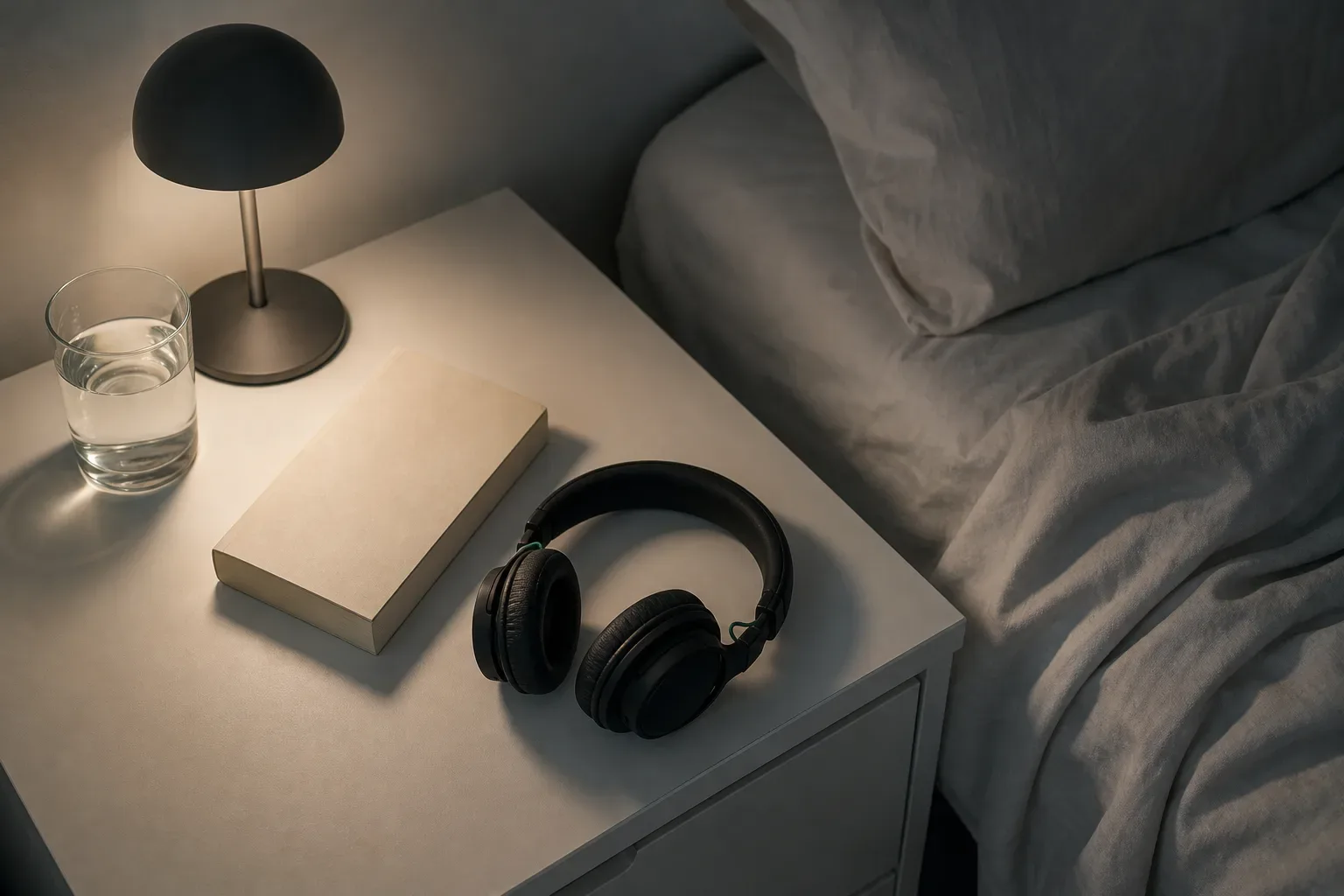
Reading before bed works best as a short wind-down, not an open-ended second shift. Read until sleep pressure appears, usually 10 to 20 minutes, then switch to Dream-Self audio when your eyes reread lines or your attention softens. The book lowers speed. The audio carries repetition.
Why does reading before bed help some nervous systems settle?
Reading before bed helps because it gives attention a narrow, predictable task while the body leaves daytime alertness.
A book is a ramp, not a destination. The page reduces choice, blocks some rumination, and asks the eyes to move in a steady pattern. In a 2021 online randomized trial of 991 adults, people assigned to read in bed before sleep reported better sleep quality more often than the control group: 42 percent versus 28 percent after 7 days. That doesn’t prove reading is a sedative. It suggests that a simple pre-sleep cue can help.
Mechanically, reading competes with the mental loops that tend to appear at night. Cognitive arousal is one of the common features in insomnia research, including work summarized in the Journal of Behavioral Medicine and behavioral sleep medicine texts. A calm book gives the mind enough structure to stop rehearsing tomorrow, but not so much stimulation that the body has to stay braced.
The details matter. The American Academy of Sleep Medicine and Sleep Foundation commonly point adults toward 7 to 9 hours of sleep, but routine timing is often what protects that window. If reading takes 45 minutes because the chapter is tense, it may steal from sleep instead of preparing it. If it takes 12 minutes and ends cleanly, it can become a reliable cue.
Think of reading as acoustic silence for the mind. It masks the inner noise without adding much new signal.
When is the right moment to switch from the page to audio?
The right switch point is the first reliable sign that effort has begun to cost rest.
Most healthy adults take about 10 to 20 minutes to fall asleep once conditions are right, according to common clinical sleep-latency ranges used in sleep medicine. Your reading window should usually end before you cross from drowsy into strained. If you keep reading after the body has asked to stop, the book becomes a small test you keep trying to pass.
Use body cues rather than chapter breaks. Chapters are built for story rhythm, not nervous-system timing. In practice, the switch cue is often physical: the book dips, the jaw loosens, the same sentence repeats twice, or the breath becomes slower without instruction. That is the handoff point.
| Signal during reading | What it usually means | Best next move |
|---|---|---|
| You reread the same line twice | Attention is softening | Close the book |
| You want one more chapter | Reward system is active | Stop at the next paragraph |
| Your eyes feel dry or bright | Light may be too strong | Dim the lamp by 50 percent |
| You feel calm but awake | Good audio window | Start the recording |
| You feel irritated by stopping | Book is too stimulating | Choose plainer material tomorrow |
The switch should feel almost boring. That is a good sign. The National Sleep Foundation has long emphasized consistent pre-sleep routines because repeated cues train the brain to predict rest. You are not trying to make the audio compete with the book. You are letting the book finish its job.
Keep the page for attention and the audio for repetition.
How do you build a 20-minute bedtime handoff routine?
A good handoff routine uses reading first, then sound, with no decision-making in the middle.
Start by setting the room before the book opens. Put the phone on Do Not Disturb, place the audio track where one tap can start it, and choose a lamp that doesn’t flood the room. A 2015 Proceedings of the National Academy of Sciences study found that light-emitting e-readers before bed suppressed evening melatonin and delayed circadian timing compared with printed books. Paper or e-ink is usually the quieter choice.
Try this 20-minute structure for 7 nights:
- Minute 0 to 2: lower the room light and place the audio device within reach.
- Minute 2 to 14: read calm material, ideally paper or e-ink.
- Minute 14 to 16: stop at the first switch cue, even if the timer hasn’t ended.
- Minute 16 to 20: play Dream-Self audio softly and lie still.
- After minute 20: let the track end or fade without checking messages.
This is where the AYA Method fits naturally. The AYA Method is a daily audio manifestation practice. Each day you listen to a short personalized recording - your Dream-Self Moment - narrated from the version of you who has already manifested the life you intend. Listening is the practice. Repetition is the work. The audio is the method.
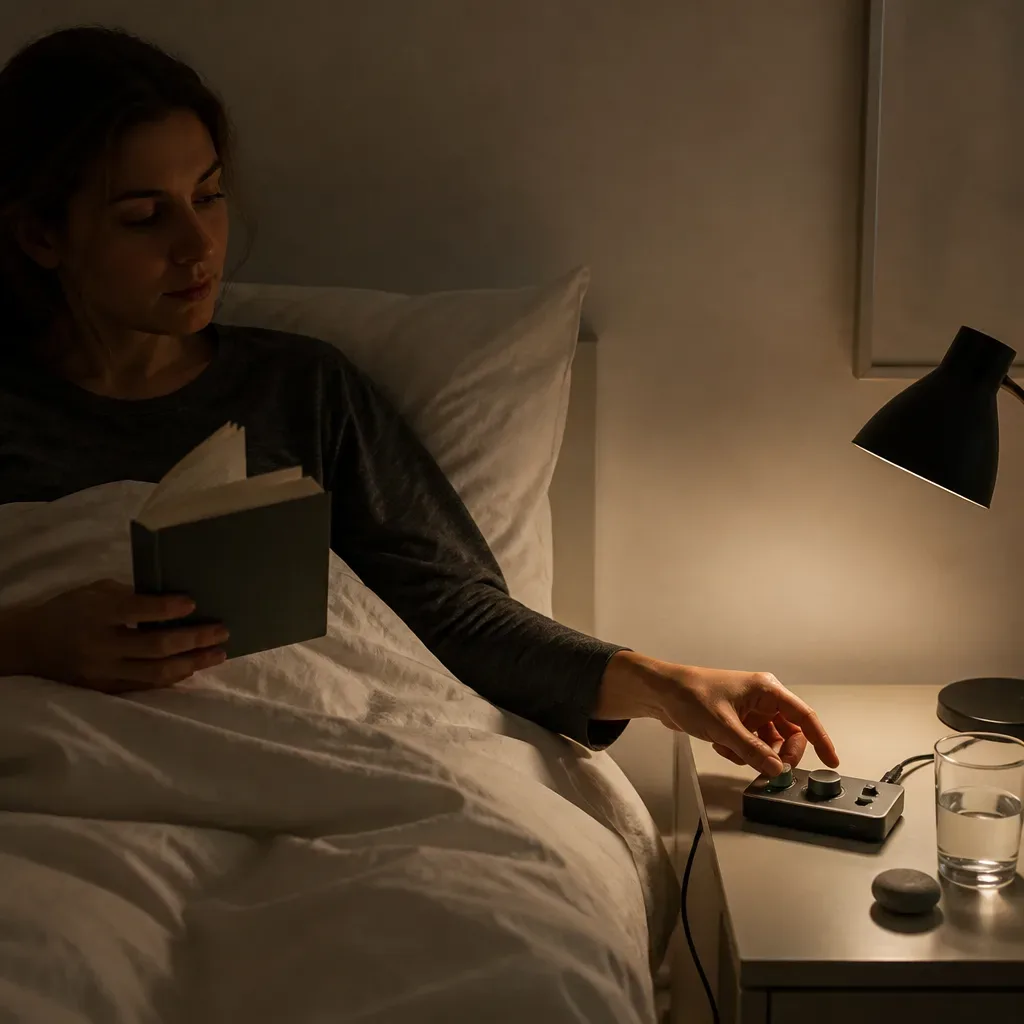
If your room has traffic noise or a shared wall, you can place a neutral mask under the voice. The White noise generator + guide is useful when the problem is interruption rather than mood. Keep it low enough that the voice remains clear.
What if the book keeps you awake instead of calming you down?
If reading keeps you awake, the problem is usually the book type, the light level, or the lack of a stop rule.
Suspense, work material, self-improvement assignments, and emotionally charged memoir can all raise alertness. That doesn’t make them bad books. It makes them poor last inputs. Sleep researchers often separate cognitive arousal from physical arousal because the body can be still while the mind keeps moving. A plot twist at 11:17 p.m. is still a stimulus.
Use a small test. For 3 nights, choose the plainest book you can tolerate: essays, nature writing, poetry, spiritual text, or a familiar novel with no cliff edge. Read no more than 15 minutes. If sleep latency improves by even 5 to 10 minutes, the issue was likely stimulation, not reading itself.
Also check the device. In the PNAS e-reader study, participants using light-emitting readers took longer to fall asleep and had reduced next-morning alertness compared with print. If you must use a screen, reduce brightness, use a warm setting, and keep the device out of your face. A bedside lamp angled away from the eyes is often simpler.
A book that demands a decision is no longer a bedtime tool.
When the book is too active, switch earlier. Some nights the right reading dose is 6 minutes. That still counts. Rest practices fail when we turn them into measures of discipline.
What should the Dream-Self audio sound like at bedtime?
Bedtime audio should be intelligible, low, steady, and free of sudden changes.
Volume is the first safety setting. The World Health Organization’s night-noise guidance has used 40 dB outside the sleeping room as a level meant to protect sleep, while occupational hearing guidance often flags 85 dB over 8 hours as a risk zone. Bedtime listening should sit far below that. If you use a phone speaker, start under 50 percent volume. If you use earbuds, keep them very low and avoid sleeping with a loud track looping for hours.
The voice should be clear without pulling you upward. A good test is simple: if you can understand it while relaxed but would not choose it for daytime motivation, it is probably close. Bedtime isn’t the place for dramatic crescendos, sharp chimes, or sudden bass. Volume should feel like a nearby lamp, not a stage light.
Some listeners like a soft carrier sound underneath the voice. If your mind catches on silence, try the Binaural beats generator + guide, but keep the claims plain. A binaural beat is a brain-made auditory illusion from two slightly different tones. Small studies suggest possible relaxation effects, but results are mixed and depend on frequency, duration, and listener.
For a more ritual tone, the Solfeggio frequencies guide explains the tradition around tones such as 528 Hz without treating them as medical tools. If a fixed tone helps you stay with the voice, use it. If it distracts you, remove it.
How can you tell whether the switch is working?
You can tell the handoff is working when sleep begins with less negotiation and mornings feel less interrupted.
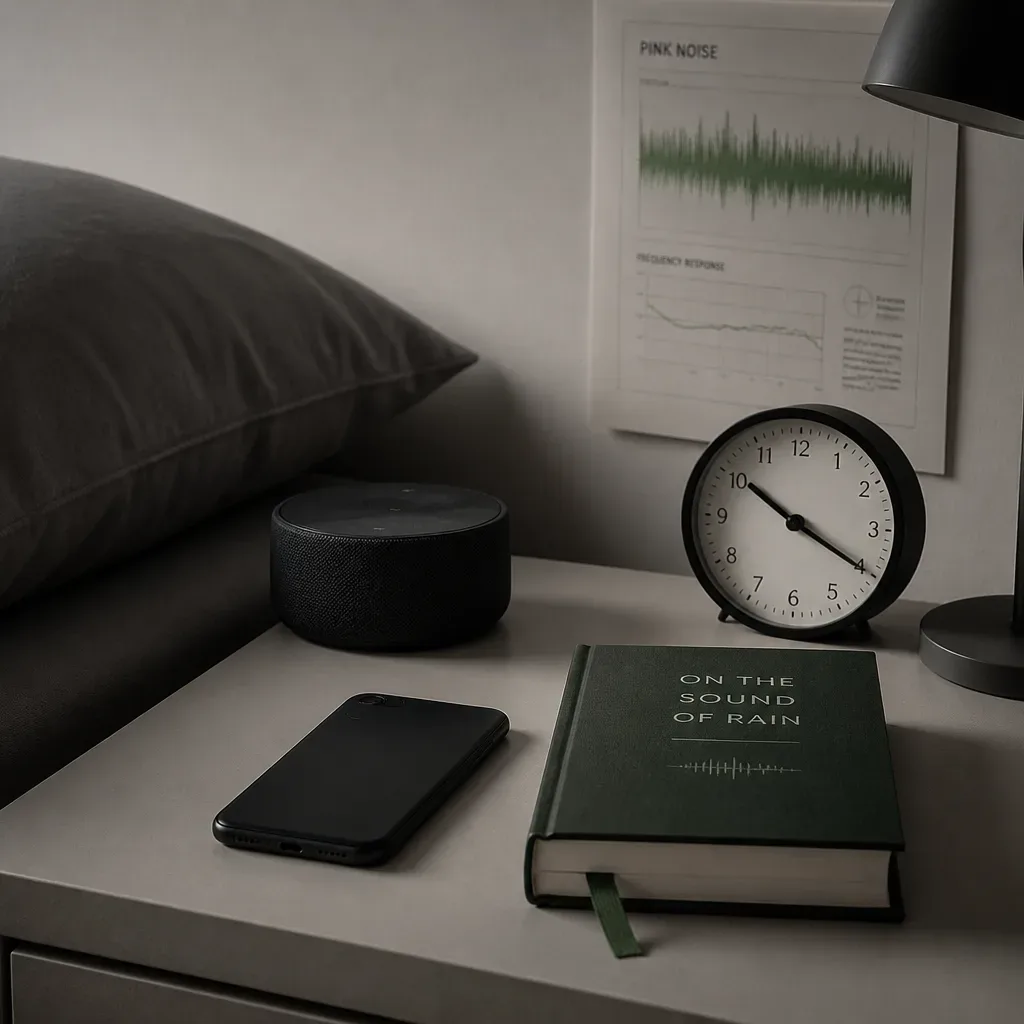
Track only 4 numbers for 7 nights. More data can become another form of wakefulness. Write them on paper in the morning, not in bed at midnight. Consumer sleep trackers can estimate patterns, but even the American Academy of Sleep Medicine cautions that wearables are not diagnostic devices. Your felt pattern matters, especially when it repeats across a week.
| Morning note | What to record | Useful range |
|---|---|---|
| Reading minutes | Time from opening to closing book | 6 to 20 minutes |
| Switch cue | First cue noticed | rereading, heavy hands, slower breath |
| Sleep latency | Estimated time to sleep | under 30 minutes is often workable |
| Night waking | Number you remember | 0 to 2 is common |
| Morning tone | Plain word, not a score | clear, dull, tense, steady |
Look for trends, not perfection. One late meal, one difficult message, or one noisy street can distort a night. In cognitive behavioral therapy for insomnia, sleep diaries are often reviewed across 1 to 2 weeks because single nights are noisy data. The same patience belongs here.
Adjust in small increments:
- If you feel wired after reading, choose calmer material or cut 5 minutes.
- If you fall asleep before audio, start the recording 5 minutes earlier.
- If the voice annoys you, lower volume first, then shorten the track.
- If outside sound breaks the routine, test the White noise generator + guide at a low setting.
- If tones pull focus, use voice only for 7 nights.
A practice kept gently for 14 nights teaches more than one perfect night.
When should you get help instead of adjusting the routine?
Get help when sleep trouble is frequent, distressing, or paired with symptoms that a bedtime routine should not be asked to solve.
If you have loud snoring, gasping, pauses in breathing, restless legs, persistent nightmares, or daytime sleepiness that affects driving or work, speak with a qualified clinician. Obstructive sleep apnea affects an estimated 10 percent to 30 percent of adults in various population studies, and it needs proper assessment. Audio can make the room feel kinder, but it doesn’t treat breathing disorders.
For chronic insomnia, the first-line behavioral treatment is often cognitive behavioral therapy for insomnia, known as CBT-I. The American College of Physicians recommended CBT-I as initial treatment for chronic insomnia in its 2016 guideline. That matters because sleep difficulty can become conditioned: the bed starts to mean effort. A structured therapy can help retrain that loop.
You don’t have to abandon reading or audio if you seek support. Bring your notes. A 7-night record of reading minutes, switch cues, and estimated sleep latency gives a clinician more signal than a general statement that sleep is bad. Keep the routine simple while you get help: low light, short reading, soft audio, no argument with the clock.
Tonight, let the page close before it asks too much of you.