sleep science
Sleep Debt Recovery With Gentle Dream-Self Audio
Sleep debt recovery needs ordinary nights, not force. Learn a 25-minute wind-down using quiet sound, conservative volume, and gentle Dream-Self audio.
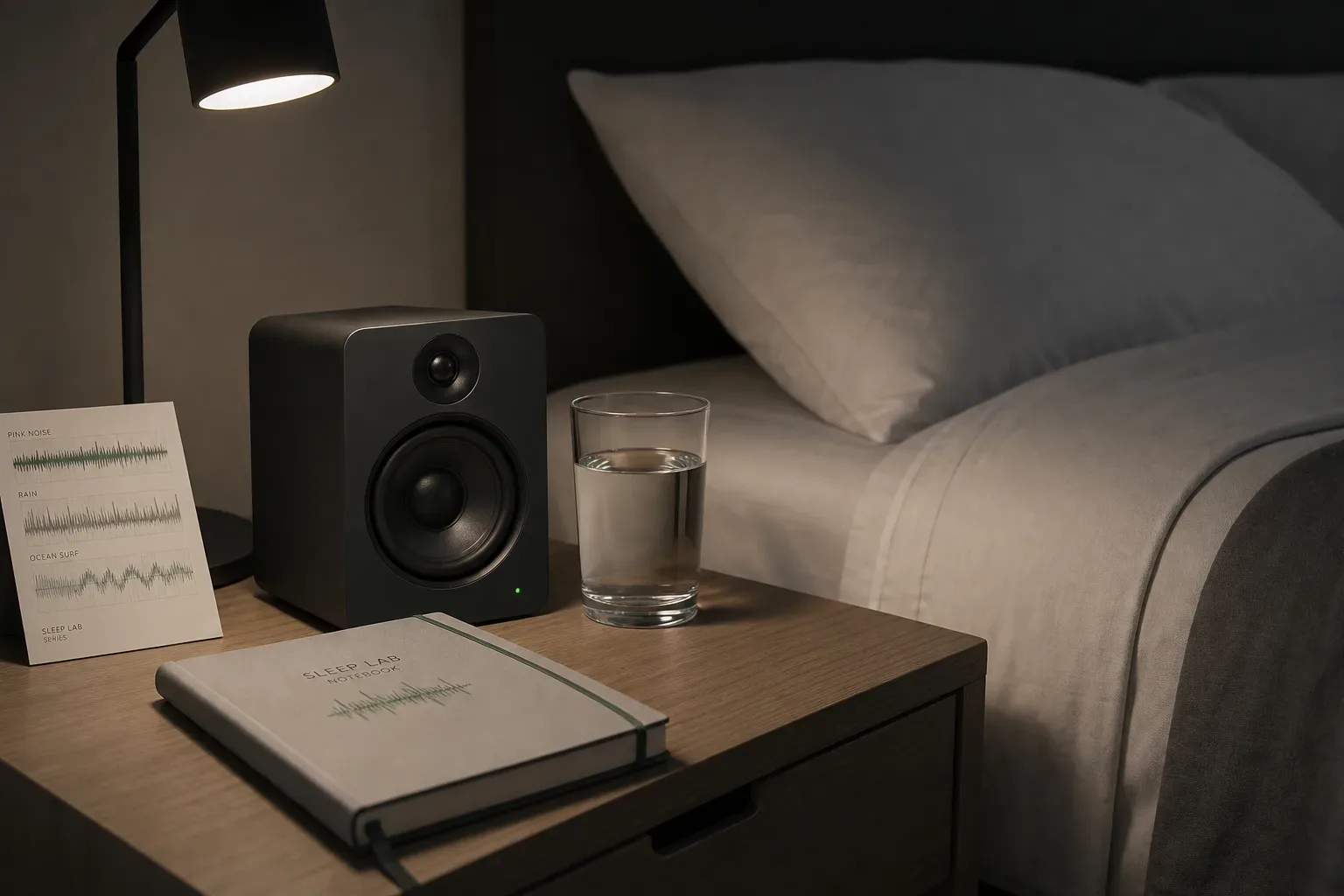
Sleep debt recovery means giving your body enough real sleep over several nights to repay recent shortfall. Gentle Dream-Self audio can help by reducing decision load and giving attention a steady object, but it doesn’t replace sleep. Tonight, use sound quietly, protect your ears, and aim for repeatable rest.
What is sleep debt recovery, exactly?
Sleep debt recovery is the gradual repayment of missed sleep through adequate sleep opportunity, usually over more than one night.
If you need about 7.5 hours and you sleep 5.5 hours for three nights, you’ve created roughly 6 hours of debt. That arithmetic is plain, but biology is less tidy. The American Academy of Sleep Medicine and Sleep Research Society recommend 7 or more hours per night for most adults. After restriction, the body can increase deep sleep and sleep duration, yet attention, mood, and metabolic measures may recover at different speeds.
Van Dongen and colleagues reported in a 2003 Sleep study that people restricted to 6 hours per night for 14 days showed cognitive lapses comparable to 2 nights without sleep, while many didn’t notice how impaired they were. That matters on overtired nights because the tired mind often chooses stimulation when it needs less input.
Sleep debt is not paid back by drama; it is paid back by enough ordinary nights. One 10-hour night can help, especially after a single short night, but a repeated deficit tends to need repeated repair. A 2019 Current Biology study found that weekend recovery sleep didn’t fully reverse metabolic effects from weekday restriction in a small controlled sample.
Use sound as support, not as a shortcut. A low steady signal can mask hallway noise, soften sudden changes, and make the room feel predictable. Sound cannot repay sleep debt, but it can protect the conditions in which repayment happens.
How much sleep can you safely try to recover tonight?
A practical target is 8 to 9 hours of sleep opportunity, not an extreme 12-hour attempt that disrupts tomorrow night.
Sleep opportunity means time in bed with the conditions for sleep, not guaranteed sleep. If your usual need is 7.5 hours and you’ve been short by 90 minutes for two nights, choose a bedtime that gives you 8.5 or 9 hours available. The National Sleep Foundation lists 7 to 9 hours as the recommended adult range, with some healthy adults needing slightly more or less.
Trying to force a very long night can backfire. Long naps after 4 p.m., bright light at midnight, or staying in bed frustrated for 3 awake hours can weaken the next sleep cycle. In insomnia treatment, stimulus control is used for this reason: bed should stay linked with sleep rather than effort. If chronic insomnia, sleep apnea, restless legs, or severe daytime sleepiness is present, talk with a qualified clinician.
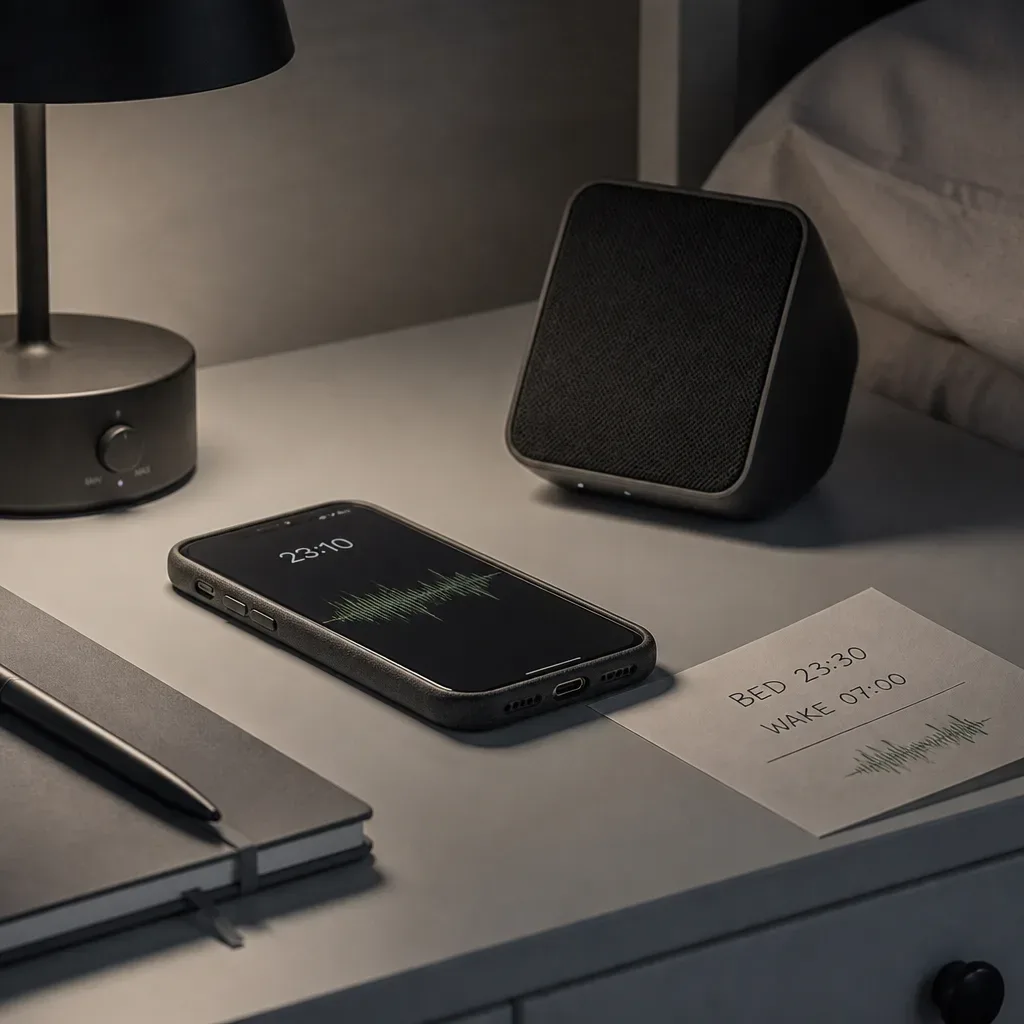
A nervous system that is overtired doesn’t need more stimulation; it needs fewer decisions. The simplest plan has 3 numbers: a wake time, an earliest bedtime, and a volume ceiling. For example, wake at 7:00, lights down at 9:45, in bed at 10:15, sound under about 40 to 45 dB(A). That level is roughly a quiet room to soft library level, depending on distance.
Here is the plain recovery frame:
- Keep the same wake time within about 30 minutes.
- Add 30 to 90 minutes of extra sleep opportunity.
- Repeat for 2 to 4 nights before judging the result.
- Avoid late caffeine; caffeine’s half-life is often cited around 5 hours, with wide variation.
How should sound prepare an overtired brain?
Sound should reduce contrast in the room, not entertain the brain into staying awake.
The mechanism is masking. A steady broadband sound raises the acoustic floor so small disturbances are less distinct. If a pipe clicks at 32 dB(A) in a room with a 22 dB(A) background, the change is obvious. If a soft noise bed sits around 35 dB(A), the same click may matter less. The ear still hears; the nervous system has fewer sharp edges to track.
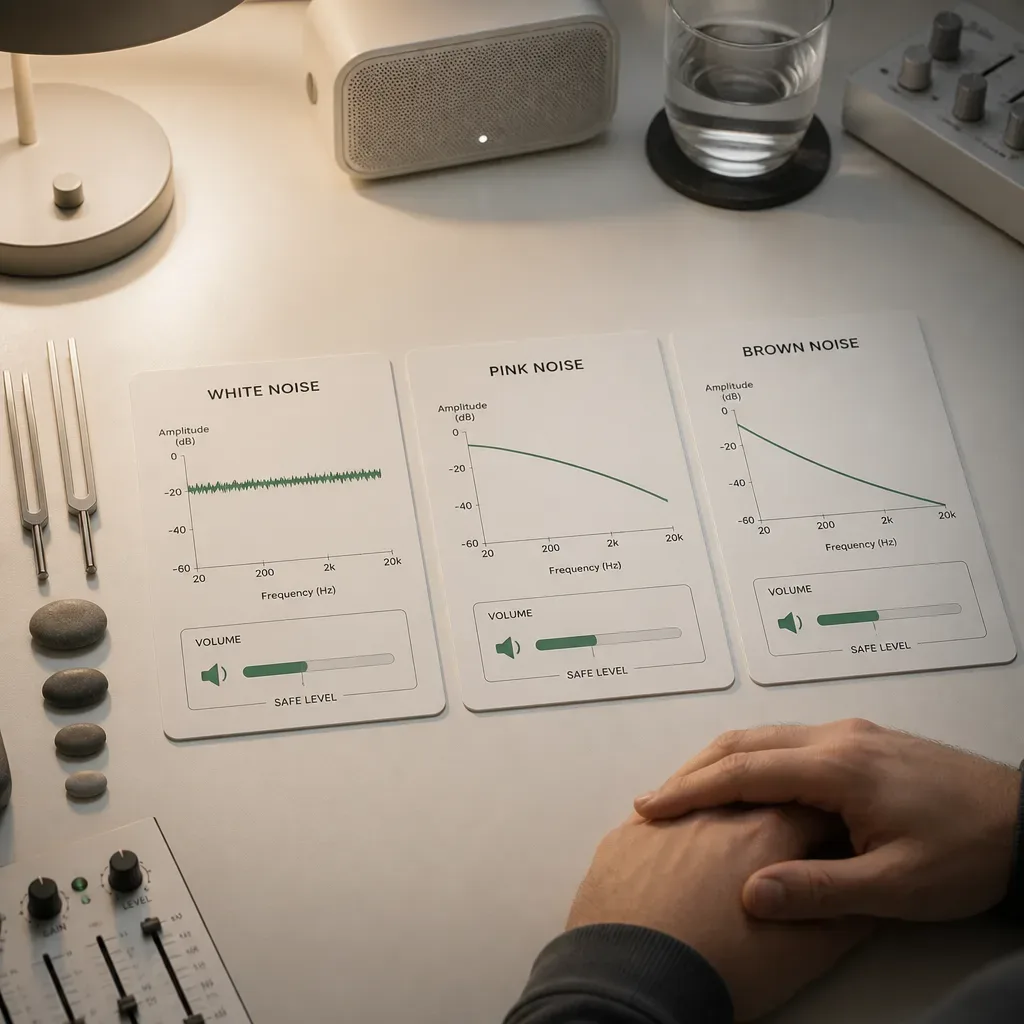
Different sound colors distribute acoustic content differently. White noise has equal power per hertz, which can sound hissy. Pink noise falls by about 3 dB per octave, so it often feels balanced. Brown noise falls more steeply, about 6 dB per octave, and tends to feel low and rounded. You can compare them with the White noise generator + guide before bed rather than guessing from labels.
Volume is part of the method; louder is not kinder to tired ears. The World Health Organization has warned about recreational noise exposure above 80 to 85 dB over time, but sleep audio should sit far below that. For bedside speakers, start just audible, then raise only until the room stops startling you. For children, keep it lower and farther away, and avoid placing a speaker near the crib.
If you prefer a lower hum, compare it with a brown noise guide and listen for body tension rather than taste. If the sound feels sharp after 2 minutes, it will likely feel sharper at 3 a.m. The best sleep sound is usually the one you stop noticing.
What is the 25-minute Dream-Self audio routine?
The routine is a low-stimulation sequence: mask the room first, then play one gentle Dream-Self recording, then let the sound bed continue or fade.
Start 25 minutes before your planned lights-out time. Set the room before you set your mind: dim light, cool temperature, phone on Do Not Disturb, and water within reach. Many sleep labs keep bedrooms cool; the National Sleep Foundation commonly suggests about 60 to 67°F, or 15.6 to 19.4°C, though comfort varies. Temperature isn’t decoration; it affects how easily the body drops core heat.
Then start a quiet masking layer. This can be pink noise, brown noise, rain, or a soft fan. Keep it at the lowest effective level. Press play below in the relevant guide and listen for the difference rather than choosing by name: the Binaural beats generator + guide is useful if you want to test tones, while broadband noise is often simpler for masking.
After 5 minutes of settling, play your Dream-Self audio once. The AYA Method is a daily audio manifestation practice. Each day you listen to a short personalized recording, your Dream-Self Moment, narrated from the version of you who has already manifested the life you intend. Listening is the practice. Repetition is the work. The audio is the method.
On an overtired night, keep it plain:
- One recording, not a playlist.
- Low volume, not intimate loudness.
- Familiar voice, not novelty.
- No note-taking in bed.
- No checking whether it worked.
The audio is not a command to sleep. It is a steady object for attention to rest on. If the words start making you plan tomorrow, lower the volume or use only a sound bed tonight. Recovery is allowed to be mechanical.
Which sound should you pair with Dream-Self audio?
Use the sound that masks your room at the lowest comfortable volume, with brown or pink noise often easier than bright white noise on tired ears.
There is no universal best frequency for sleep debt recovery. The research on acoustic stimulation during sleep is narrow and specific. Some small studies on pink-noise-timed stimulation have reported improvements in slow-wave activity, especially in older adults, but these protocols used sensors and timing rather than a generic loop. For home use, the safer claim is modest: steady sound may reduce awakenings from environmental noise.
Binaural beats are different. They occur when each ear receives a slightly different tone, such as 200 Hz in one ear and 204 Hz in the other, producing a perceived 4 Hz beat. Reviews have found mixed results for anxiety and cognition, with study designs varying widely. If you use them, use speakers only if the track is designed for speakers; many require headphones, which I don’t recommend for overnight sleep.
Solfeggio tracks sit in another category. The tradition assigns meaning to tones such as 396 Hz, 528 Hz, and 852 Hz. You can treat that tradition with respect while keeping the evidence plain: claims about specific frequencies causing specific biological repair are not established. If 528 Hz feels calming to you, the preference is real enough for your routine. The mechanism may be association, timbre, pacing, or simple liking. Our Solfeggio frequencies guide separates the lore from measured claims.
| Sound option | What it does | Best use tonight | Caution |
|---|---|---|---|
| Pink noise | Balanced broadband mask, about 3 dB less per octave | General sleep masking | Keep volume low |
| Brown noise | Lower, softer hum, about 6 dB less per octave | Overtired ears sensitive to hiss | Can mask alarms if too loud |
| White noise | Even power per hertz | Noisy apartments or sharp room sounds | May feel bright |
| Binaural beats | Perceived beat from two tones | Short pre-sleep focus | Evidence is mixed |
| Solfeggio tones | Traditional named frequencies | Personal preference, ritual cue | Not proven medical repair |
The spectrum matters more than the label. Choose with your ears at bedtime, not with a claim on a thumbnail.
What should you avoid when you’re carrying sleep debt?
Avoid adding intensity: loud audio, late light, long evening naps, and self-measurement that makes sleep feel like a performance test.
Overtired doesn’t always feel sleepy. After sleep restriction, the body can show increased sympathetic activation, and many people get a second wind. That doesn’t mean recovery has happened. It means the system is compensating. A 2014 CDC report found that about one-third of U.S. adults reported short sleep duration, commonly defined as less than 7 hours, so this pattern is not rare.
Keep the evening boring by design. Bright light suppresses melatonin, with blue-rich light tending to have stronger alerting effects. Many lab studies use intensities and durations that don’t match a bedroom, but the practice remains sensible: dim overhead lights 60 minutes before bed and move screens away from your face. If you must use a phone for audio, start the track, set the volume, and put the screen down.
Avoid compensations that steal from tomorrow. A 2-hour nap at 6 p.m. may feel necessary, but it can reduce sleep pressure at bedtime. If you need a nap, keep it around 20 to 30 minutes and earlier in the day. Avoid alcohol as a sleep tool; it can shorten sleep onset but tends to fragment the second half of the night.
Also avoid turning Dream-Self audio into a test. Don’t ask, Did I believe every sentence? Don’t restart the recording because your mind wandered. Wandering is normal; in meditation research, even trained participants report repeated attention shifts. For sleep debt recovery, the win is simpler: you created a quiet interval and stayed with it.
How do you know the routine is helping?
Judge the routine by 3 mornings of steadier waking, fewer night disruptions, and less afternoon sleepiness, not by one perfect night.
Sleep is variable. A single night can be shaped by room temperature, stress, dinner timing, hormones, travel, pain, or a neighbor’s door. Track only what you can use without becoming tense. I like a 30-second note: bedtime, estimated sleep opportunity, number of remembered awakenings, and afternoon sleepiness from 1 to 5. That gives enough signal without making the bed a data lab.
Wearables can estimate sleep, but they aren’t polysomnography. Consumer devices are often better at detecting sleep versus wake than at staging deep sleep accurately; validation studies vary by device and algorithm version. If your watch says you had 41 minutes of deep sleep, don’t reorganize your emotional life around that number. Ask whether you drove safely, spoke more patiently, and needed less caffeine after lunch.
Use this small decision table after 3 nights:
| What you notice | Likely adjustment |
|---|---|
| Falling asleep faster, waking less | Keep the same routine for 1 week |
| Audio feels interesting or activating | Shorten Dream-Self audio or lower volume |
| Noise masks too much, alarms feel distant | Reduce volume or use a timer |
| Still exhausted after adequate time in bed | Consider medical or sleep-clinic guidance |
If you want one clean nightly sequence, use 5 minutes of a masking sound from the White noise generator + guide, one quiet Dream-Self recording, then either silence or a low pink/brown bed. Keep the same wake time. Give the body enough nights to believe the pattern.
The room gets quiet before the mind does.