noise colors
Travel White Noise Machine for Clear Dream-Self Audio
A travel white noise machine can mask hotel noise without covering your Dream-Self audio. Learn volume, placement, timing, and sound color.
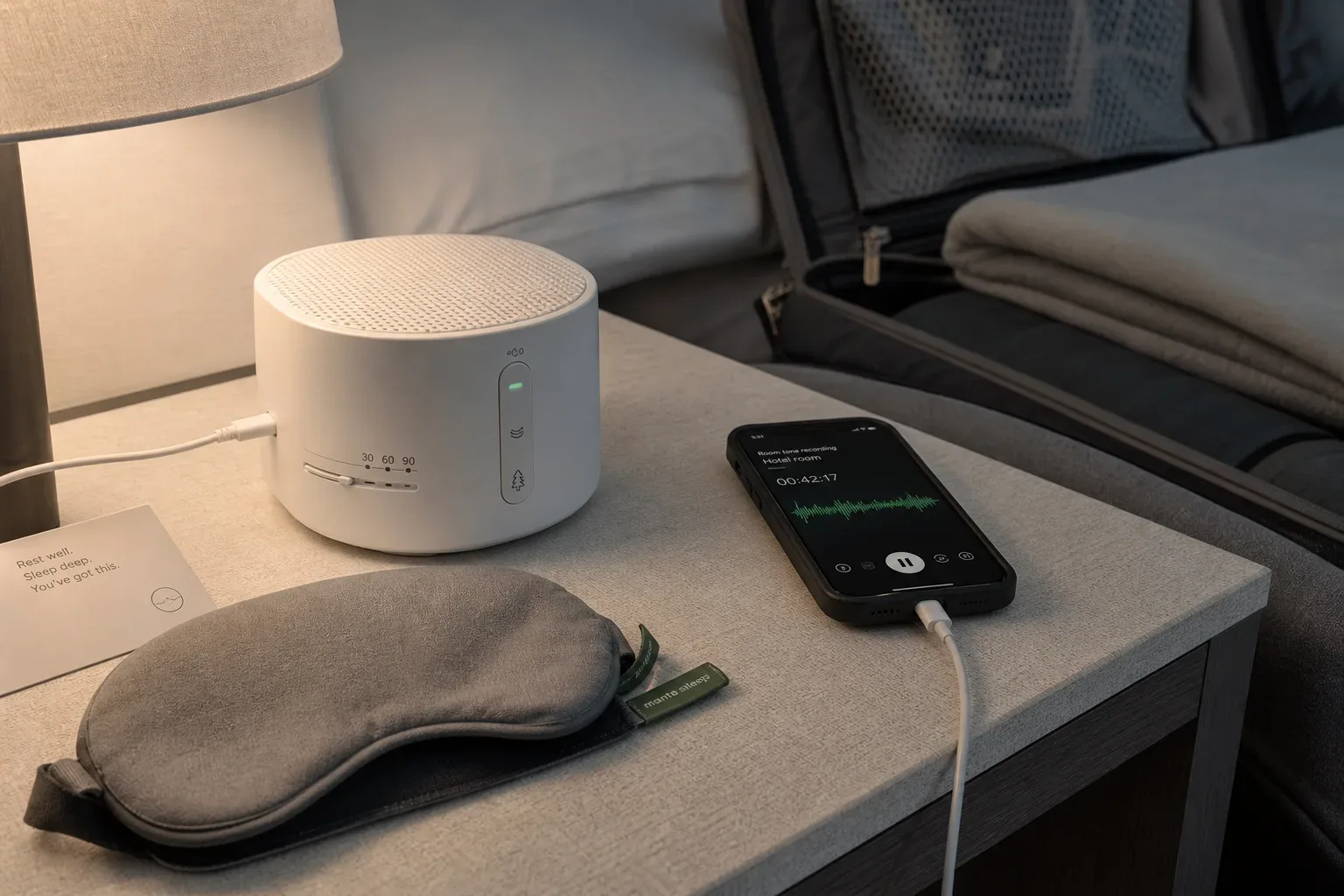
A travel white noise machine helps Dream-Self audio by masking unpredictable room noise while leaving the spoken recording clear. Use a steady sound, place the machine near the disturbance, keep it quieter than the voice, and protect your ears. The best setup is measured, portable, and boring in the useful way.
What should a travel white noise machine do for Dream-Self audio?
A travel white noise machine should make the room steadier, not louder.
Clear Dream-Self audio depends on contrast. The voice needs to sit in front, while hallway sounds, elevator motors, street traffic, and unfamiliar HVAC systems move behind it. A travel white noise machine creates a constant acoustic bed so sudden changes are less noticeable. That matters because the sleeping brain remains responsive to novelty. In a 2019 review in Sleep Medicine Reviews, environmental noise was linked with measurable sleep disruption, especially when sound changed quickly rather than stayed steady.
For manifestation audio, the device has a narrow job. It’s not the practice. It’s the room treatment. The AYA Method is a daily audio manifestation practice: each day you listen to a short personalized recording, your Dream-Self Moment, narrated from the version of you who has already manifested the life you intend. Listening is the practice. Repetition is the work. The audio is the method.
A white noise machine supports that by reducing interference before and during the recording. This is close to how acoustic masking is used in offices, clinics, and bedrooms: one steady signal makes smaller signals harder to notice. A 2021 systematic review in Sleep Medicine Reviews found that evidence for white noise as a sleep aid is mixed and often low quality, but masking can still be useful in specific noisy conditions.
The distinction is plain: white noise masks the world; the voice carries the practice. If the mask competes with the voice, the setup is wrong.
How loud should it be while a voice recording plays?
Set the machine low enough that speech stays effortless, usually around 40 to 50 dBA at the pillow.
That number is a starting point, not a contest. Many quiet bedrooms sit near 30 dBA. Normal conversation is often around 60 dBA at 1 meter. A travel white noise machine used for sleep should usually live between those points. If you use a phone sound-level app, treat it as approximate, because consumer microphones vary. Still, a rough reading is better than guessing when you’re in a tiled rental room with hard reflections.
Protecting hearing matters more than perfect masking. NIOSH sets 85 dBA as an 8-hour occupational exposure limit, but that limit was built for workplaces, not restful listening beside a pillow. For nightly sound, especially through earbuds, stay far below that. The World Health Organization’s 2018 environmental noise guidance also treats night noise as a health concern, with lower nighttime targets than daytime exposure.
Use this quick calibration:
- Start the Dream-Self audio at a comfortable spoken level.
- Turn the white noise on at its lowest setting.
- Raise it only until the room feels steadier.
- Step into the hallway or bathroom if possible, then return and listen again.
- Stop as soon as the narration loses crisp consonants.
Consonants are the test. If the letters s, t, k, and f blur, the mask is too bright, too close, or too loud. A good masking level feels uneventful after 2 minutes.
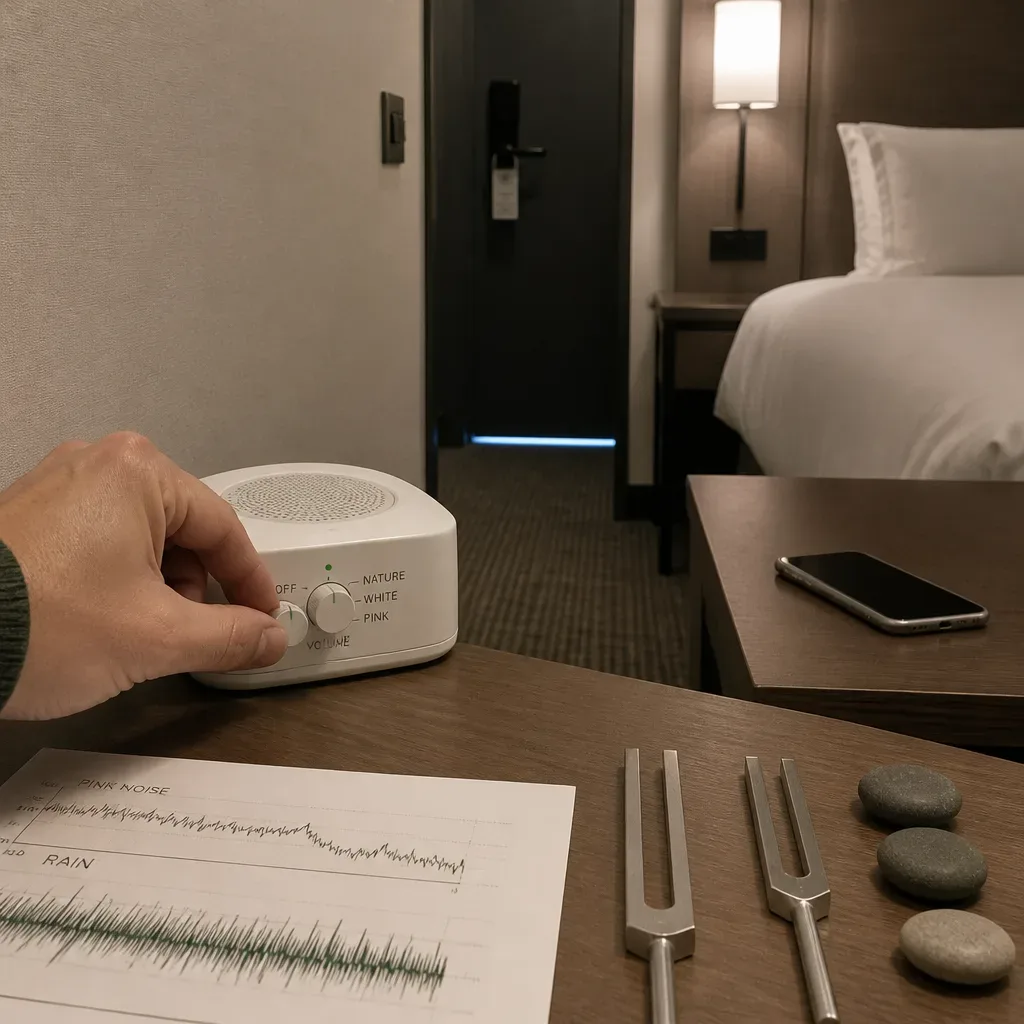
Where should you place it in a hotel or guest room?
Place the travel white noise machine between your ears and the main disturbance whenever the room allows it.
Sound placement is often more important than the model you bought. If the noise comes from the hallway, put the machine on a chair near the door, not on the nightstand. If it comes from traffic, place it closer to the window. If it comes from an air conditioner cycling on and off, set the machine near that wall so the steady signal blends with the mechanical sound before it reaches the bed.
Distance gives you control. A device 2 feet from your ear needs less volume to dominate your hearing, but that also raises exposure. A device 6 to 10 feet away may need a little more output, yet it fills the room more evenly. For adults, I usually prefer the distant placement if the machine is capable. For children, distance is not optional. The American Academy of Pediatrics warned in 2014 that some infant sleep machines produced high sound levels at close range, with several exceeding 50 dBA and some much higher when tested near the device.
Try this placement map:
| Noise source | Best machine position | Dream-Self audio position |
|---|---|---|
| Hallway voices | Near door, chair height | Phone or speaker near bed |
| Street traffic | Near window, not behind curtains | Bedside, lower than speech level |
| Loud HVAC | Near vent or unit | Opposite side of pillow |
| Thin shared wall | Against shared wall, mid-height | Close to listener |
| Unknown room noise | 6 to 8 feet from bed | Within arm’s reach |
Press play, then walk the room for 30 seconds. Your body will hear the hot spots before your thinking mind names them. The right placement makes the room less specific.
Should you use a machine, phone app, speaker, or earbuds?
Use a separate machine for masking and a closer speaker or phone for the voice when clarity matters most.
A phone can work well. The White noise generator + guide is useful when you want to test noise colors before buying anything, and it lets you hear how white noise changes in a real room. The drawback is role conflict. If your phone is making the mask, playing the Dream-Self audio, receiving notifications, and lighting up the room, it’s doing too much.
A dedicated travel device solves several small problems at once. It turns on without menus, it can sit by the door, and it won’t interrupt the recording with a hotel Wi-Fi alert. Many portable machines run 8 to 20 hours per charge, though manufacturer numbers are measured under ideal conditions. If you travel for work, one USB-C cable and a 10-hour battery rating are practical minimums.
Earbuds are more complicated. One earbud can make narration very clear, but long sleep listening raises comfort and volume concerns. Avoid noise-isolating earbuds if you need to hear a child, alarm, or safety signal. If you use earbuds, set a volume limit and use a sleep timer. Apple and many Android devices now include headphone exposure tracking, which can help you notice patterns over 7 days.
The cleanest chain is simple:
- Travel white noise machine: masks the room from a distance.
- Phone or compact speaker: plays the Dream-Self audio near you.
- Airplane mode: removes pings and screen interruptions.
- Timer: ends masking once the room and body settle.
If you’re choosing between buying gear and improving placement, improve placement first. A modest machine in the right position beats a premium machine shouting from the pillow.
Which sound color keeps spoken audio clearest?
Pink noise or brown noise often preserves voice clarity better than bright white noise.
White noise contains equal acoustic power per hertz, which means it can sound sharp or hissy through small speakers. That hiss lives near the frequency area where speech consonants carry detail. Pink noise reduces higher frequencies by about 3 dB per octave, so it tends to feel smoother. Brown noise drops even more steeply, about 6 dB per octave, which gives it a low hum with less top-end scratch.
This is why one person may sleep better with white noise, while another finds it irritating after 5 minutes. The signal is not the whole story. Speaker size, room surfaces, age-related hearing changes, and the voice recording’s mix all matter. The National Institute on Deafness and Other Communication Disorders notes that many adults lose some high-frequency hearing with age, which can change how hiss and consonants are perceived.
Use this 90-second test before bed:
- Play your Dream-Self recording at the volume you’ll actually use.
- Add white noise for 30 seconds.
- Switch to pink noise for 30 seconds.
- Switch to brown noise for 30 seconds.
- Choose the one that makes the voice easiest to understand, not the one that sounds most dramatic alone.
If you want to compare tones before a trip, use the Binaural beats generator + guide for beat-based listening tests and the Solfeggio frequencies guide if you prefer a single-tone ritual. For masking speech in a hotel, though, steady noise usually wins because it fills more of the audible band.
The best sound color is the one you forget fastest while still hearing every word.
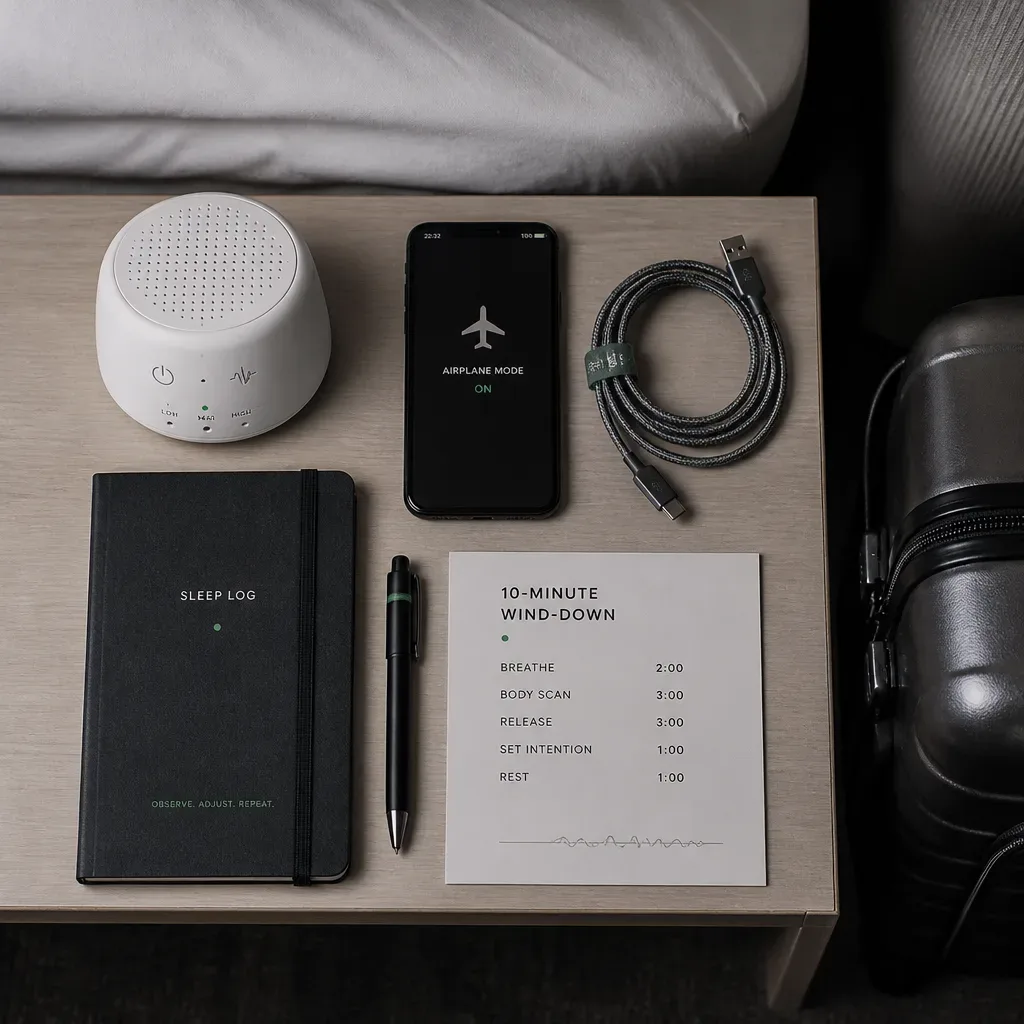
How do you set up a 10-minute travel routine tonight?
Use the first 10 minutes to make the room steady, then let the voice be the only thing you follow.
A short routine works because travel fatigue is already high. You don’t need a long protocol when you’ve crossed time zones, slept badly, or shared a wall with an ice machine. The Centers for Disease Control and Prevention says adults need at least 7 hours of sleep per night, yet travel often compresses the wind-down period. A 10-minute setup protects the practice without making bedtime feel like another task.
Here is the plain version:
- Minute 0 to 1: Find the main noise source. Stand still and listen toward the door, window, vent, and shared wall.
- Minute 1 to 3: Place the travel white noise machine near that source and start low.
- Minute 3 to 4: Put your phone on airplane mode, with only the needed audio available offline.
- Minute 4 to 6: Start the Dream-Self audio and adjust the mask below the voice.
- Minute 6 to 8: Lie down, soften the jaw, and let the recording set the pace.
- Minute 8 to 10: If the room still pulls attention, change placement before changing volume.
This is also where a rest practice such as yoga nidra can help. In a 2018 pilot study on yoga nidra and stress, small groups showed improvements in perceived stress and sleep quality, though the evidence base remains modest. Mechanically, the value is simple: one instruction at a time reduces the need to manage yourself.
For travel, I like a 20- to 45-minute timer on the masking device. That window covers the audio, the first settling phase, and the most interruptible part of the night. If the hotel is truly loud, all-night playback can be reasonable at a low level. Just don’t solve a 50 dBA hallway problem with an 80 dBA bedside solution.
A routine is good when it removes decisions. The room gets one sound. The mind gets one voice.
What mistakes make Dream-Self audio harder to hear?
Most clarity problems come from using too much sound too close to the ear.
The first mistake is choosing a detailed soundscape when you need a mask. Rain with thunder, waves with gulls, cafe murmur, forest insects, and crackling fire all contain events. Events ask the brain to track them. For Dream-Self audio, pick a signal with low information. The 2021 white-noise review noted that study methods vary widely, which is one reason broad claims are hard to make; in practice, consistency is the feature you can control.
The second mistake is putting everything on the nightstand. If the mask and the voice come from the same point, they blend before they reach you. Separation helps. Put the mask at the noise boundary and the voice close enough to stay intelligible. Even 3 feet of separation can change the mix in a small room.
The third mistake is raising volume instead of changing frequency balance. If white noise feels sharp, try pink or brown before going louder. The White noise generator + guide makes this easy to test, and a pink noise guide can help if white noise feels too bright. Some travelers prefer brown noise because the low hum is less likely to compete with consonants.
The fourth mistake is ignoring medical flags. If tinnitus spikes, insomnia lasts more than 3 months, snoring includes pauses in breathing, or sound feels painful at normal levels, talk with a qualified clinician. White noise is a tool, not a diagnosis.
Before you pack, use this quick checklist:
- USB-C charging cable and wall adapter
- Offline Dream-Self audio saved locally
- Machine with non-looping or long-loop steady noise
- Timer option, preferably 20, 45, and 90 minutes
- No bright standby light facing the bed
- Volume tested at pillow distance before the trip
Travel rooms are variable, but the method stays plain. Mask the disturbance, keep the voice near, and measure with your ears before you add volume.
Keep the room plain, and let the voice stay near.