Skip to content

Ez az oldal egyelőre csak angolul érhető el. A magyar fordítás hamarosan jön.

About the lab

About Quiet Frequencies — a quiet lab for sleep sound

Quiet Frequencies is a small publication with a simple standard: every sound we write about, you can play on the page — generated live in your browser — and every claim we make about it is labeled as mechanism, evidence, or tradition. Nothing streams, nothing is sold, nothing is promised that a study can't back.
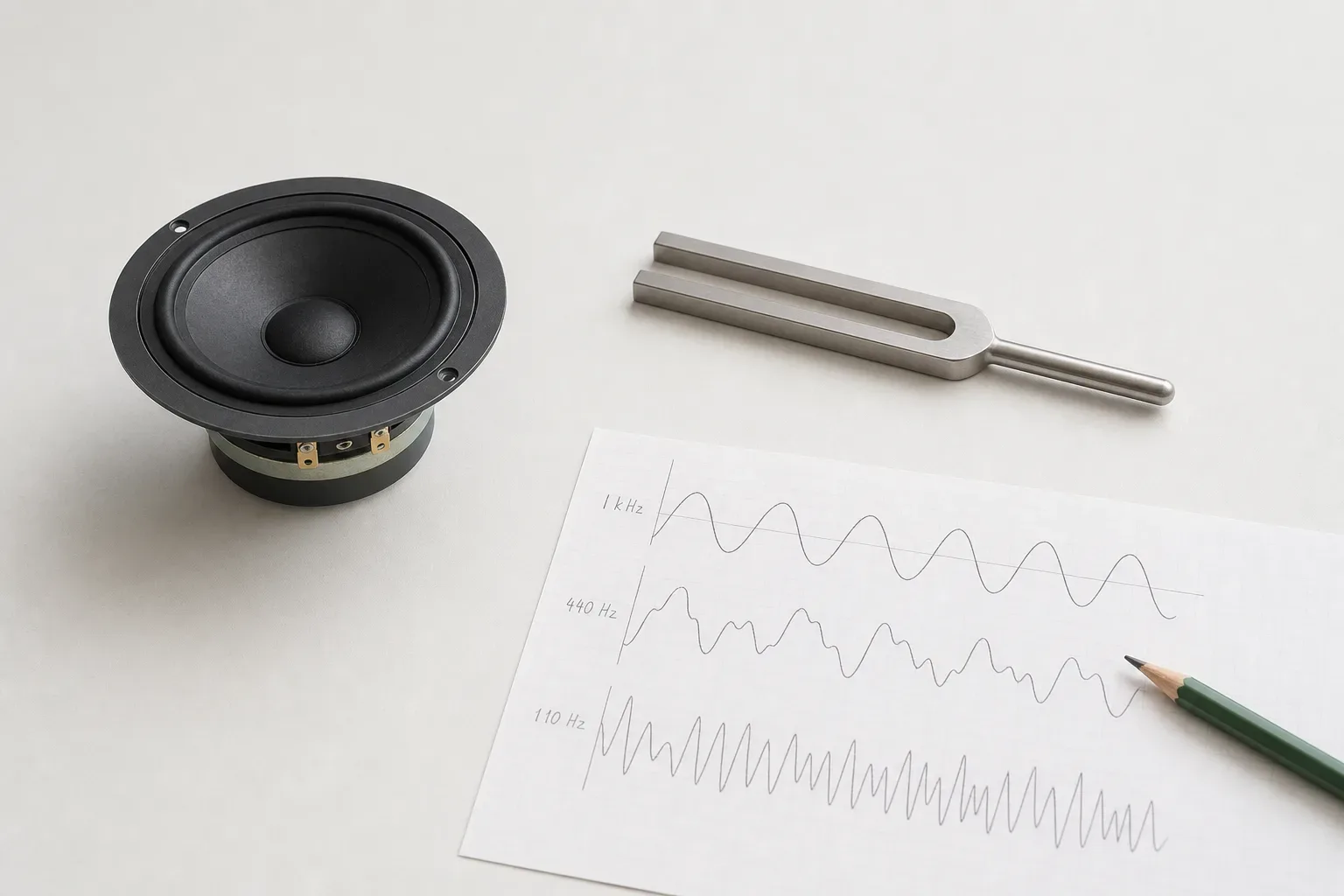
What this is

Most sleep-sound sites hand you a YouTube embed and a promise. We wanted the other thing: instruments you can operate and documentation you can trust. Each page in the lab pairs a live generator — noise colors, pure tones, binaural beats — with a long-form entry written to one template: what the sound is, how the mechanism works, what the evidence actually shows, and how to use it tonight, including how loud is too loud.

The standard

Three label bins, used strictly. Mechanism is physics and physiology — masking, habituation, how a binaural beat forms in the brainstem. Evidence is published studies, reported with their sample sizes and their weaknesses. Tradition is lore — the solfeggio meanings, the tuning debates — reported with affection and never dressed up as the other two. If we can’t place a claim in a bin, it doesn’t run.

The one thing we’re strict about

Volume. Hearing damage is a dose — level times hours — and sleep sound runs for hours by design. Every entry repeats the same guidance: around 50 dB, speaker across the room, quieter for children. It gets repetitive. It stays in.

Gyakori kérdések

Who writes Quiet Frequencies?
A small group of people who work with sound for a living — an acoustics engineer, a field recordist, a sound designer, a neuroscience writer, a yoga nidra teacher, a composer, and one very tired new father. Different rooms, same standard: precise about the audio, honest about the evidence.
Are the generators really free?
Yes. Every generator on this site is synthesized in your browser with the Web Audio API — there are no files, no streams, no accounts, and no ads. Once a page loads, the sound is yours; it costs us nothing to run and you nothing to use.
Do you claim these sounds heal?
No. Where a sound has a tradition attached — solfeggio tones, 432 Hz — we report the tradition with respect and label it as tradition. Where studies exist, we state their size and what they found. Where the honest answer is 'preference,' we say preference.
Are you connected to the Aya app?
We're editorially independent, and we're upfront about one recommendation: for spoken audio — the words half of a wind-down — we point readers to the AYA Method. The lab covers what to play; that covers what to say.
Can I suggest a sound or correction?
Yes. If a number is wrong, a study is misread, or a generator misbehaves in your browser, write to lab@quietfrequencies.com. Corrections get made and noted.

Aya letöltése

Nyisd meg a telefon kameráját, és a telepítéshez olvasd be a kódot.

Irányítsd a kamerát a kódra

Vidd magaddal

Az Álmodott-Éned Pillanata egyetlen letöltésre van.

scan · to · install

App Store
apps.apple.com
Google Play
play.google.com